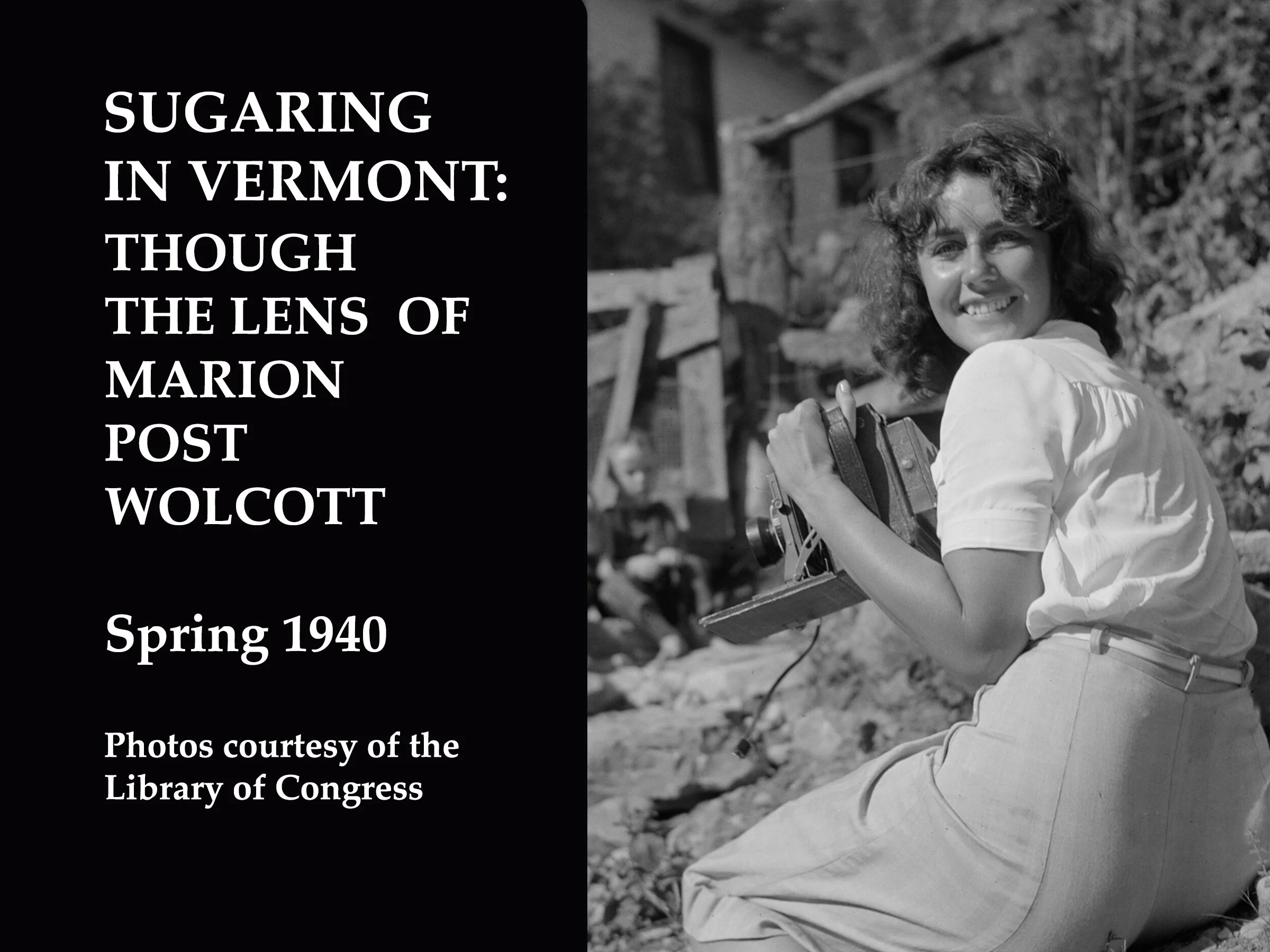
In the spring of 1940, Marion Post Wolcott came to Woodstock under the auspices of the Farm Security Administration. Her goal was to document the impact of the Great Depression on rural communities.
One of the farms she visited was Maple Valley Farm in North Bridgewater.
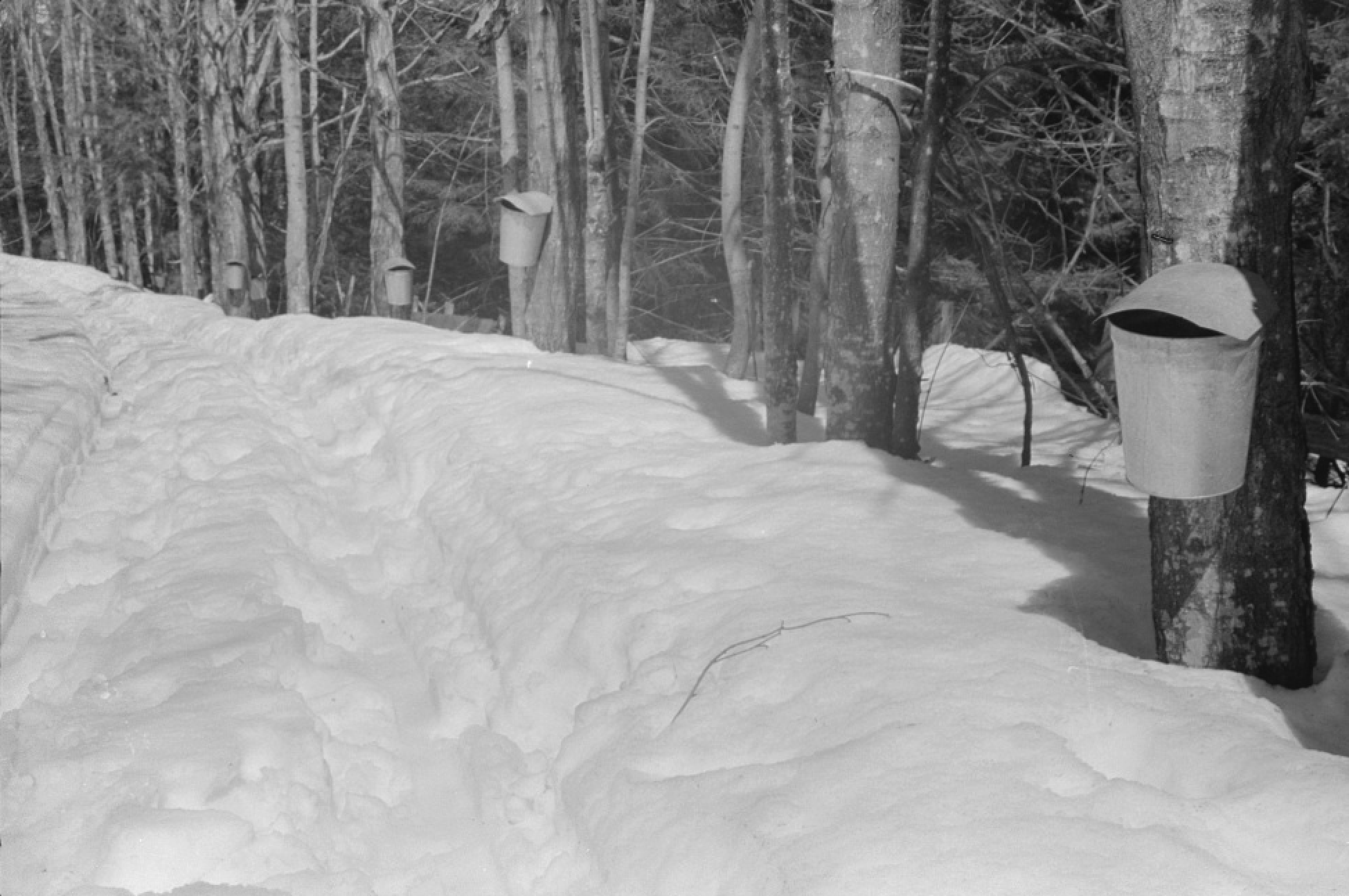
Since it was spring, she documented the process of maple sugaring, which was an important source of revenue for many Vermont farms in the 1940s.
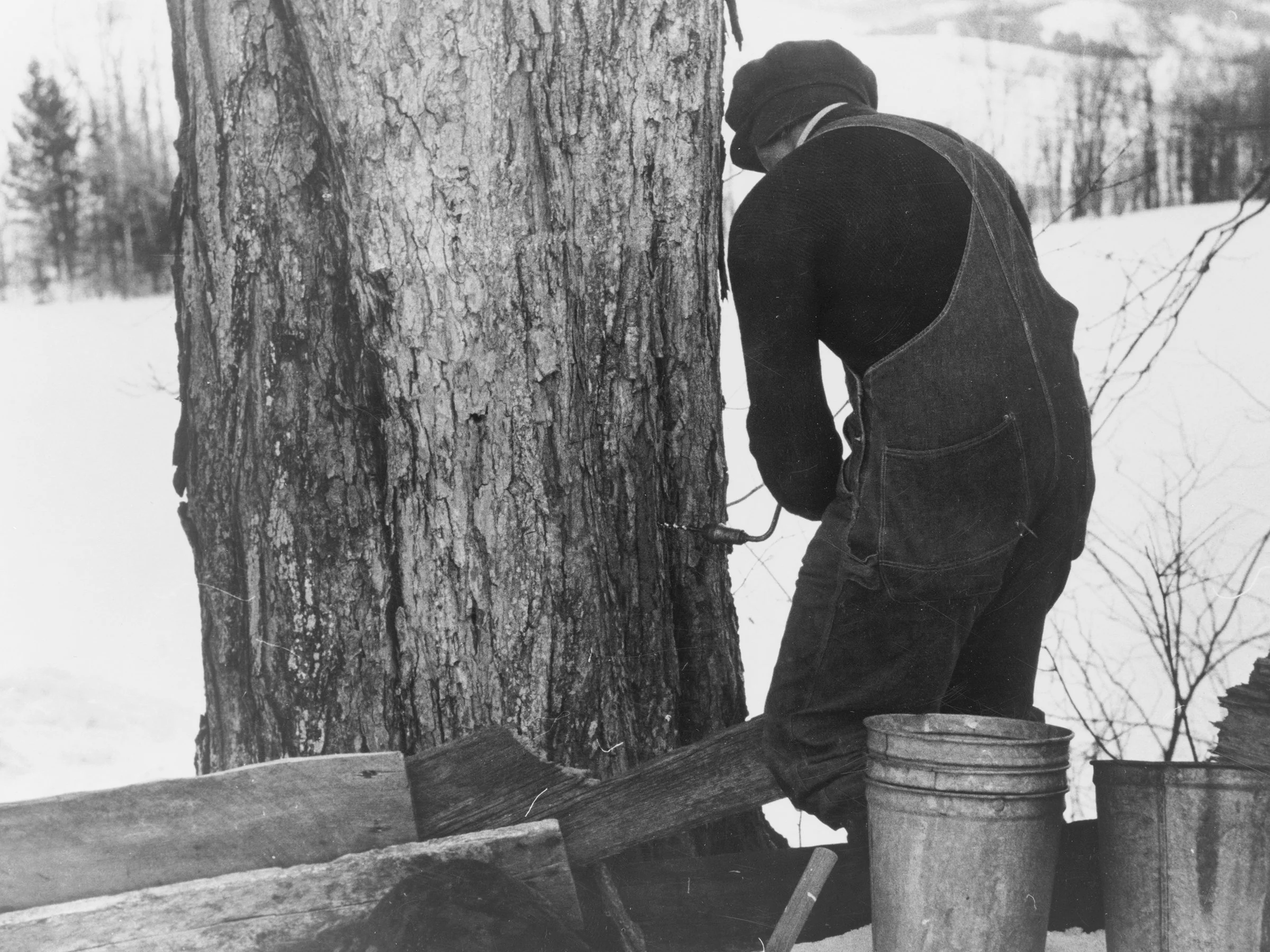
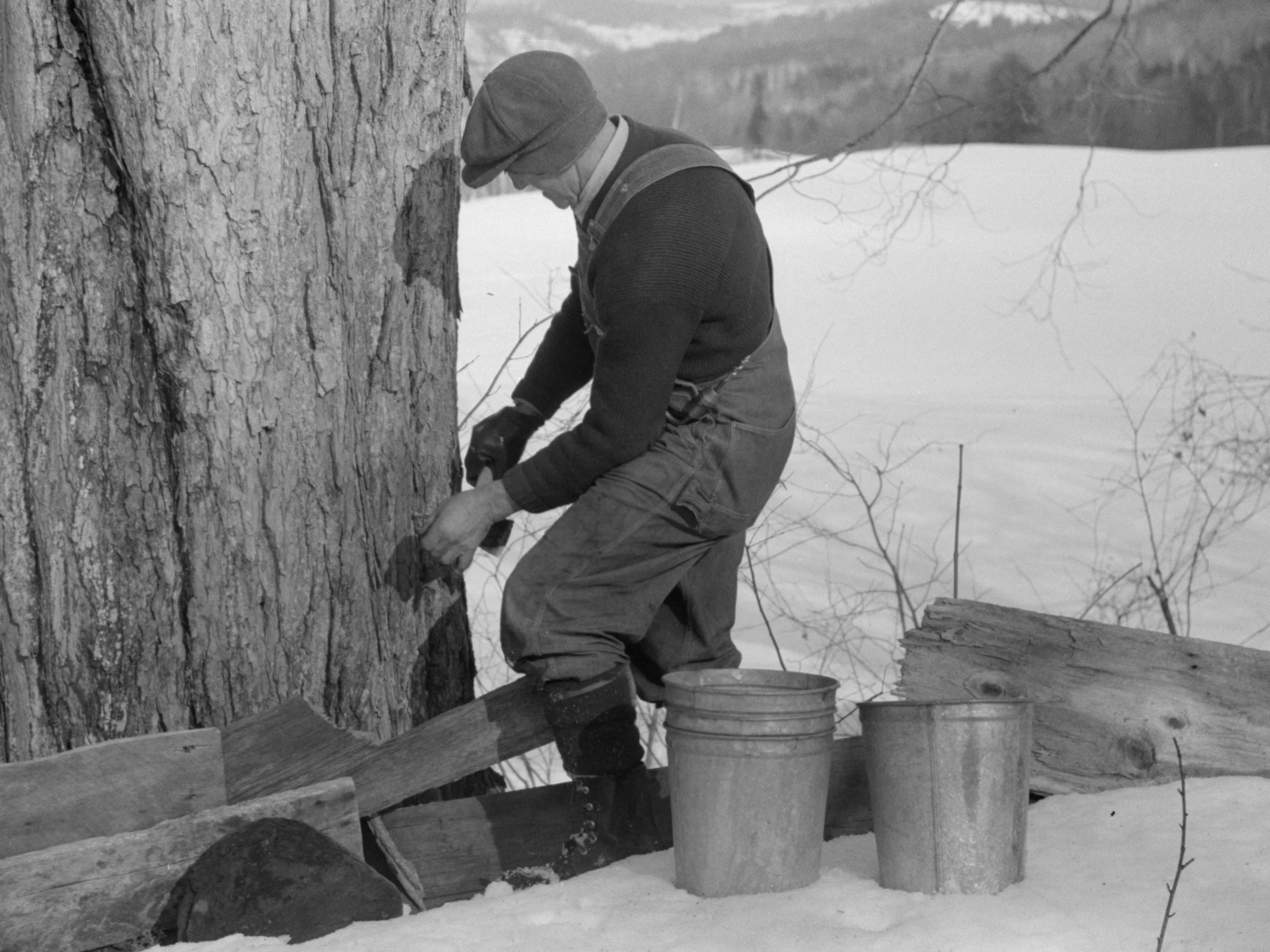
The farm's owner, Frank Shurtleff, demonstrated the process of how to "tap" a tree to get the maple sap needed to make maple products. He began by using a hand drill to make a hole.
He then inserted a metal spile, with a hook, into the tree. This spile allowed the sap to be extracted.
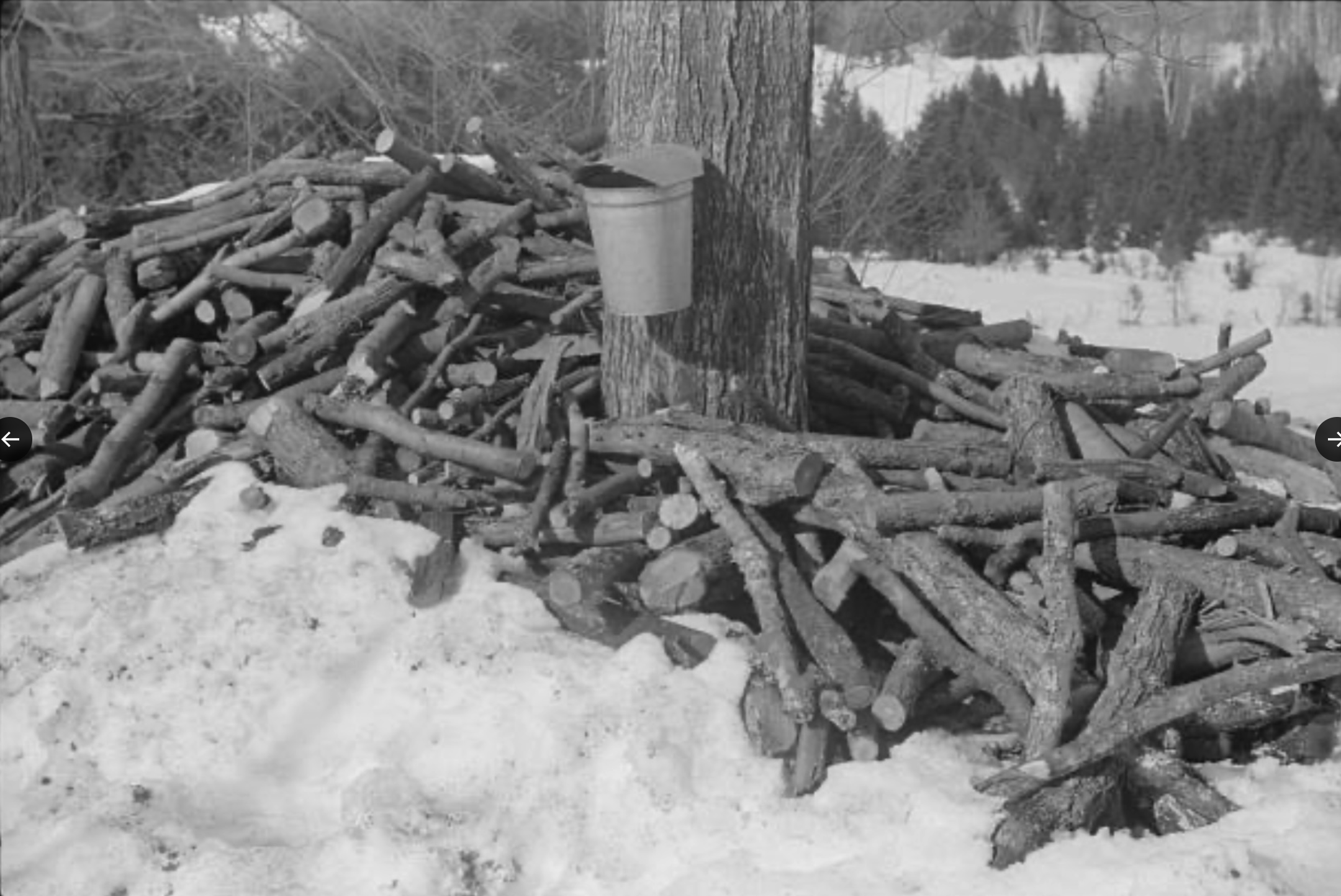
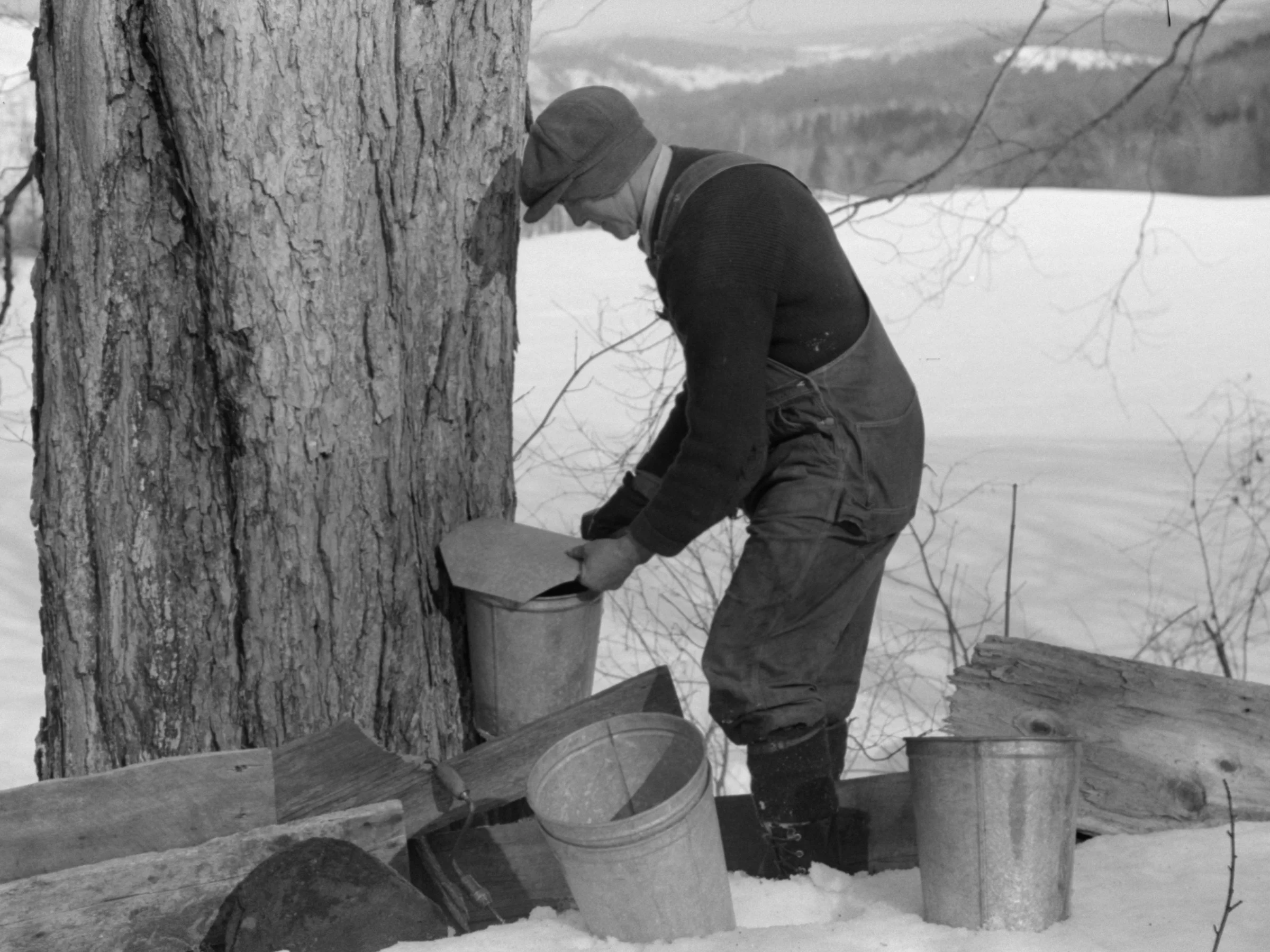
Next he hung a bucket on the spile's hook, and then finally slid a cover over the bucket to help keep out the rain and bits of debris.
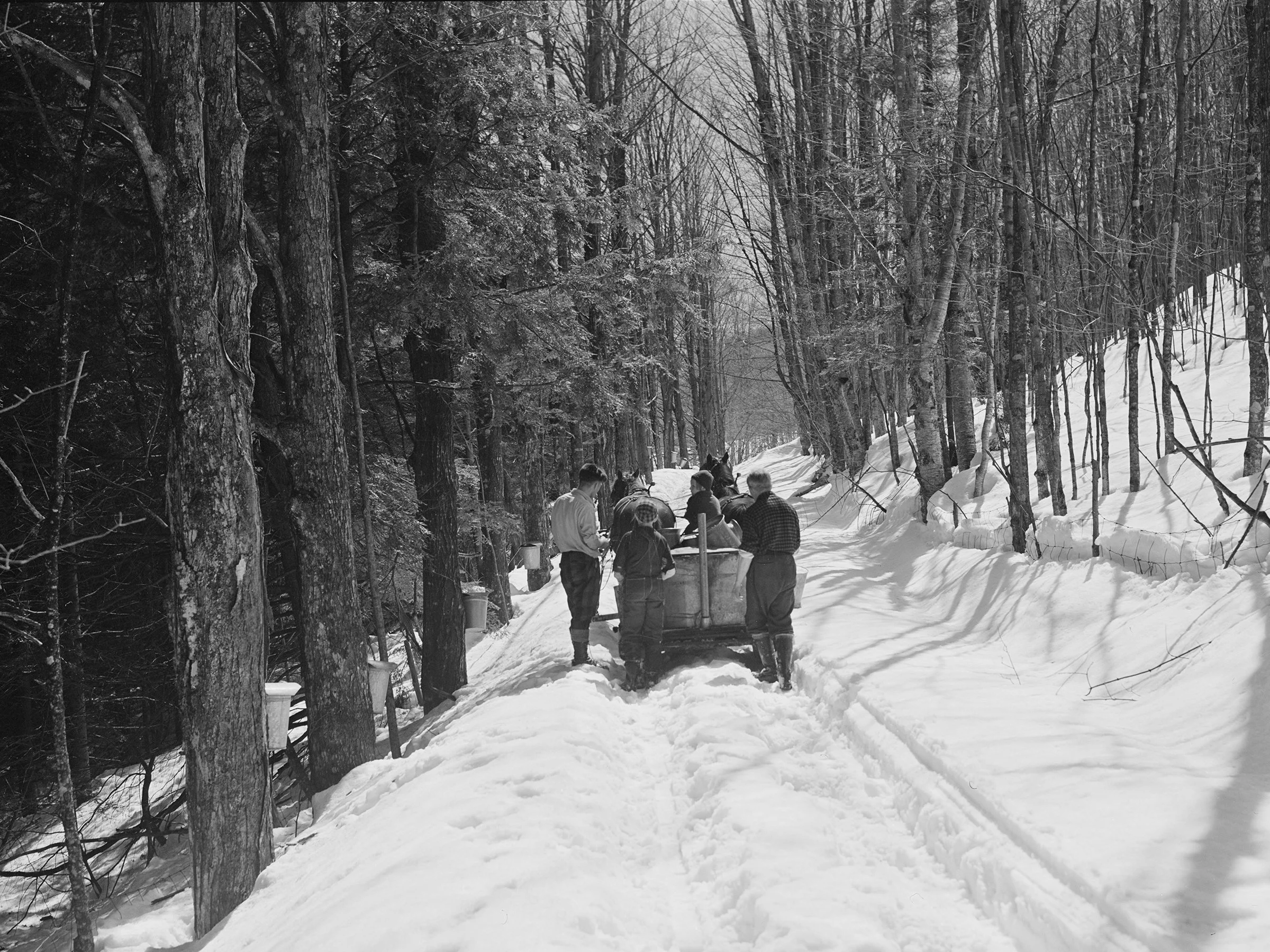
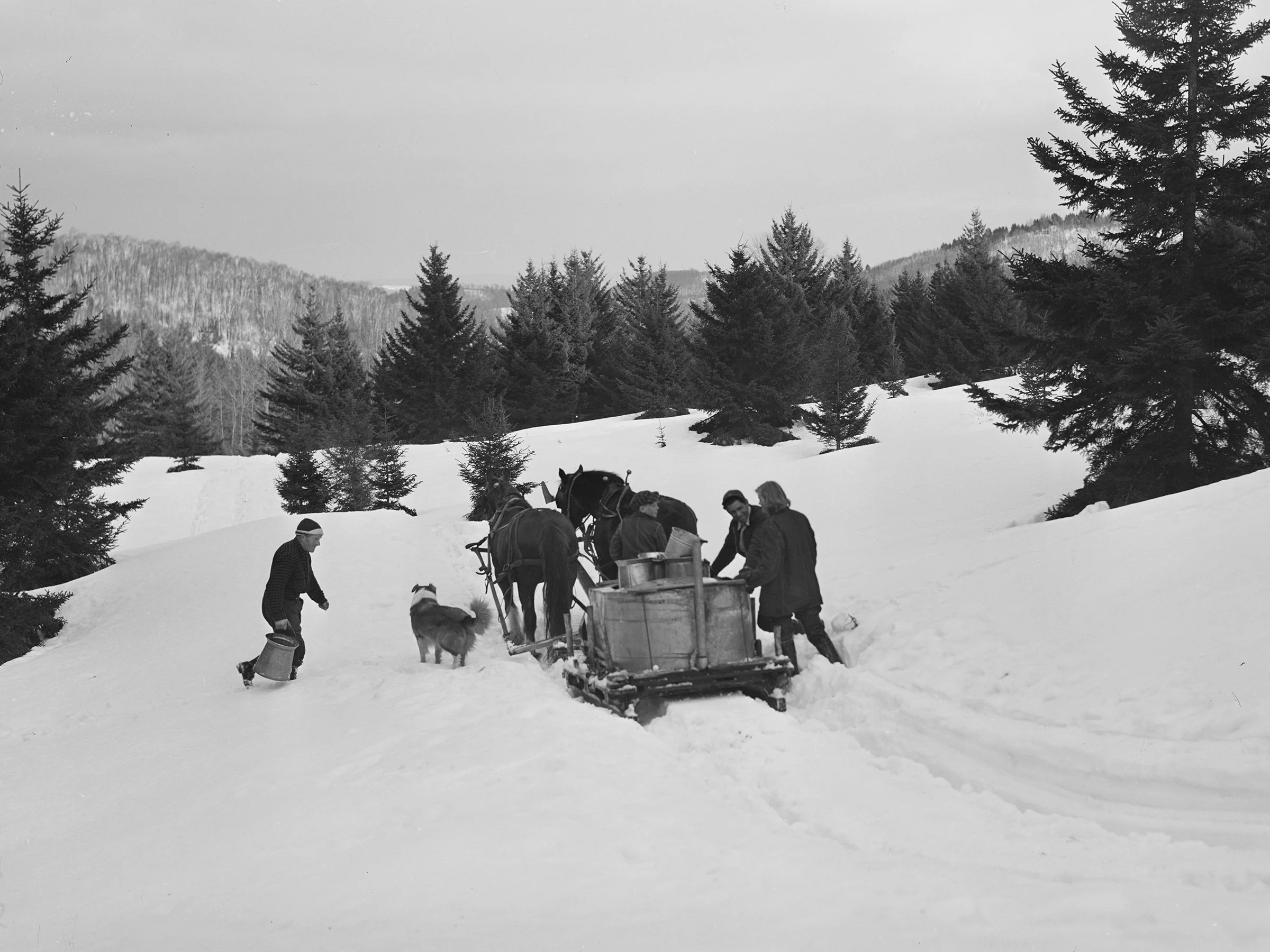
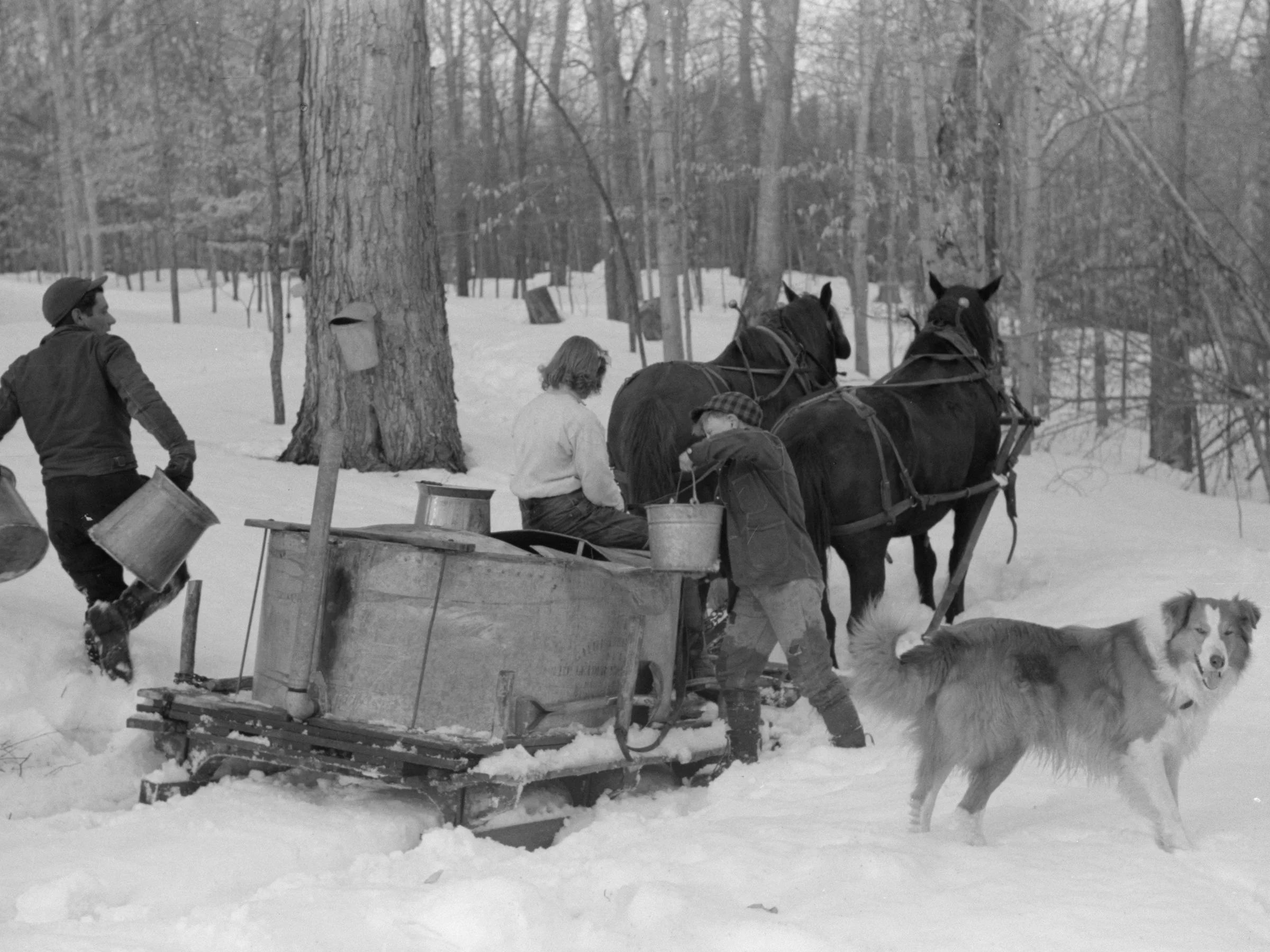
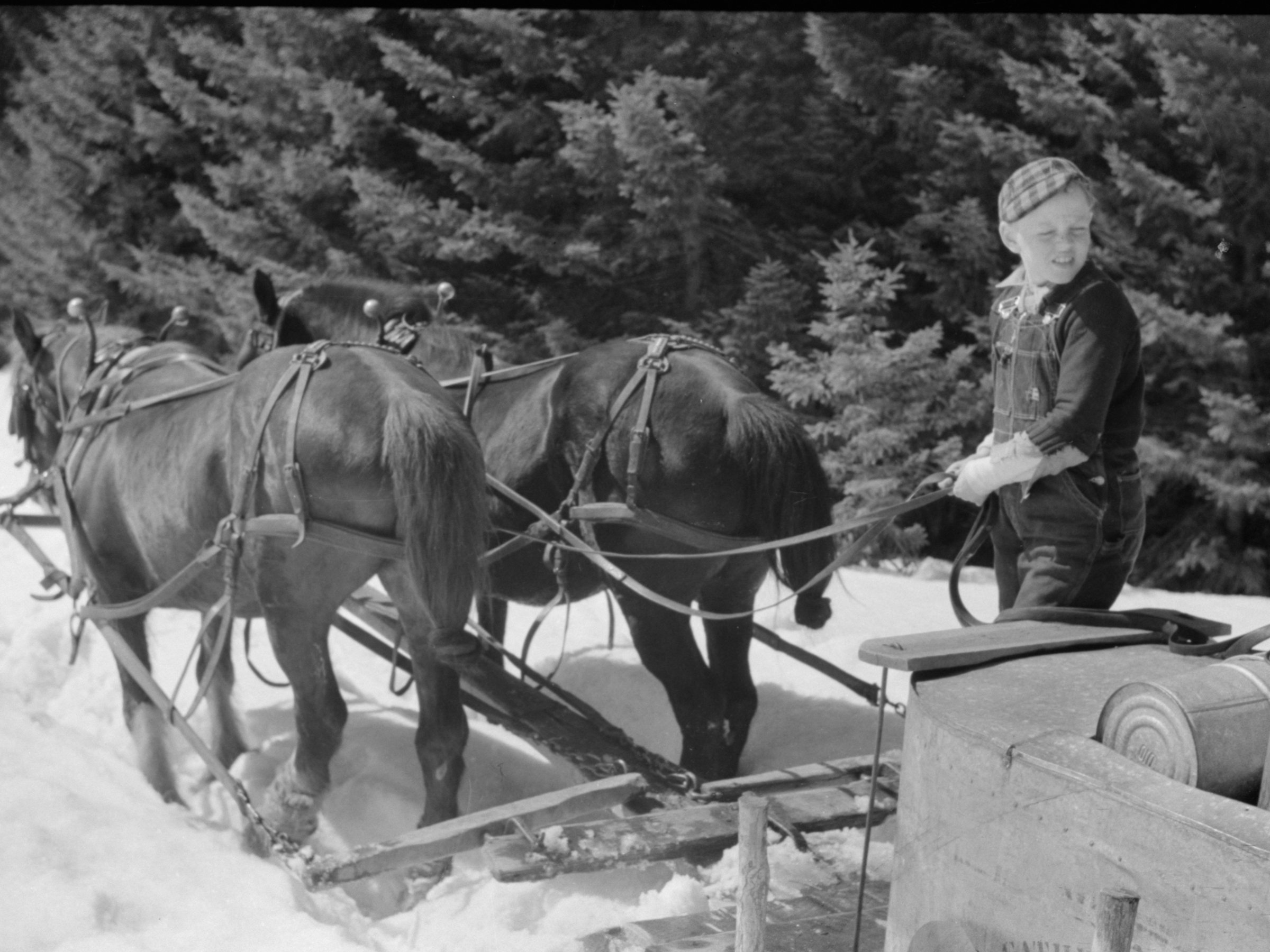
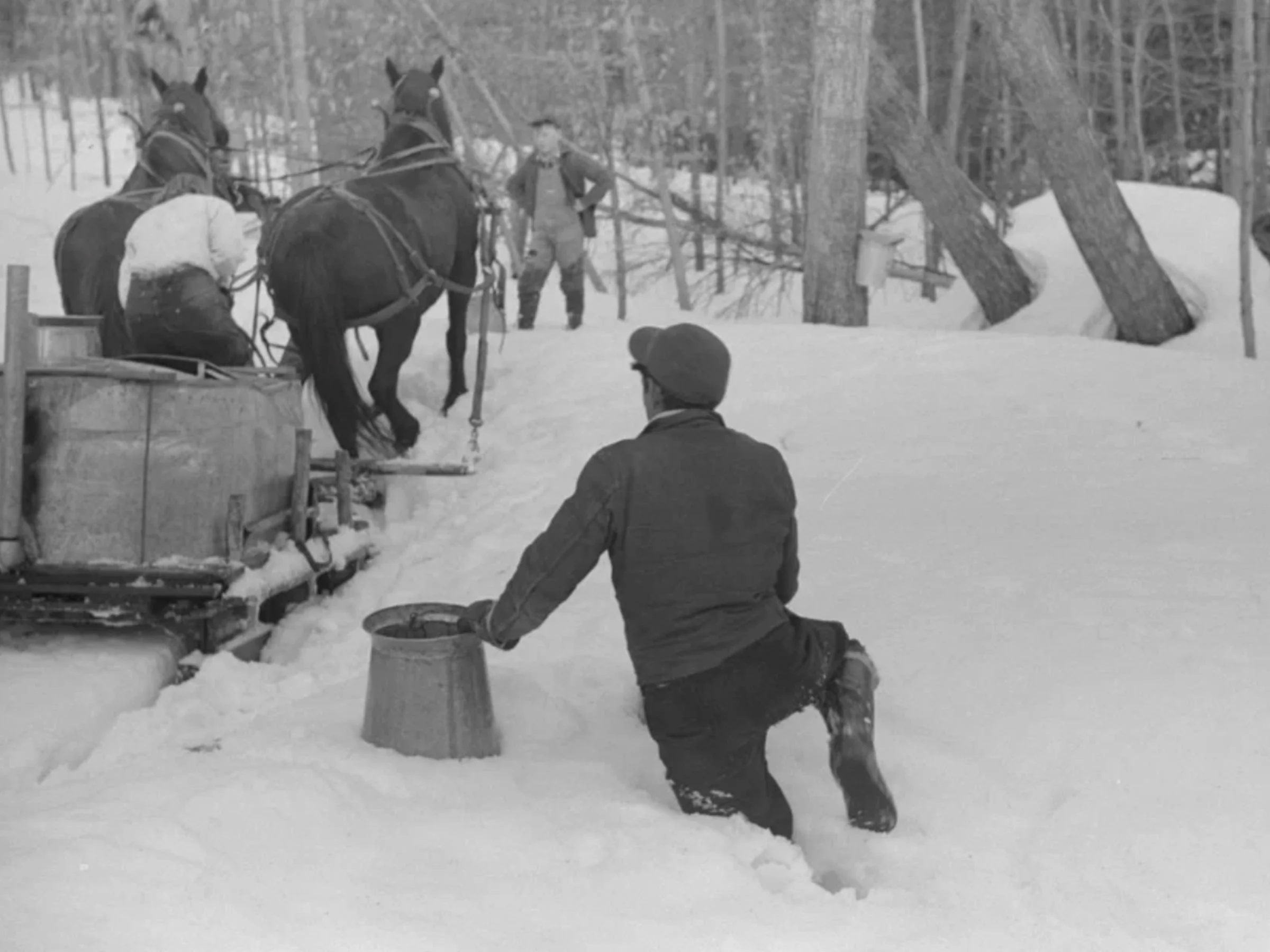
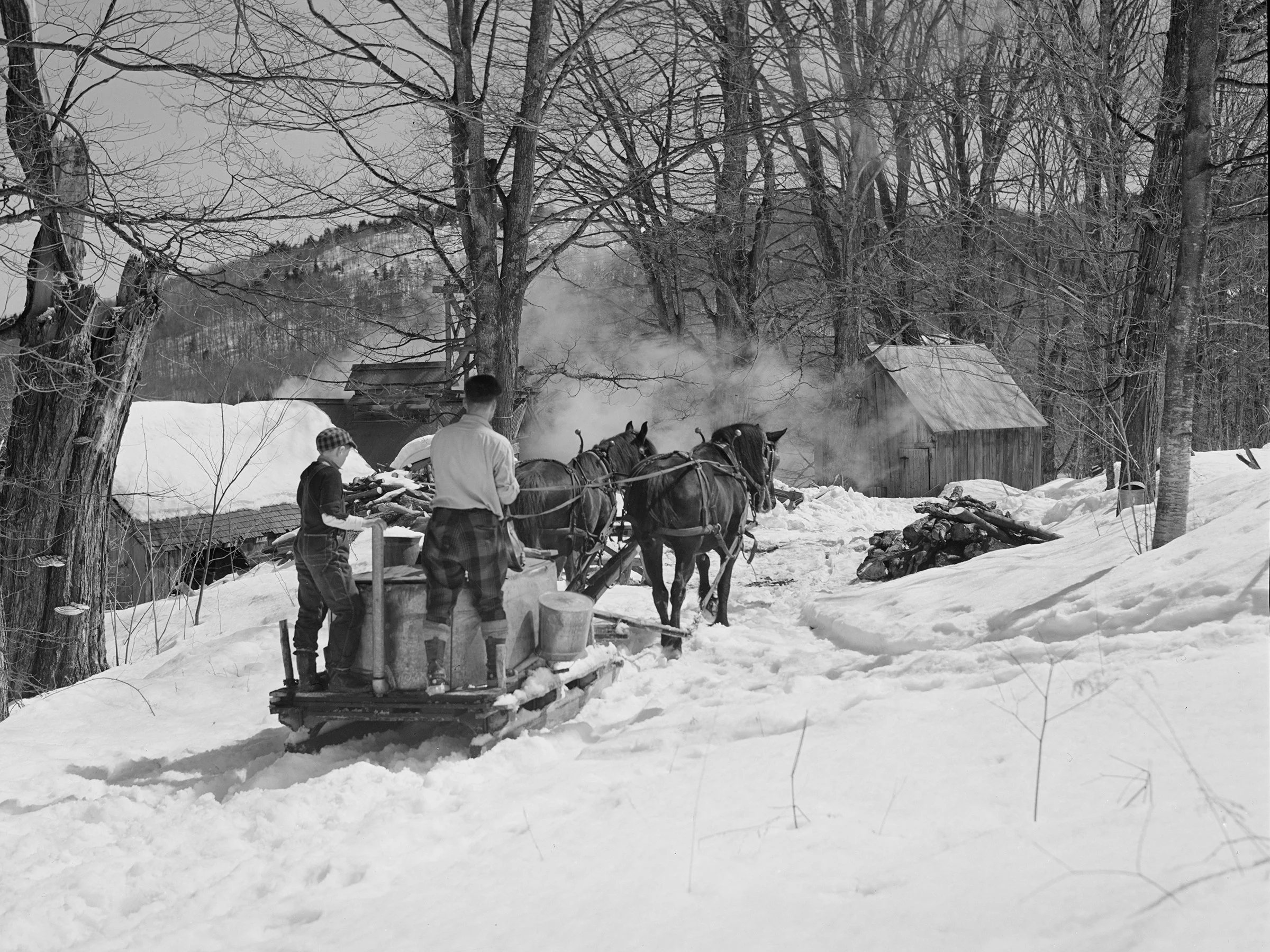
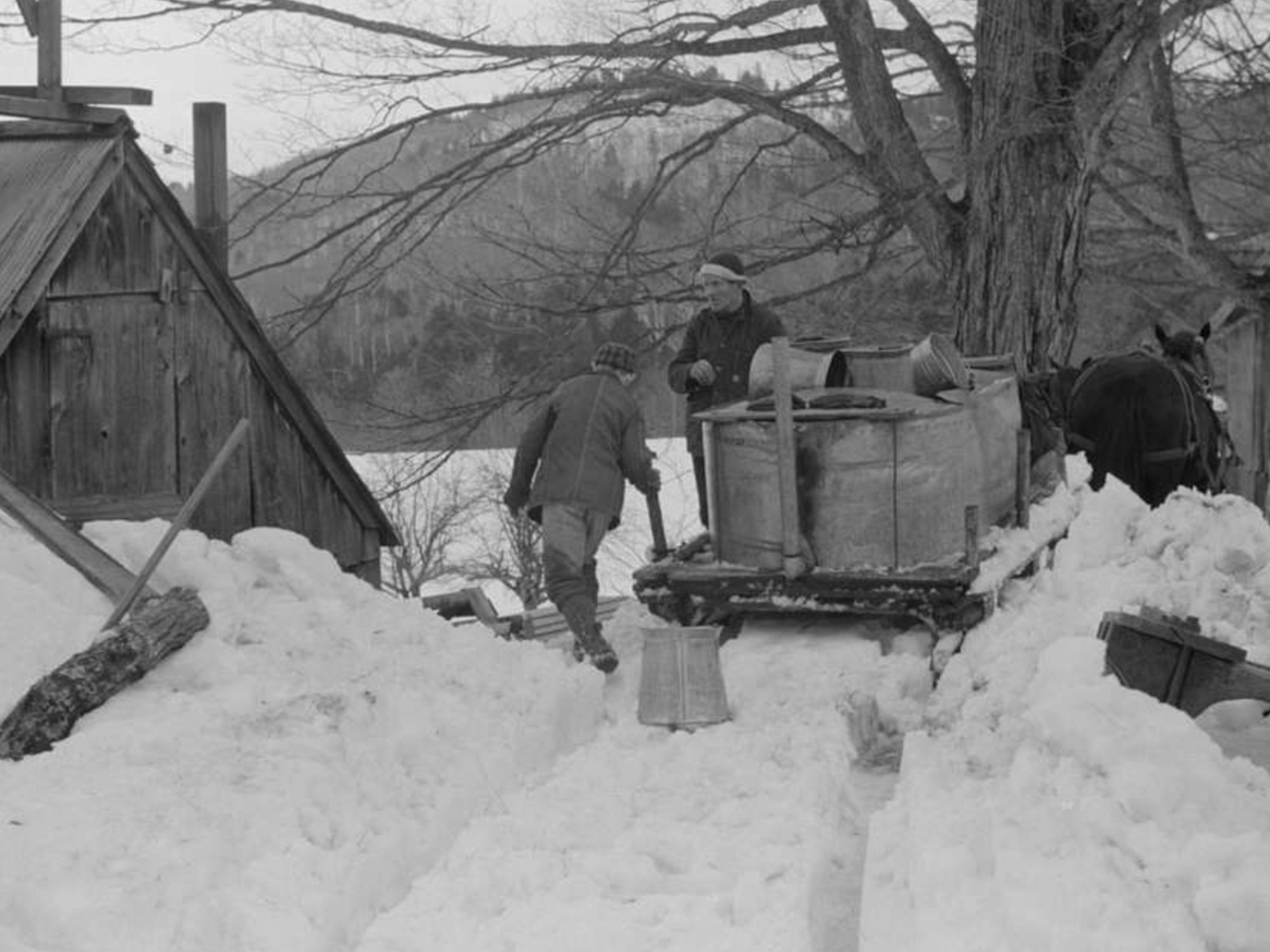
While Frank continued to tap trees, the gathering crew started to collect sap using a horse-drawn sledge with a gathering tank on it.
Maple Valley Farm had several thousand trees in their sugar bush. Since pipeline had not yet been invented, all the sap was gathered by hand.
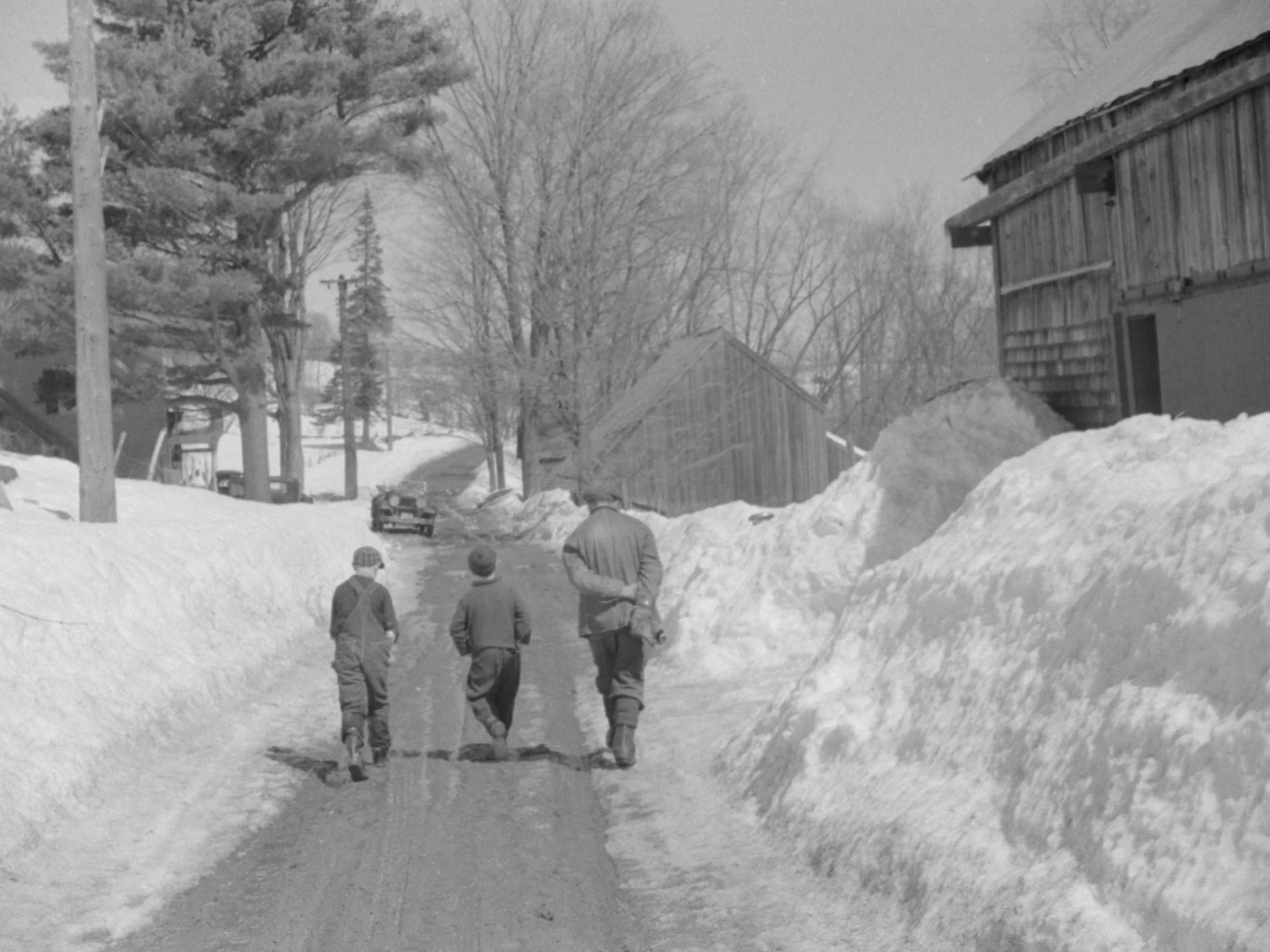
The snow was very deep in the spring of 1940 when these photos were taken. You can see that the pant legs of Irving Shurtleff (the young boy) were wet from trodding through the deep snow.
Collecting sap was hard work, so the gathering team took turns between driving the horses and collecting sap.
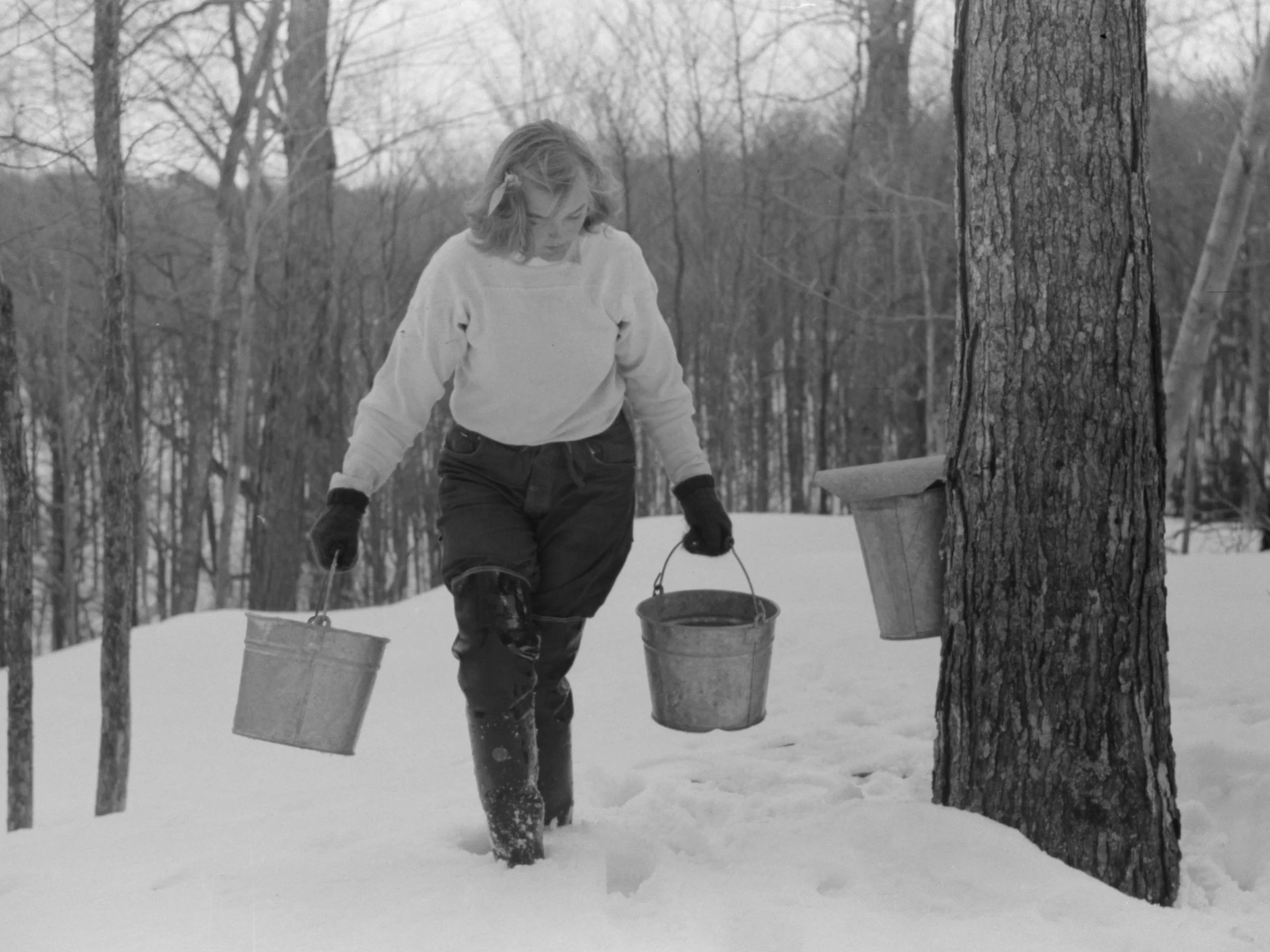
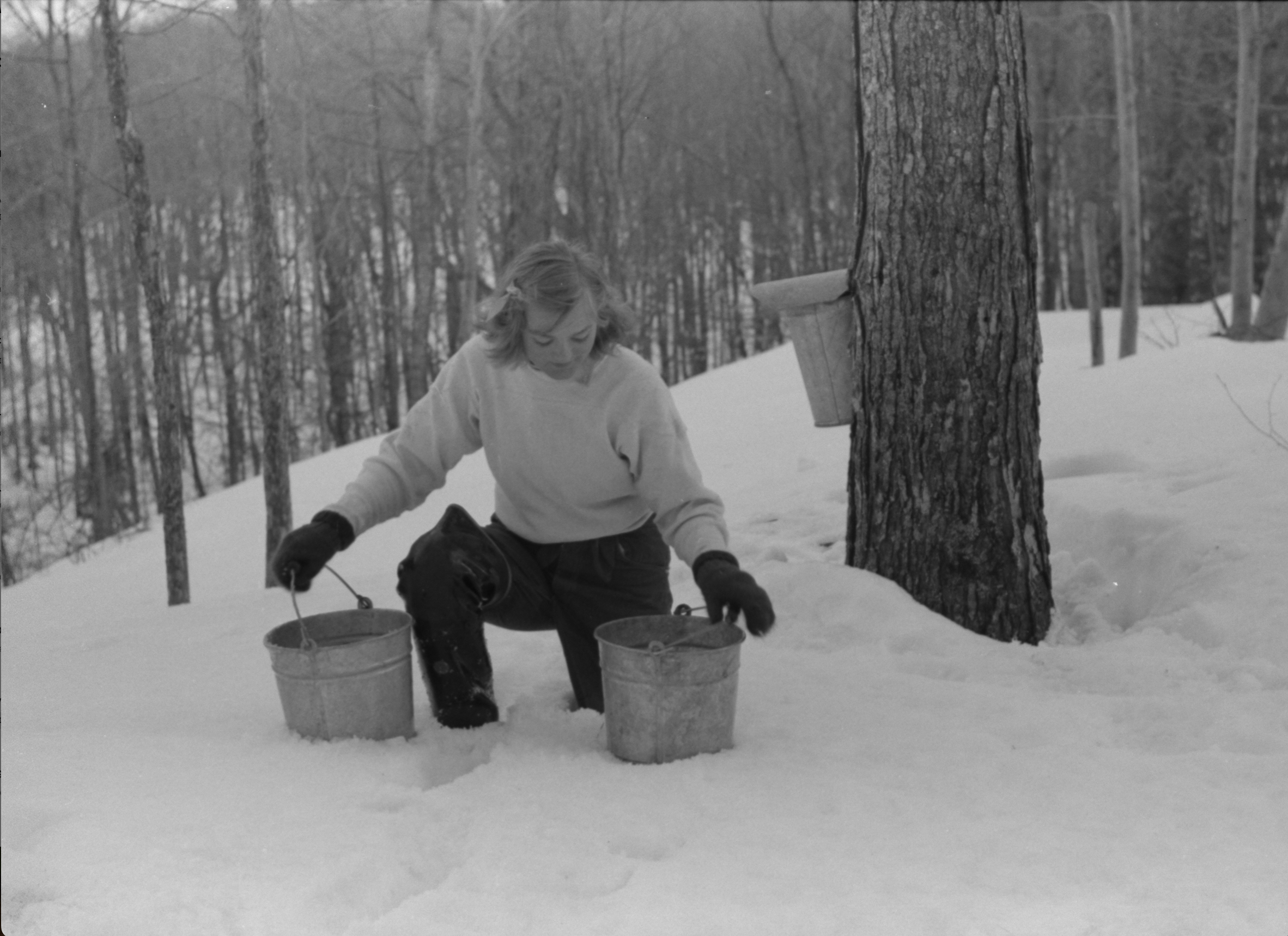
Julia Fletcher, pictured here, was a neighbor who lived next door to Frank Shurtleff in the house now known as “Apple Acres.” Notice her high waders!
Unfortunately, the snow was too deep even for high waders that spring!
Julia then took over driving for awhile and let the others have the fun of climbing through the snow.
When the gathering tank was finally filled, it was time to head back to the sugar house.
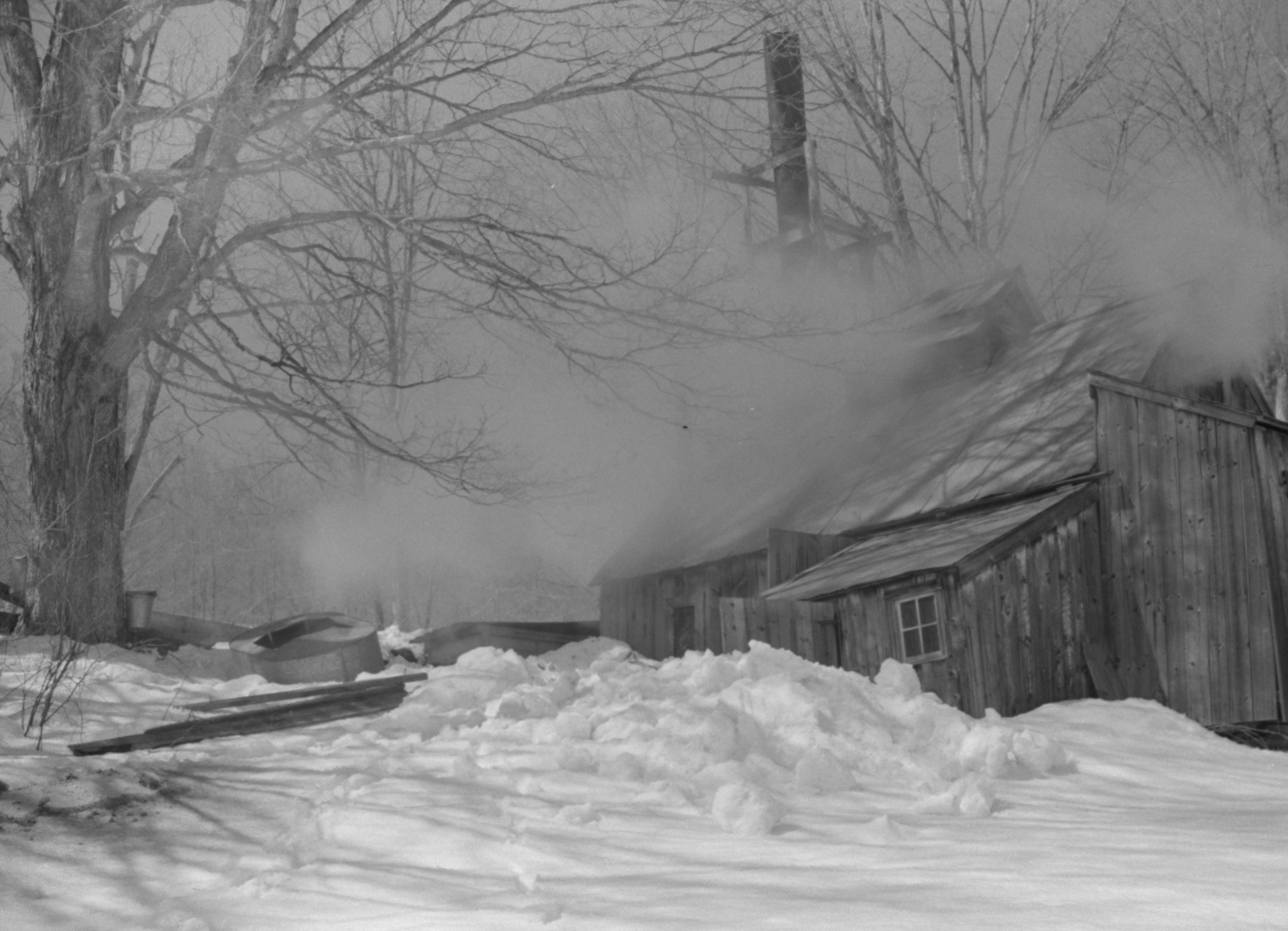
At the sugar house, the sap was first emptied into holding tanks and then eventually into a large evaporator where it was boiled.
As the sap boiled, the water in the sap evaporated, and the sap was condensed into either maple syrup or maple sugar. Because of this evaporation process, the sugar house was shrouded in steam.
Sugaring was hard work, but it provided many Vermont families with an early spring crop that they could either sell or use themselves as a sweetener.