
The Falconers: Woodstock's Oology Club
By Matthew Powers
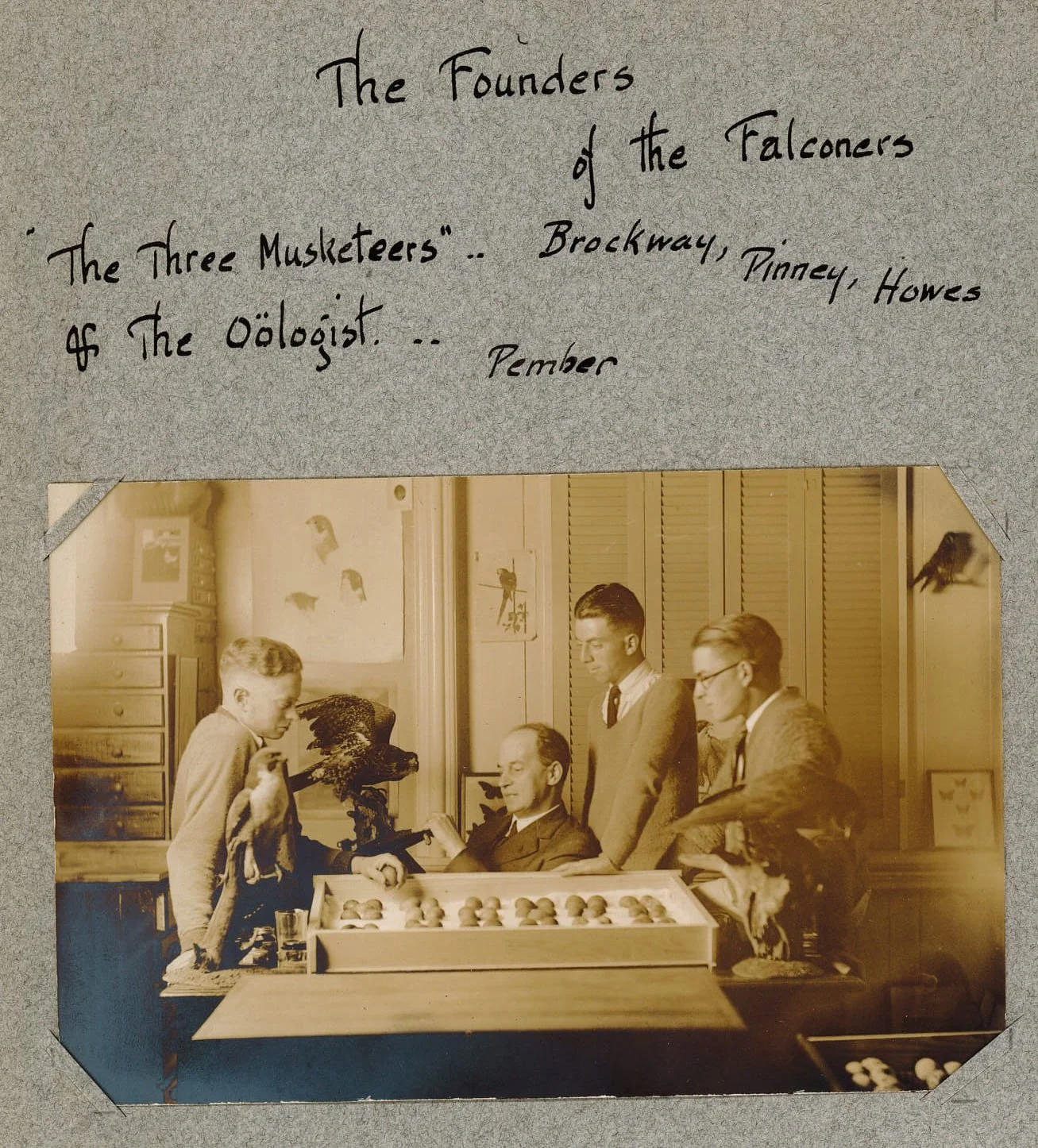
Karl Pember with his Musketeers
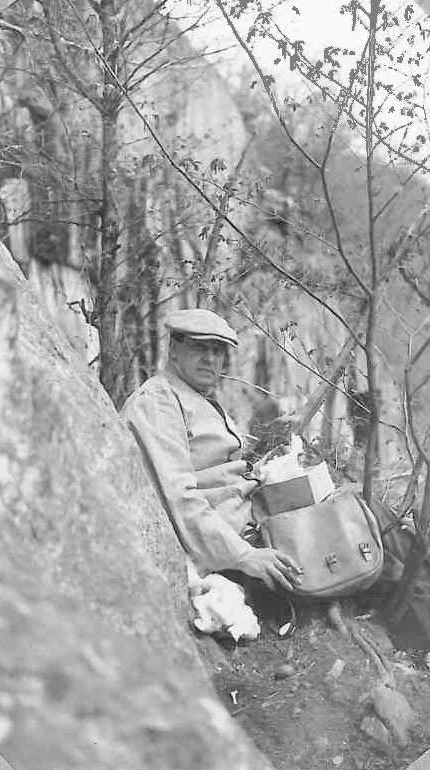
“With the recent acquisition of additional specimens, Karl A. Pember of Woodstock, clerk of Windsor County, whose hobby is ornithology, now has one of the largest collections of hawks’ eggs in the country. More than once has Mr. Pember risked his life in order to obtain, from an almost inaccessible cliff ‘aerie’ the eggs which he wanted. Three husky and daring “mountaineers” usually accompany County Clerk Pember on his egg-hunting expeditions. They are Benton Pinney, Edwin Howes, and George Brockway, the last a brother-in-law of Mr. Pember, and a student at Dartmouth College. In addition to eggs, Mr. Pember has, with the aid of his three assistants, taken many unusual photographs of hawks and their cliff-bound homes, which have been mounted and carefully tabulated. He used to gather everything from butterflies to postage stamps, but during all his thirty or more years in making such collections, he enjoys nothing more than climbing to the most inaccessible places for a mere egg.”
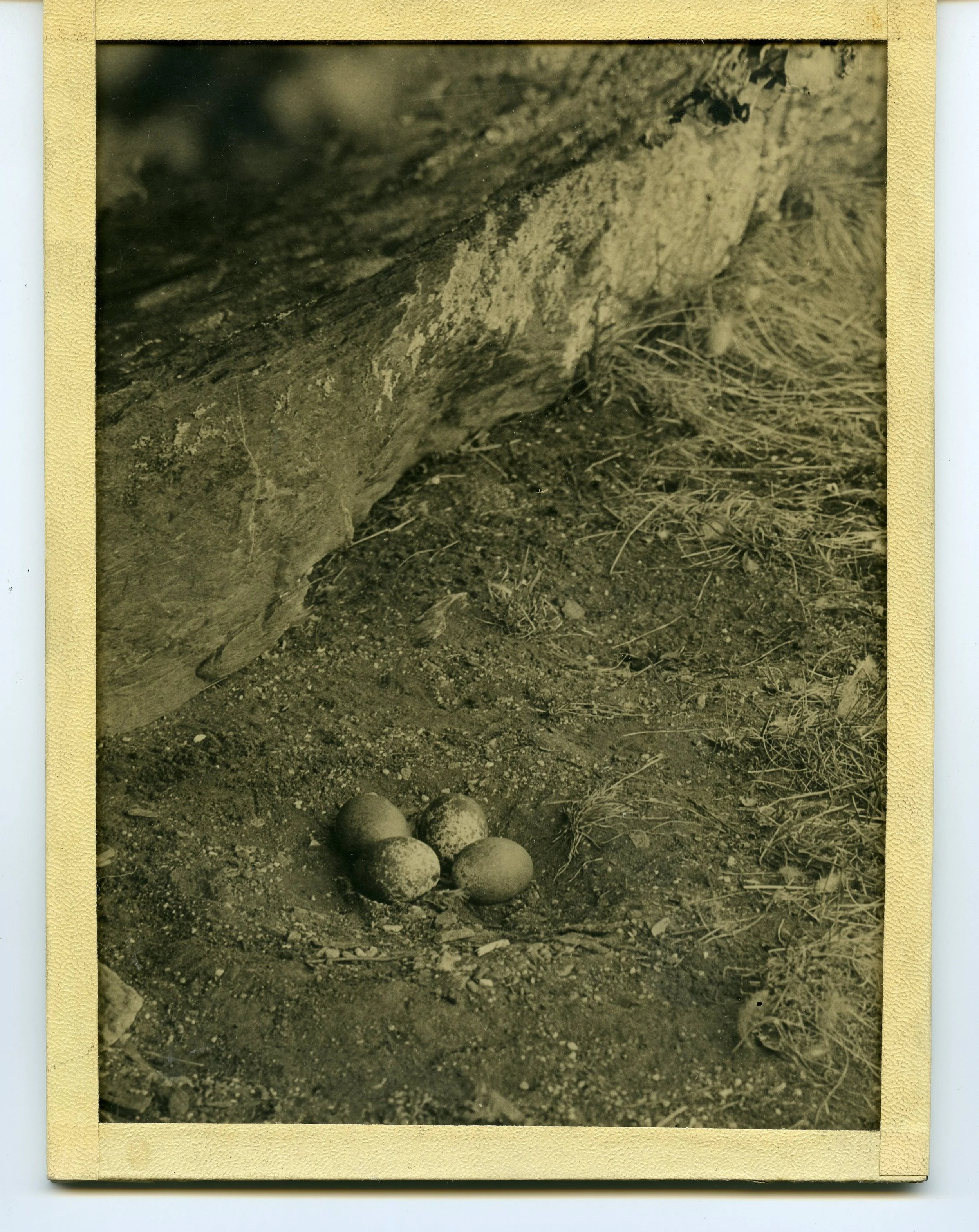
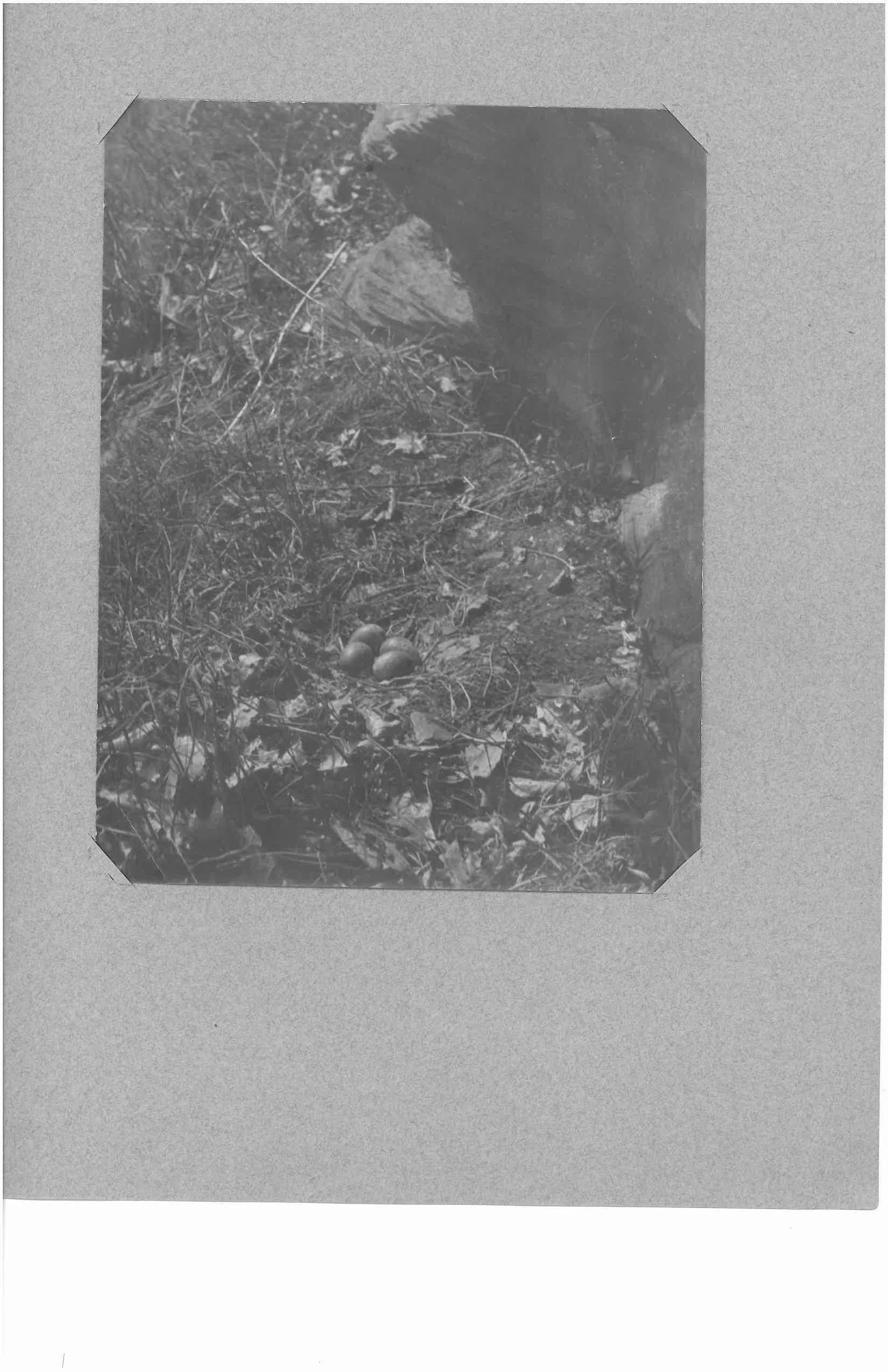
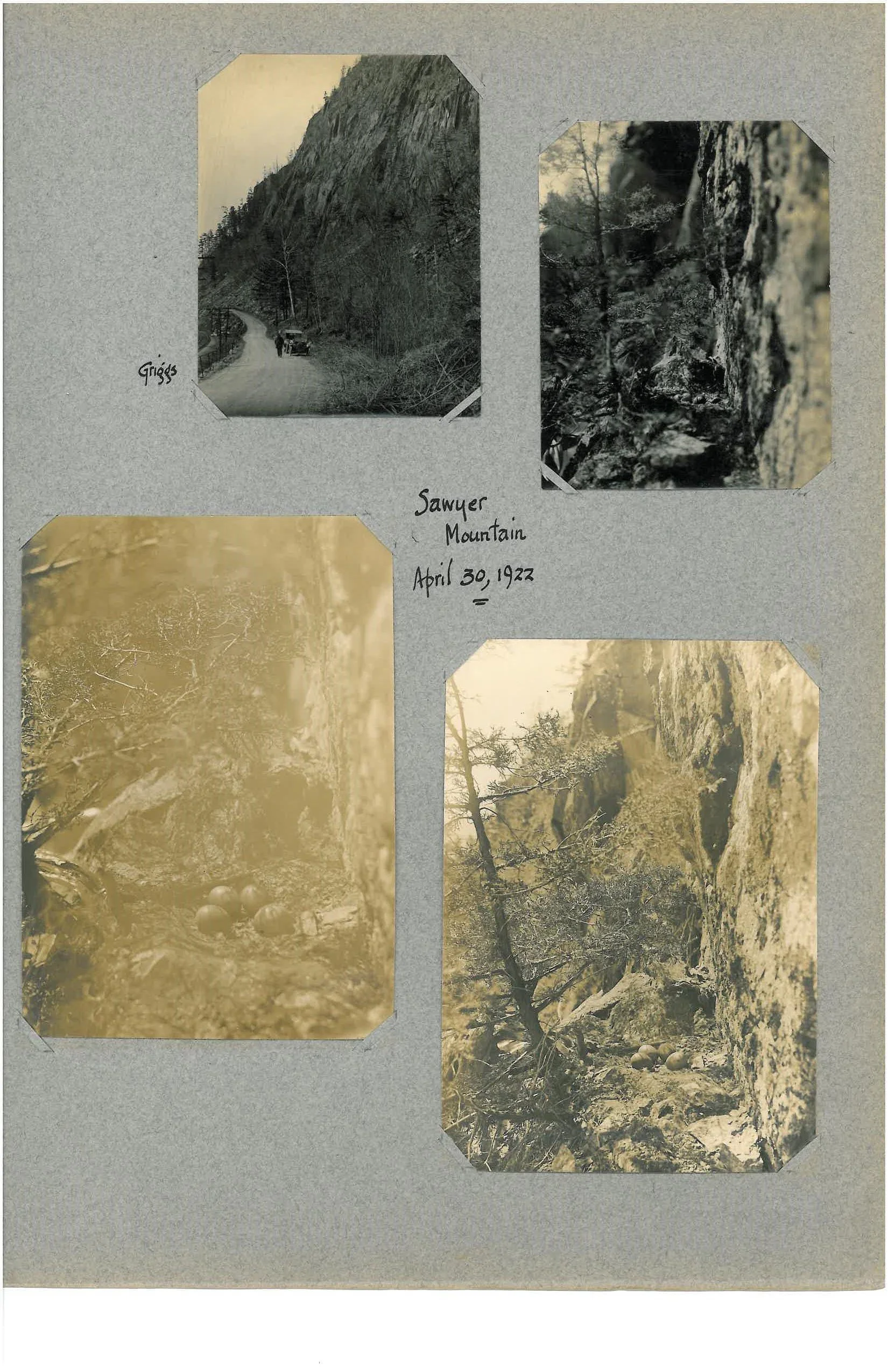
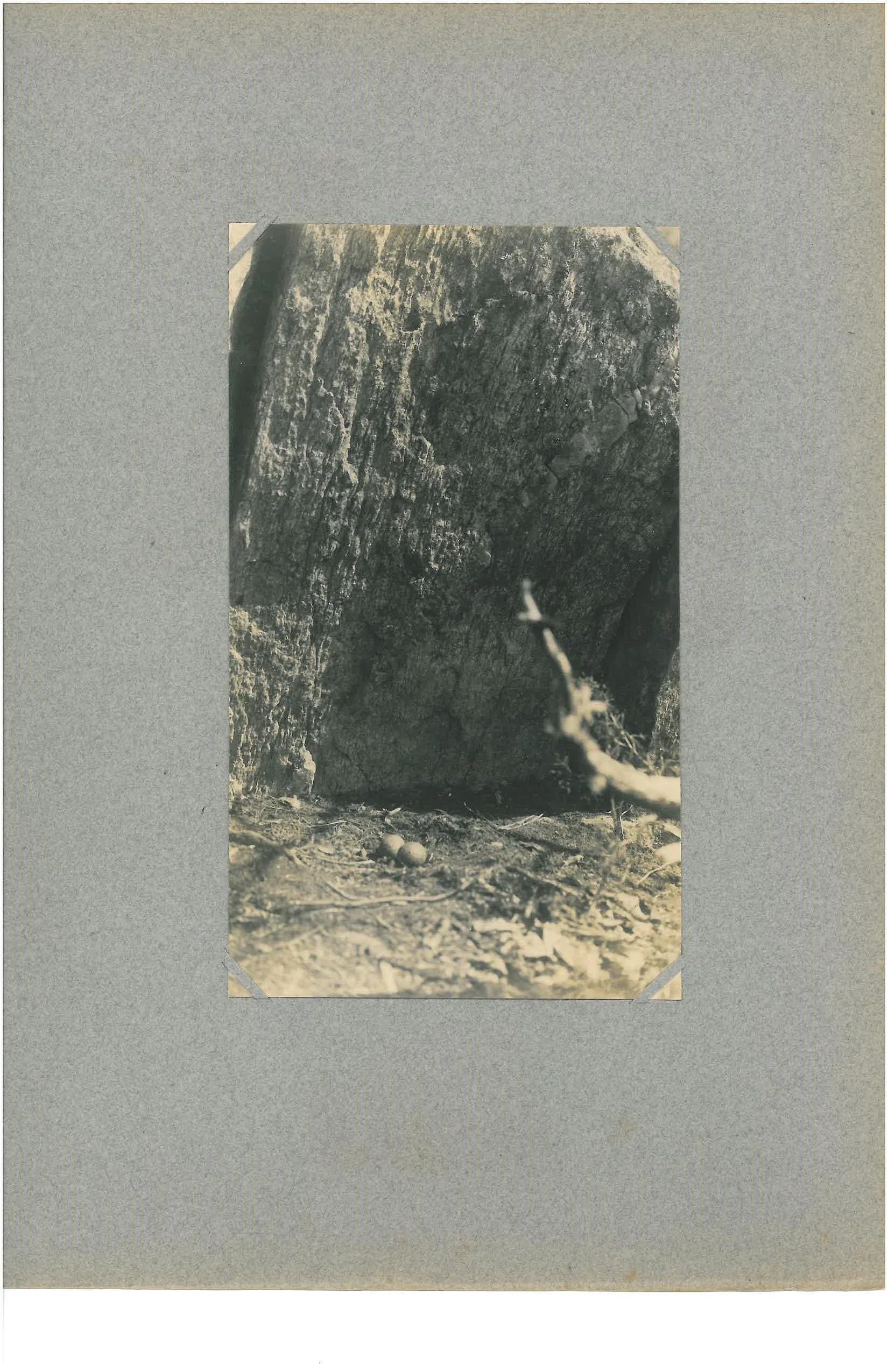
Peregrine Falcon eggs on Vulture Mountain. 1922
Karl Albrecht Pember (1879-1928) was a resident of Woodstock, and he was later appointed State Ornithologist of Vermont in April 1923. He delivered a number of lectures on bird protection and the economic value of birds. In March 1924, he published a “List of the Birds of Woodstock, Hartland and Vicinity.” Karl was also an amateur photographer. Karl Pember wrote, “A prepared mince-meat box, a few bits of wood and a small piece of tin with a pin-hole in the center were the materials. A jack-knife, some lamp-black paint and a modicum of glue composed the equipment that gave me my first camera more than thirty years ago. And it worked. I have my very first 2 X 2 inch negative tucked away somewhere among my treasures now. And that, as the blacksmith remarked to the carpenter, is the way I got my start in life.”
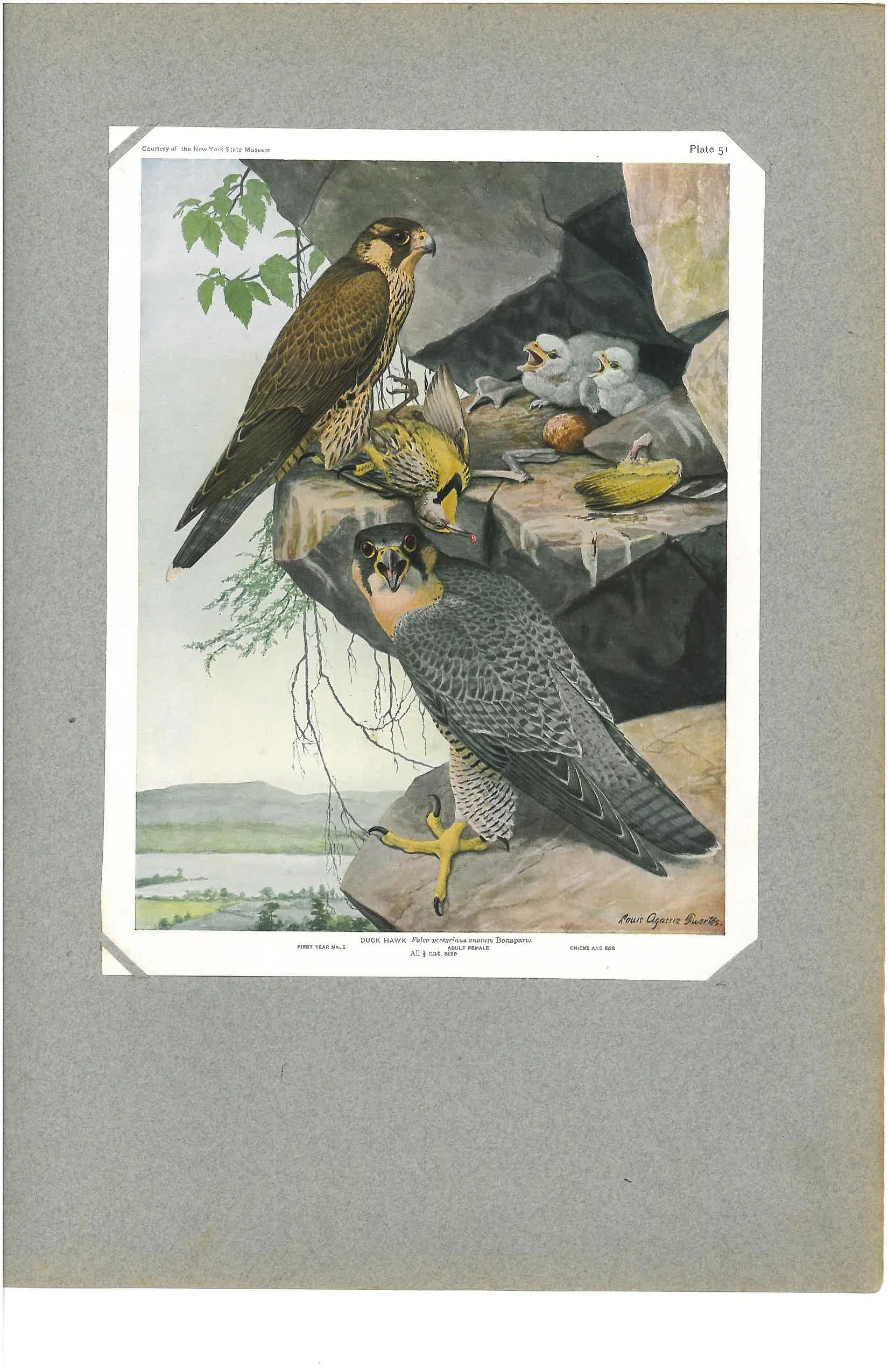
Pember was interested in oology and particularly in the eggs of the Duck Hawk, more commonly known as the Peregrine Falcon. Oology is the study of eggs, namely bird eggs (and may also include the study of nests). During the Victorian era, British, Europeans and Americans were obsessed with oology and caliology. Naturalists and bird hobbyists enthusiastically and proudly collected bird eggs and nests for display in private collections and museums.
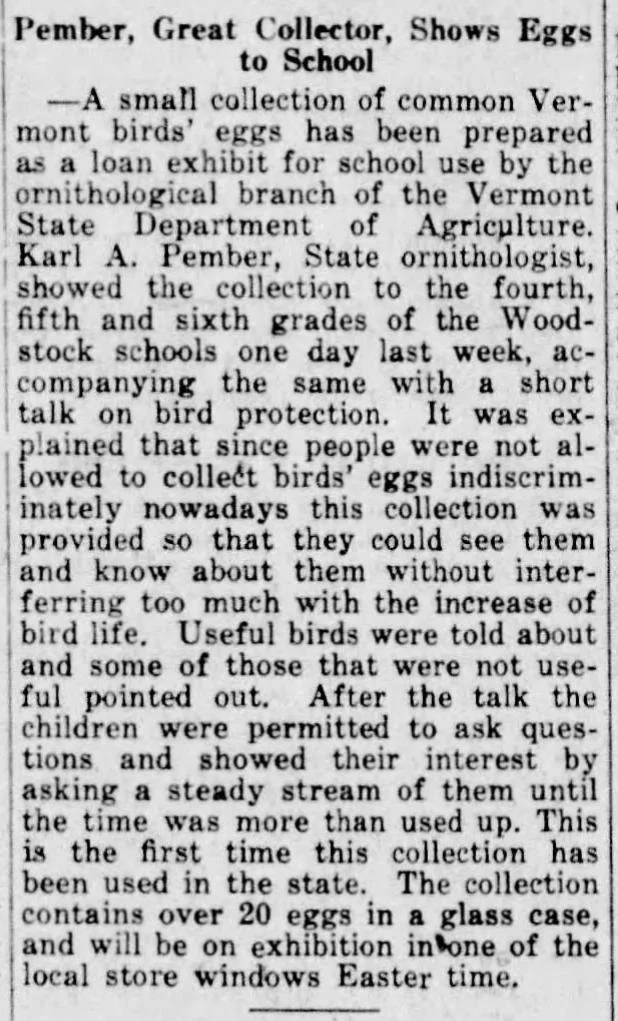
In a lecture on “The Peregrine Falcon in Vermont,” delivered before the Vermont Botanical and Bird Club in January 1926, he explained his interest in this species as follows: “Back in the early nineties I made a collection of birds eggs and gave this occupation a bit more than the average fervor usually displayed amongst the boys of that time… But I found that as the years had come along I could not rob a bird’s nest as readily as I used to and so narrowed down my oological activities to birds of prey… One day in June 1918 I was pottering about with my egg collection when a farmer came in and said that there was a pair of ‘Vultures’ that lived on a cliff behind his farm and took heavy toll from his poultry and that of his neighbors. As I knew that these couldn’t possibly be Vultures in Vermont, birds that nested on a cliff and were big enough to carry off hens were certainly worthwhile investigating and I called at his farm near Gaysville just as soon as I could… We didn’t see the birds that trip but identified them later from the egg taken at that time.”
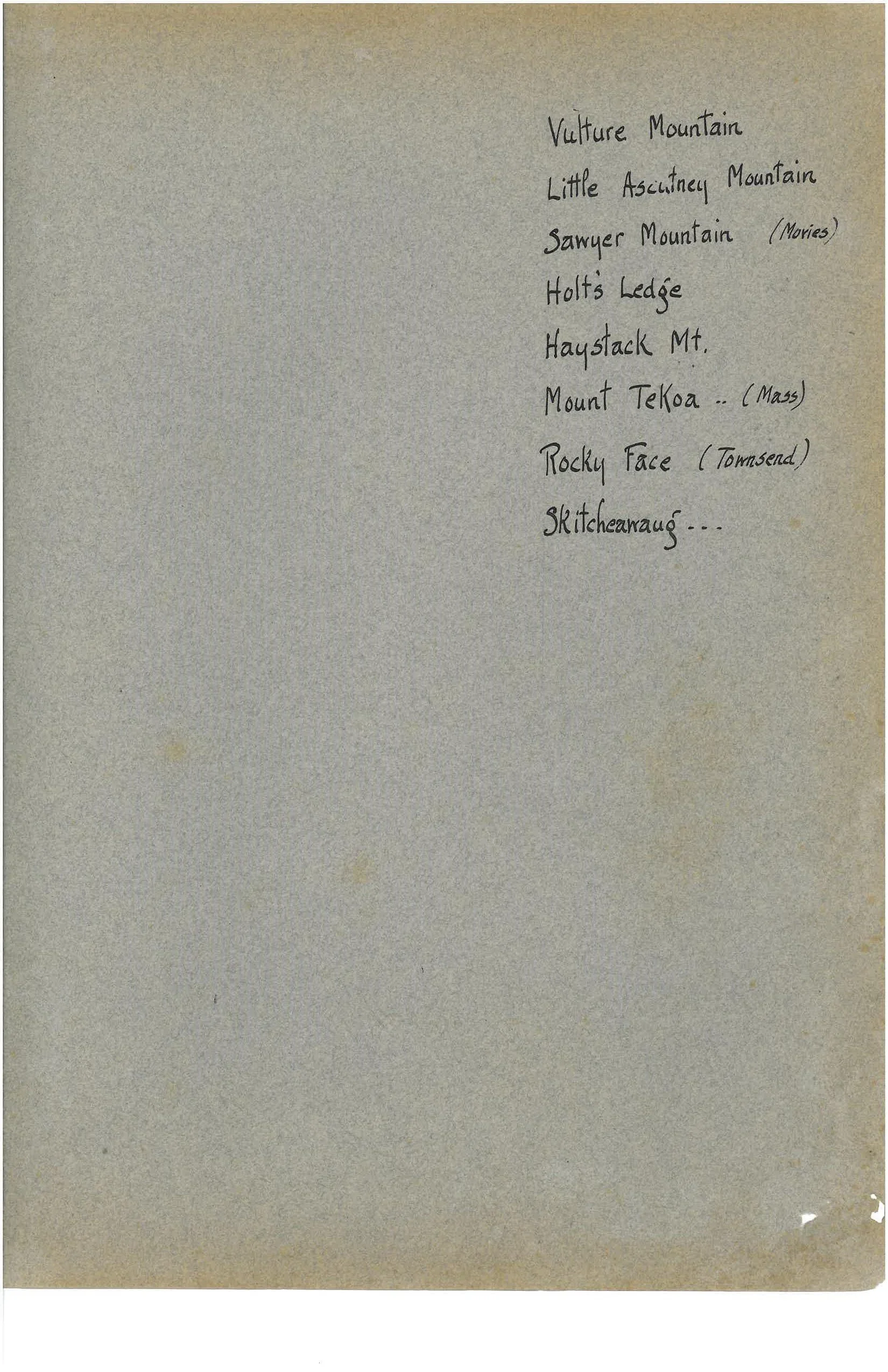
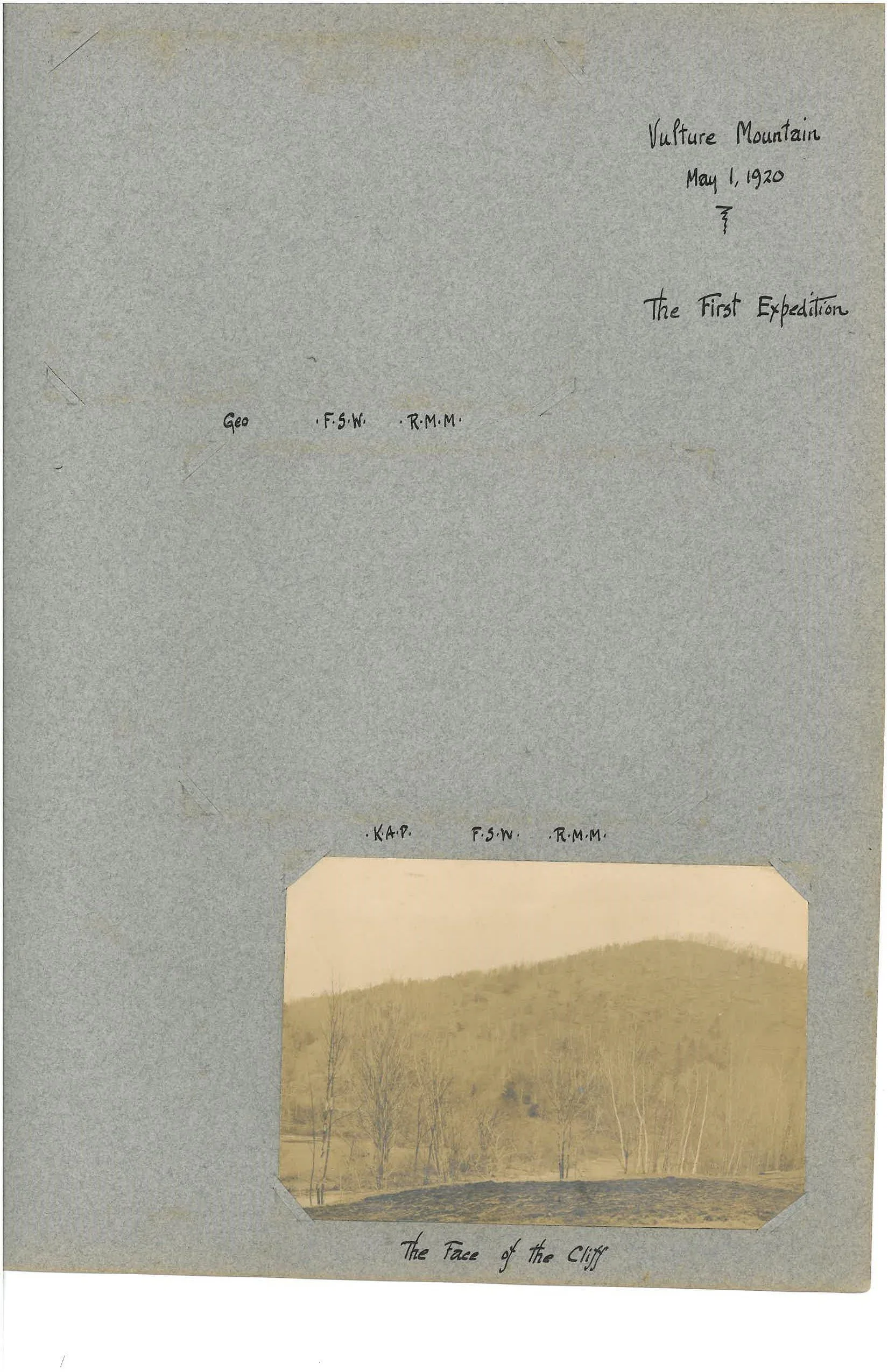
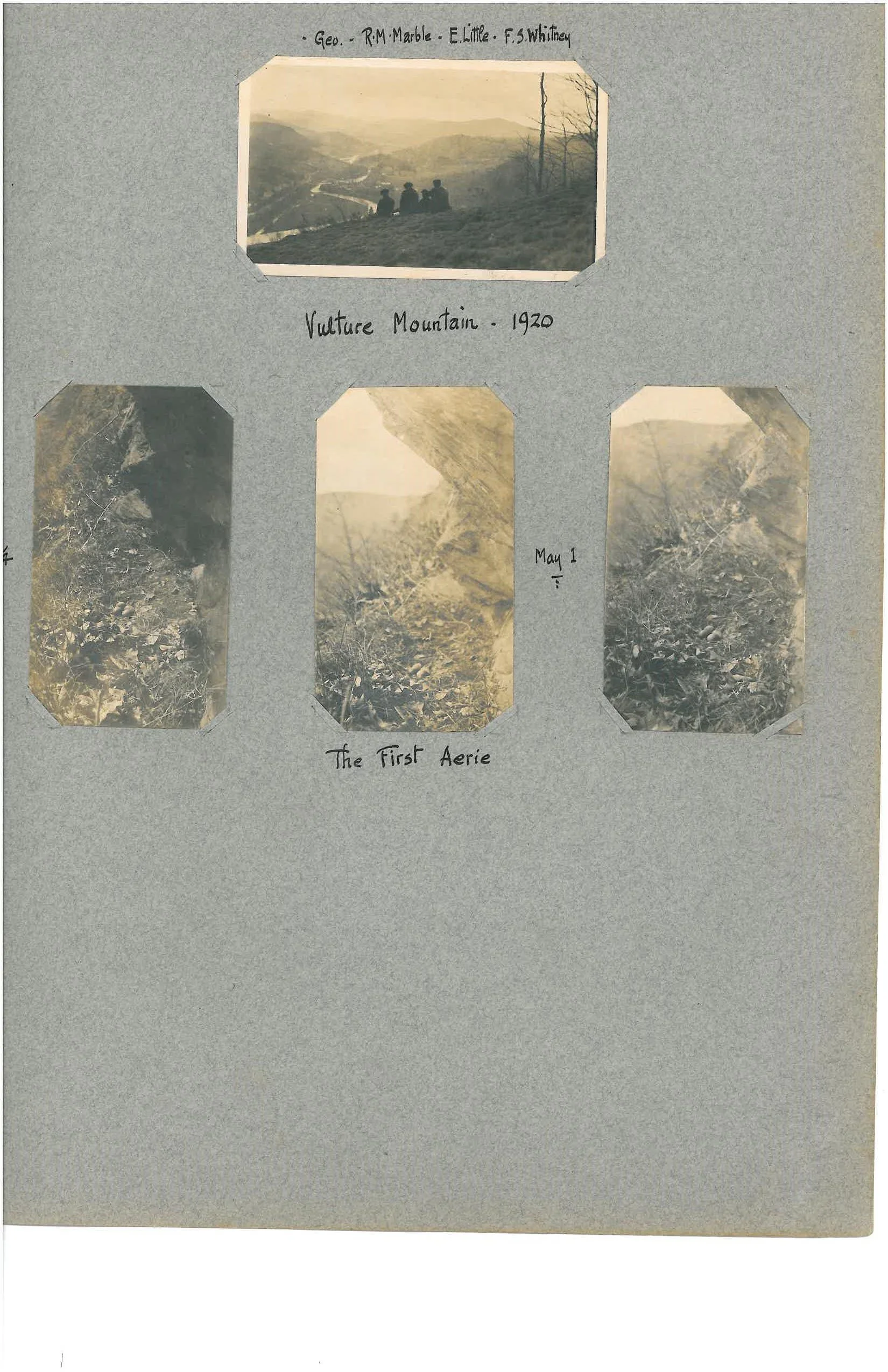
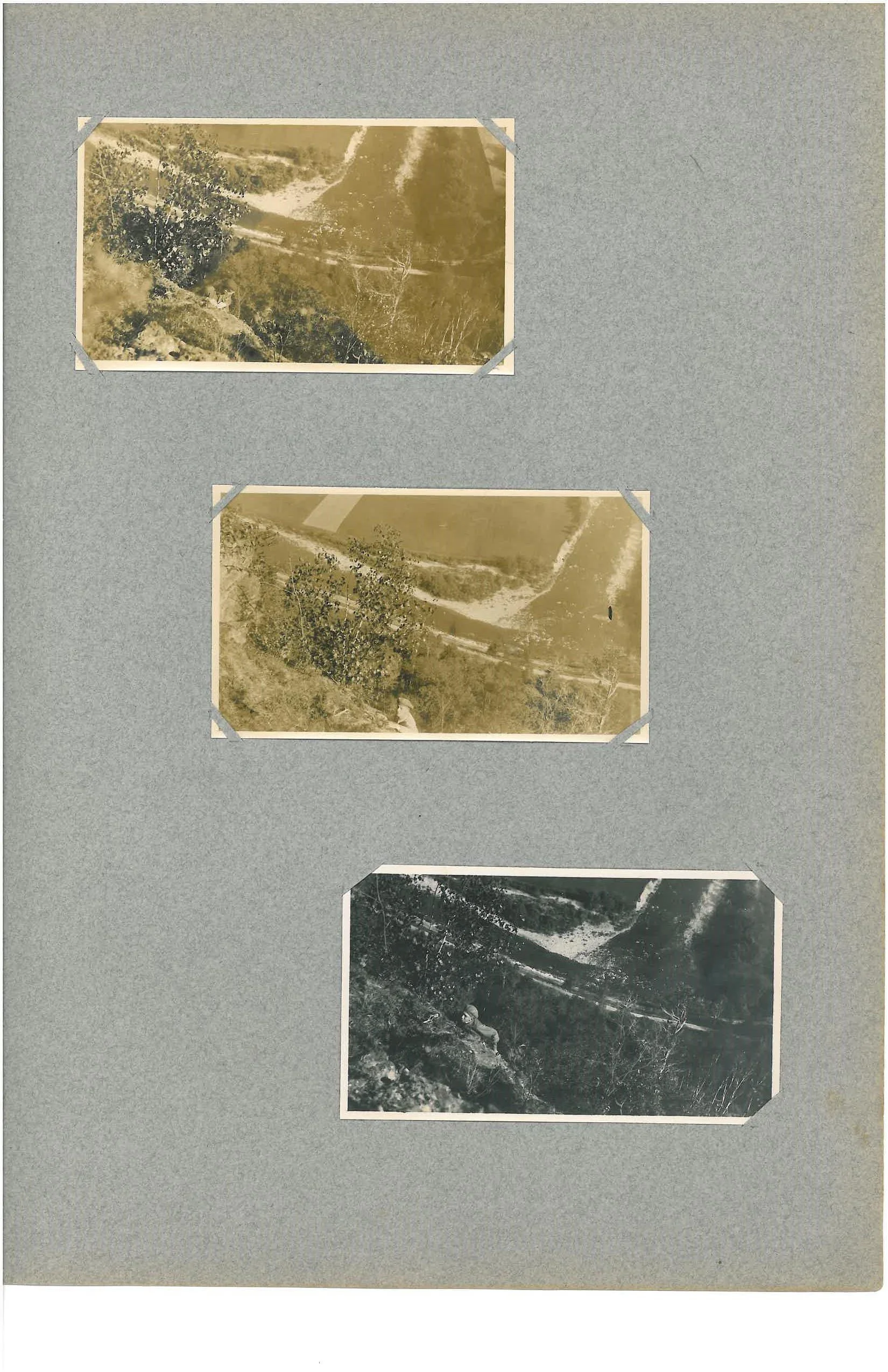
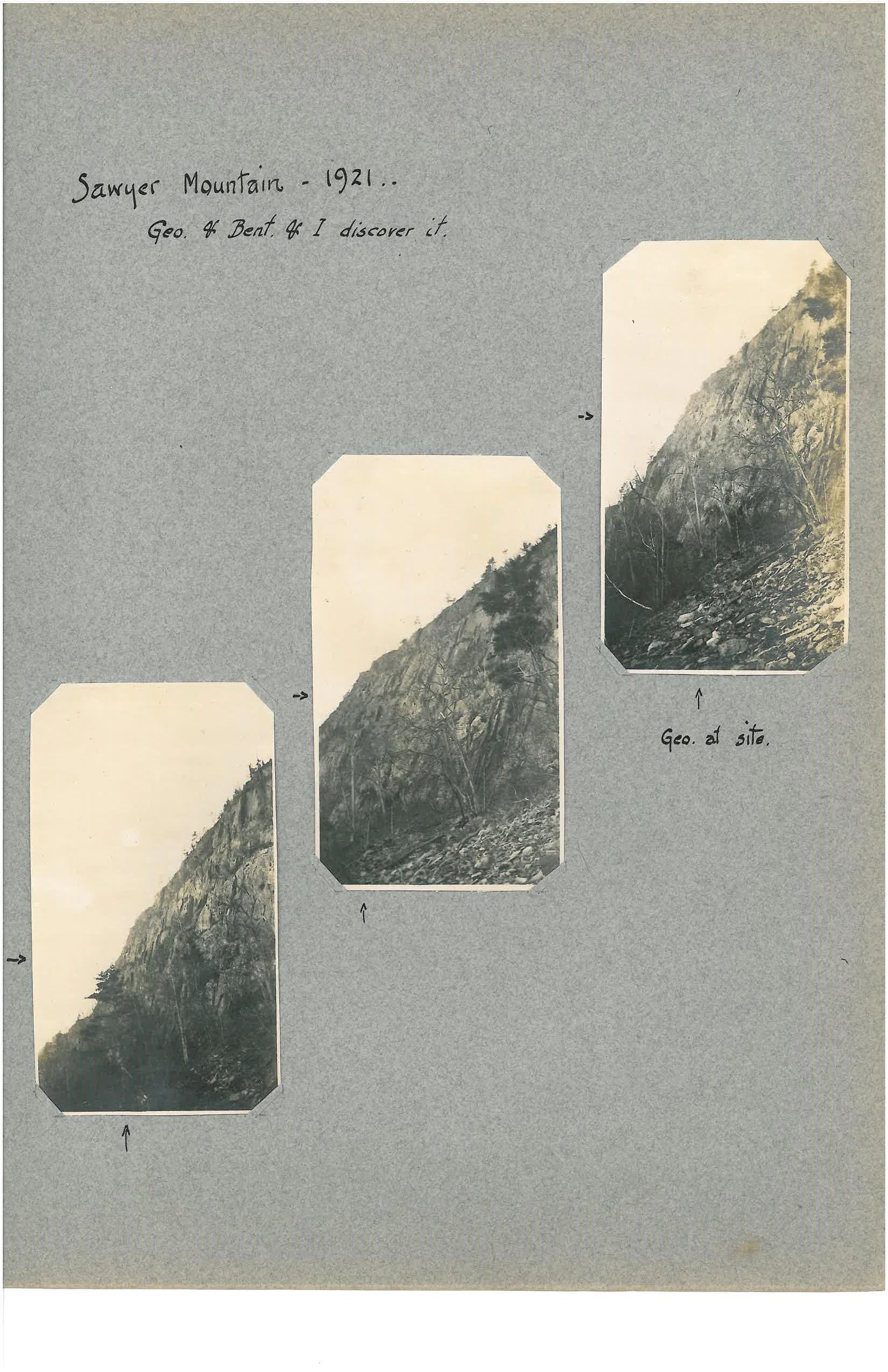
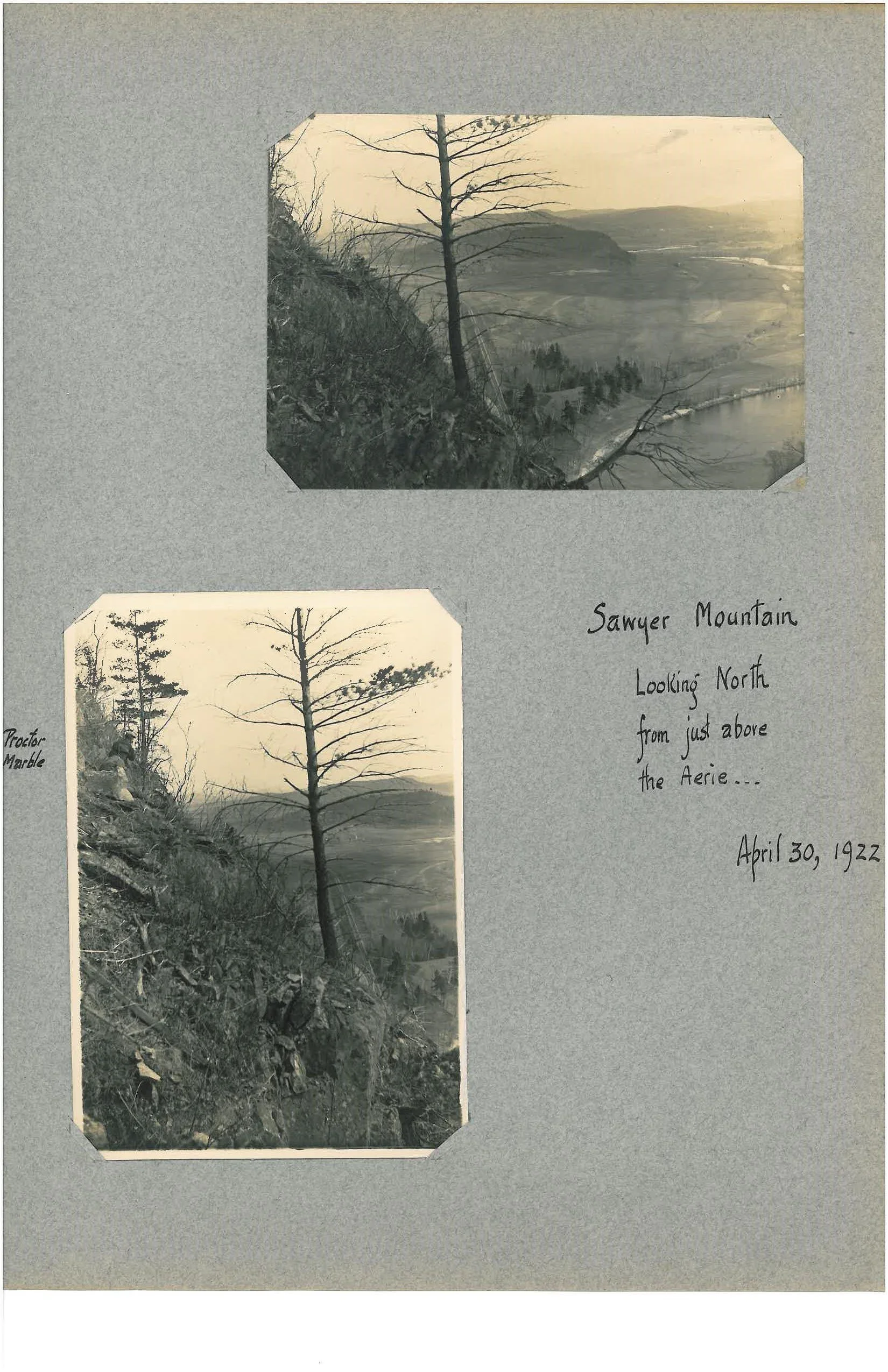
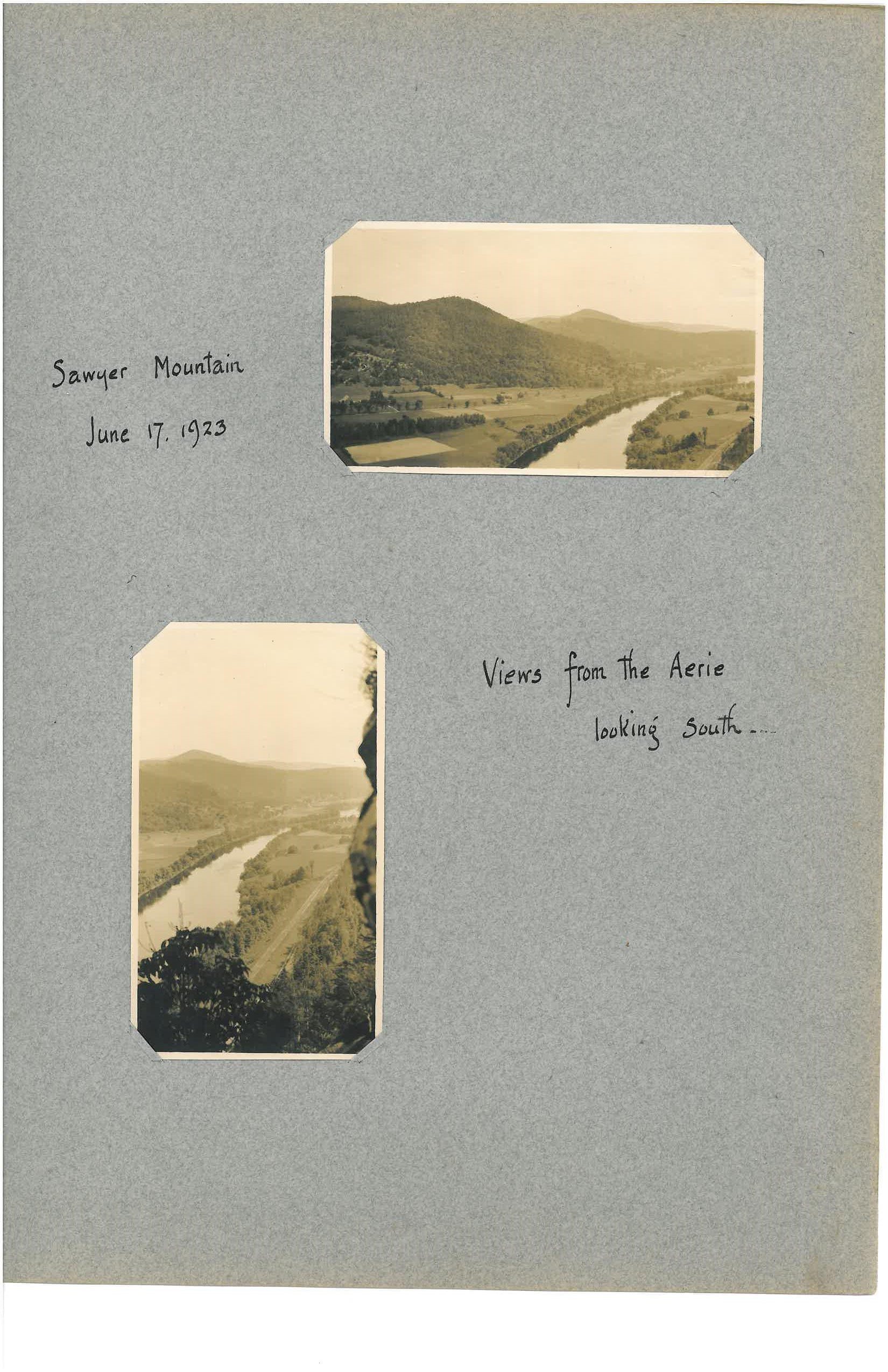
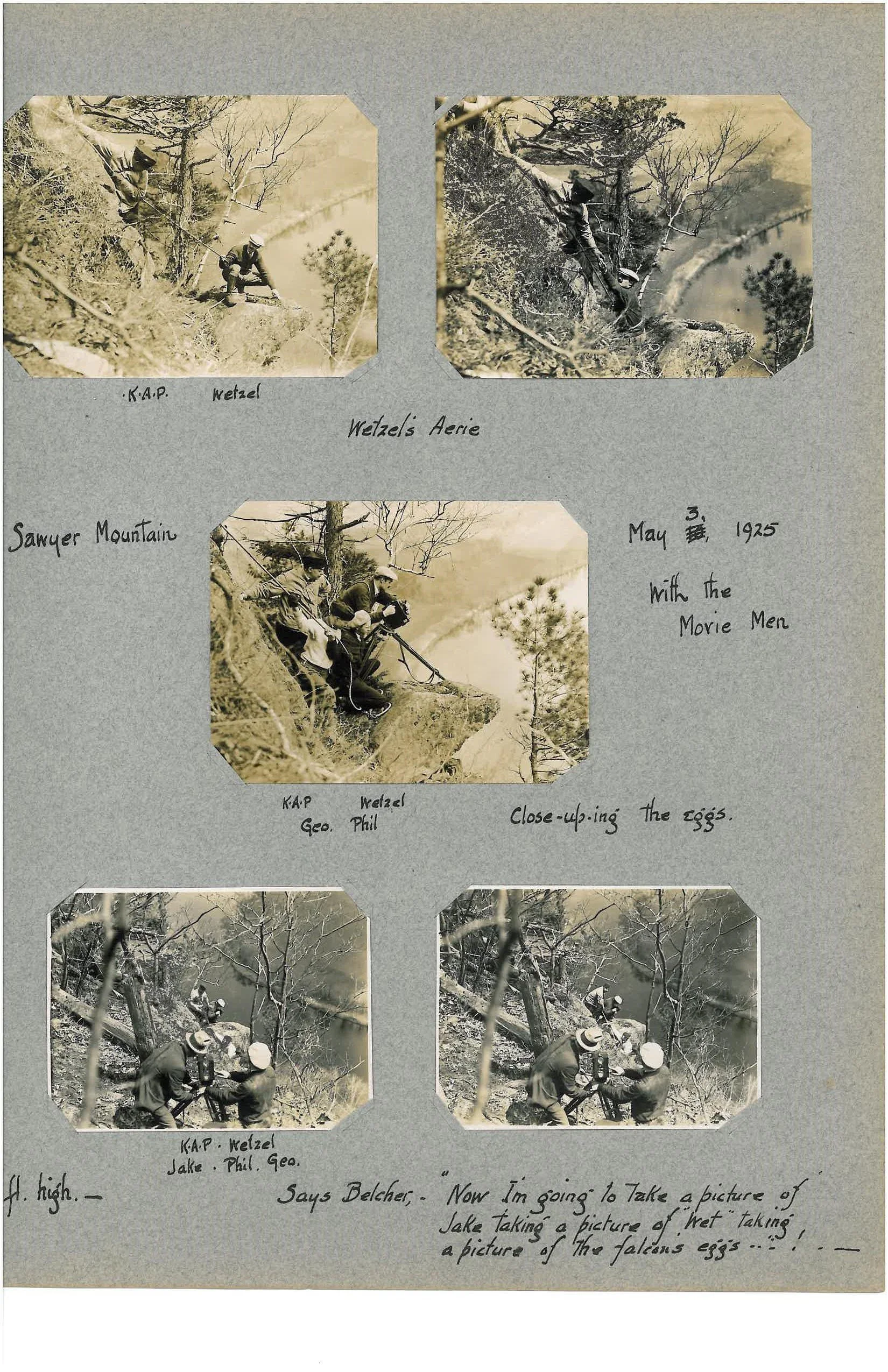
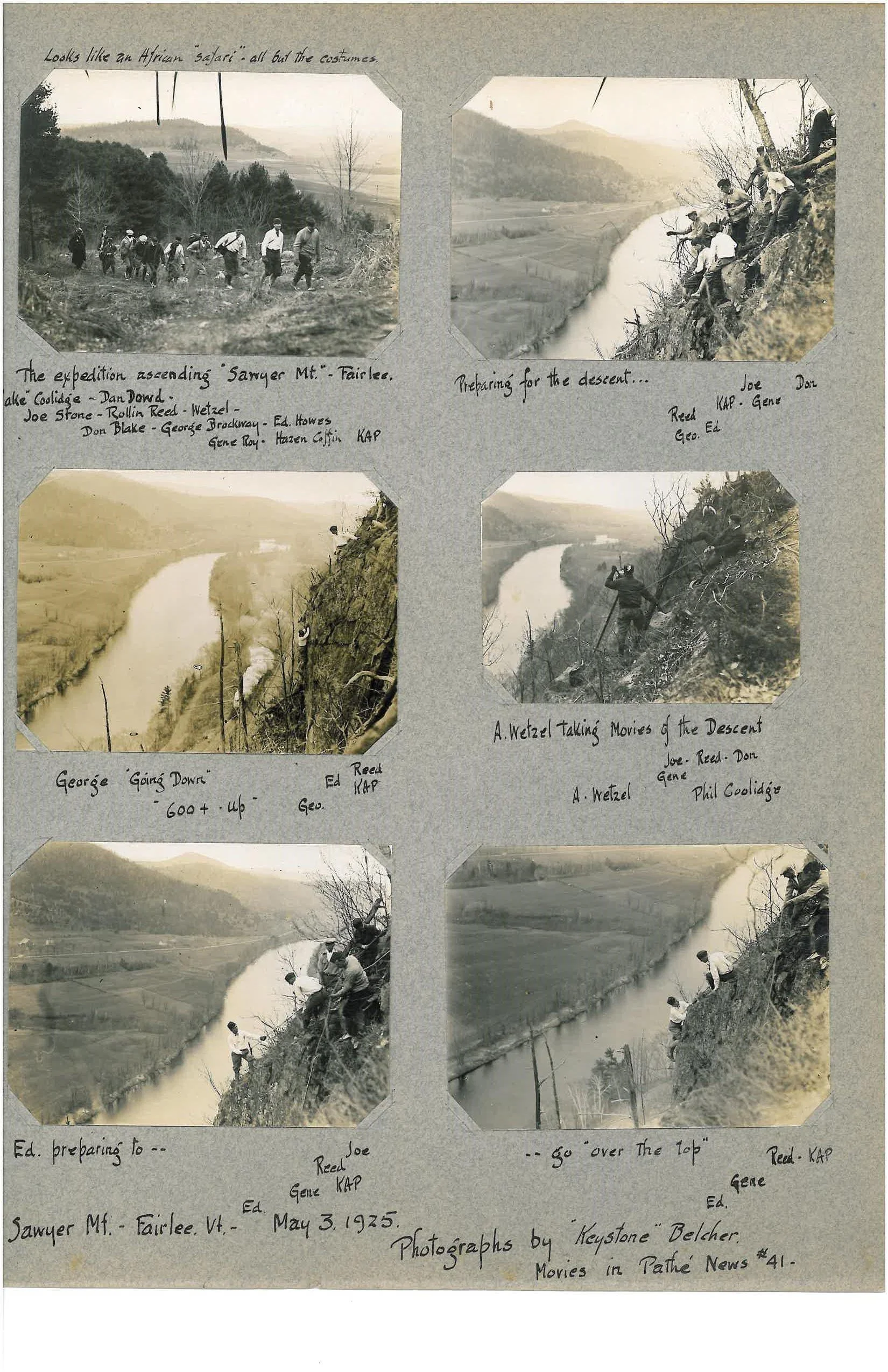
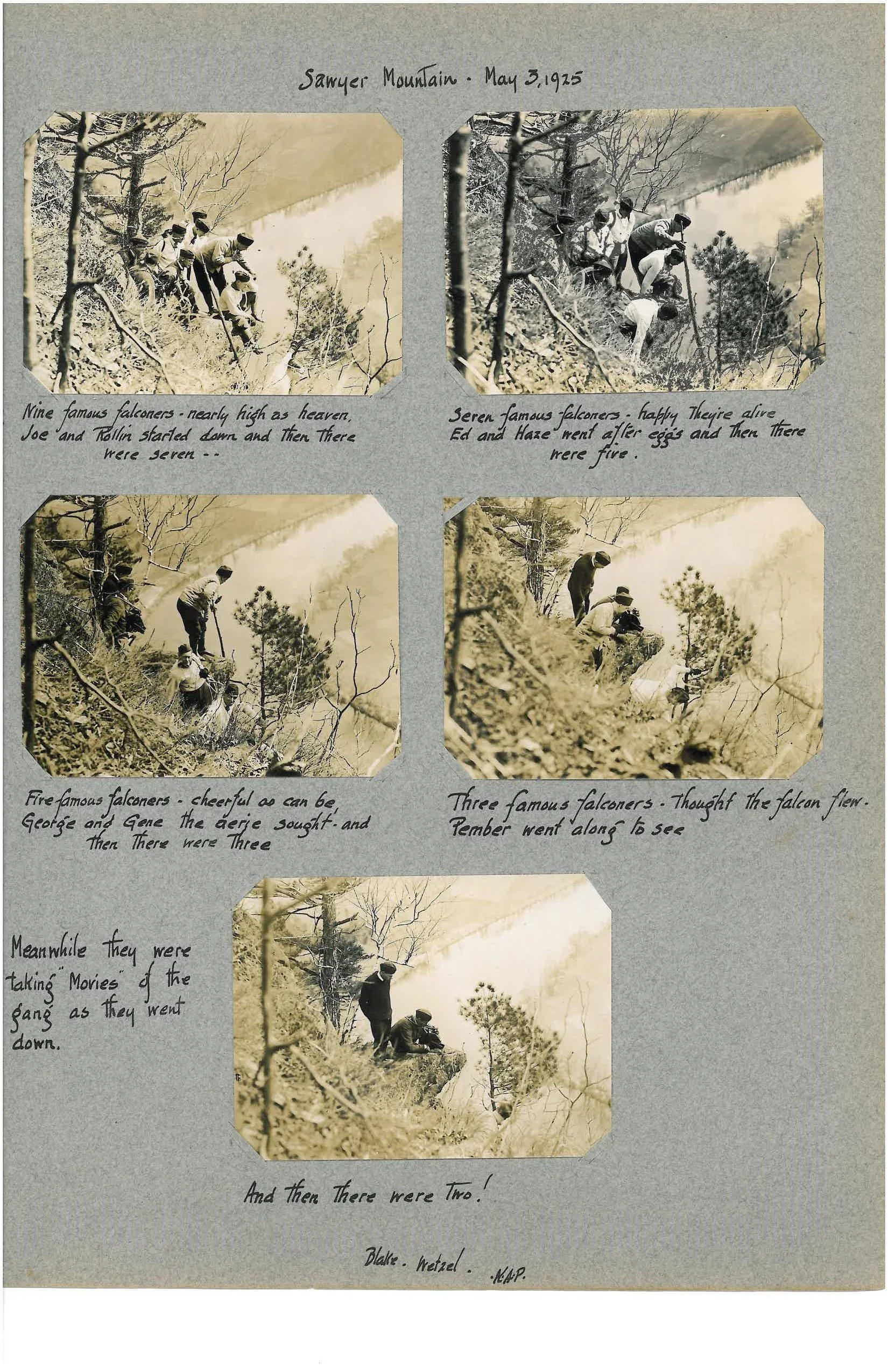
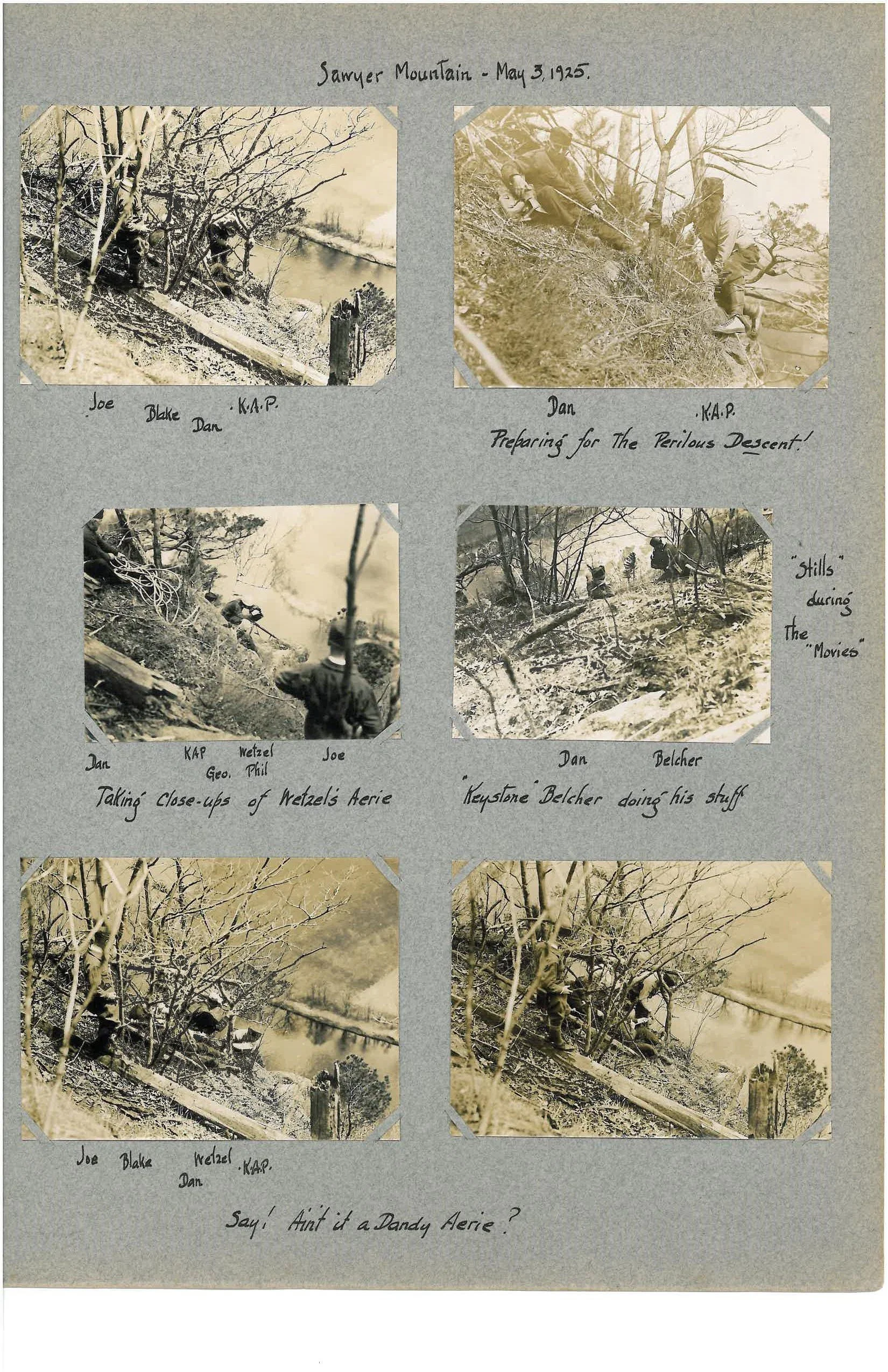
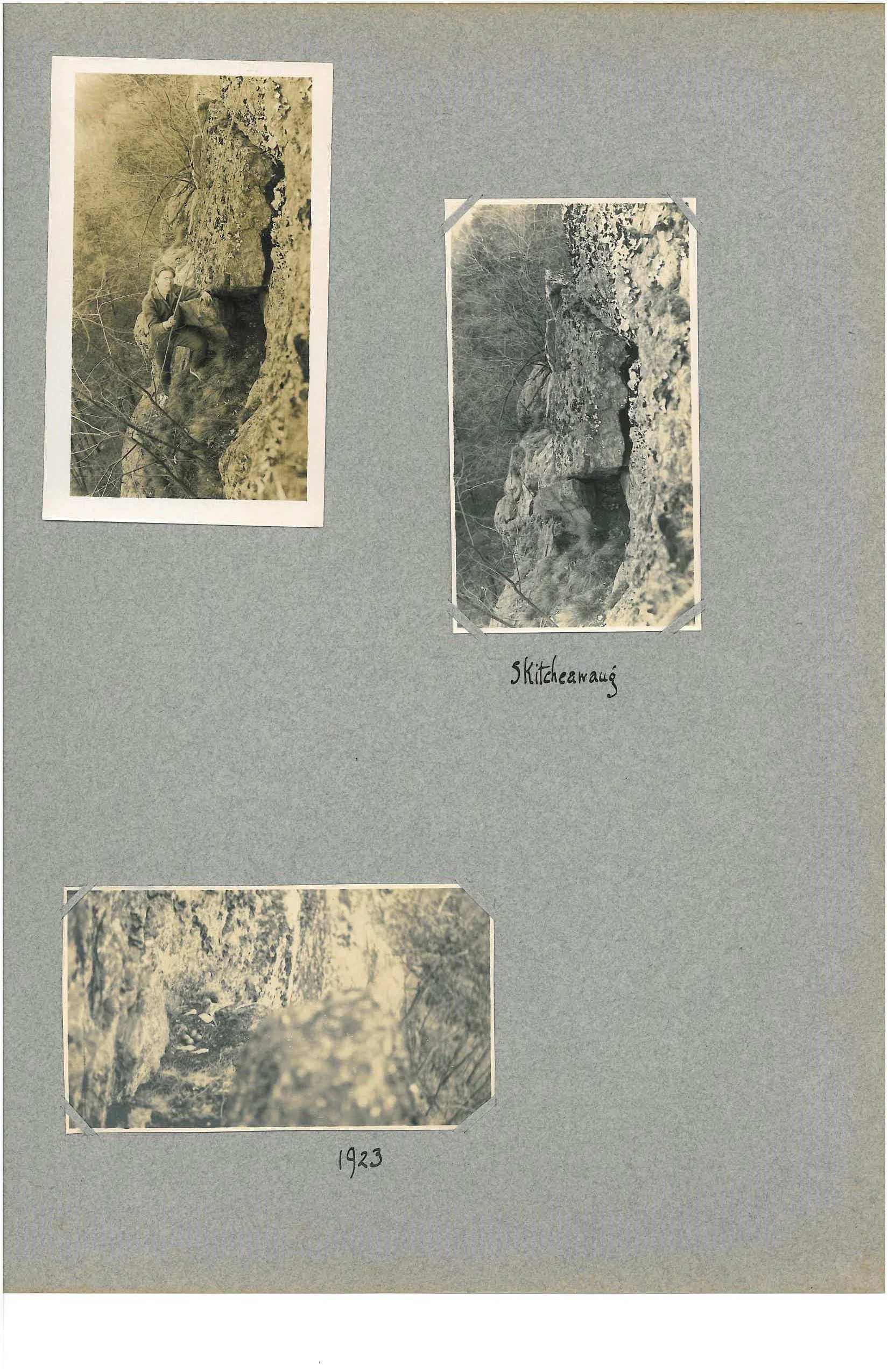
Ever since that incident, Karl maintained his interest in the Duck Hawk. He visited at least 15 aeries, brought together a fine series of 25 sets of this species, and published a brief article on “Duck-hawkiana” in The Ooligist for May 1923. Around that same time, he helped to found The Falconers which was an amateur ornithology group with a distinct emphasis on the collecting of Peregrine Falcon eggs. The Falconers rode in an old Model T truck called “Lem.” It was driven by either Richard Marble or Karl Pember. A myriad of schoolboys went along, and all were provisioned by either Mrs. Marble or Mrs. Pember. The regular traveling ration consisted of large quantities of Moxie and bananas. Mrs. Pember made suitcases full of sandwiches and cookies. Karl had elaborately prepared “Lem” by painting camouflage designs on it. The Peregrine Falcon was known to return each year to the same nesting spot, usually near vertical cliffs along a river, where its favorite food, the duck, would regularly pass by. So these collectors would choose as their goal for the day one of the known sites along the middle section of the Connecticut River, or on one of its tributaries, the Black, White, or Ompompanoosac River. Some of the collecting sites are Holt’s Ledge in Lyme, New Hampshire, and Vulture Mountain, near Gaysville; Hawkes Mountain, near Felchville; and Skitcheawaug Mountain, near Springfield — all in Vermont. Karl also took several juvenile birds from nesting sites to raise at his house. There are no other accounts of The Falconers after 1924. We are left with two extraordinary photo albums detailing some of the expeditions of the club. Karl eventually moved to Arizona due to increased problems with his asthma and soon after died.
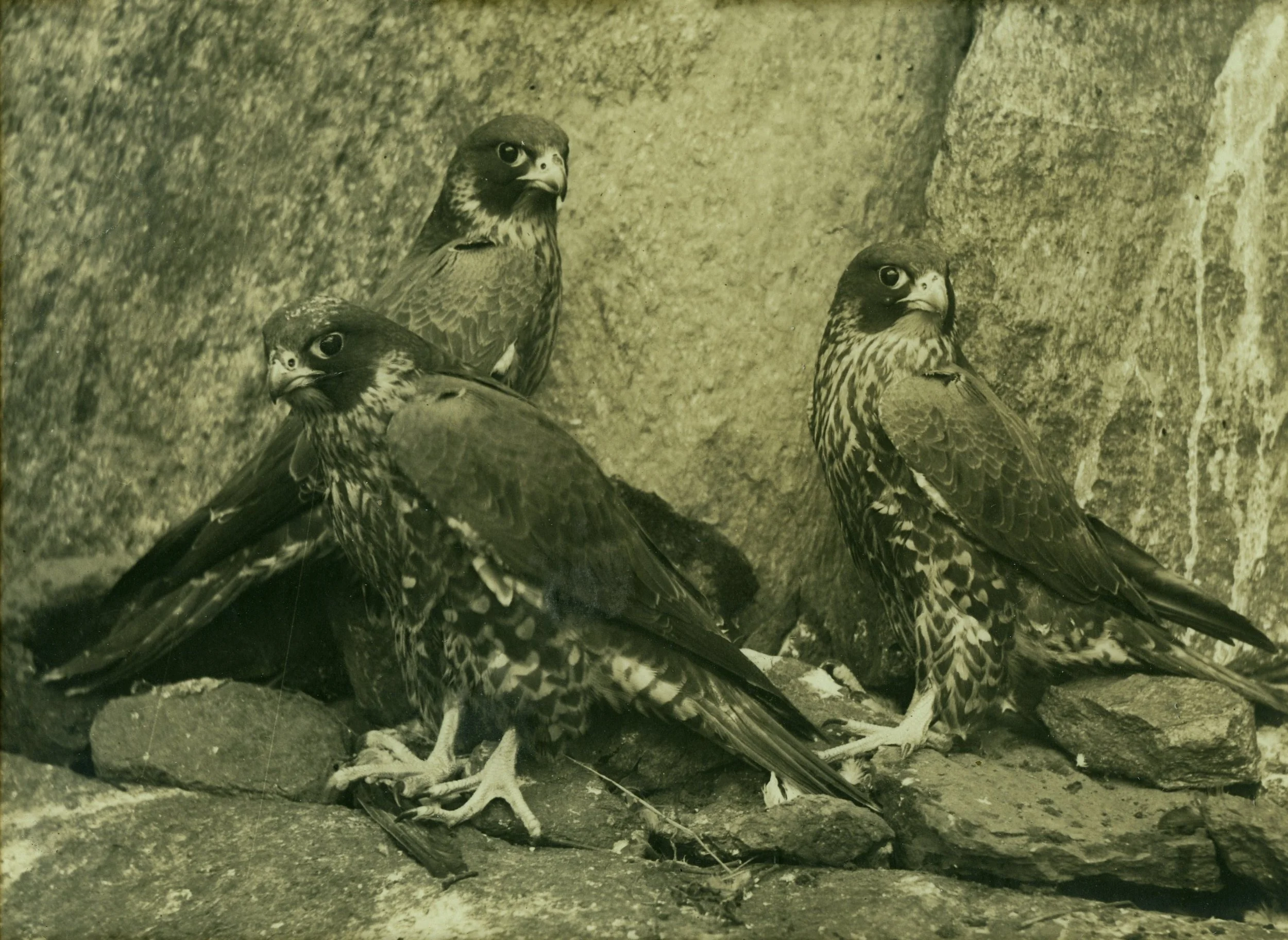
“My hobby happens to be the scaling of cliffs in quest of the eyrie of the Peregrine Falcon. Photographs are a natural consequence. ”
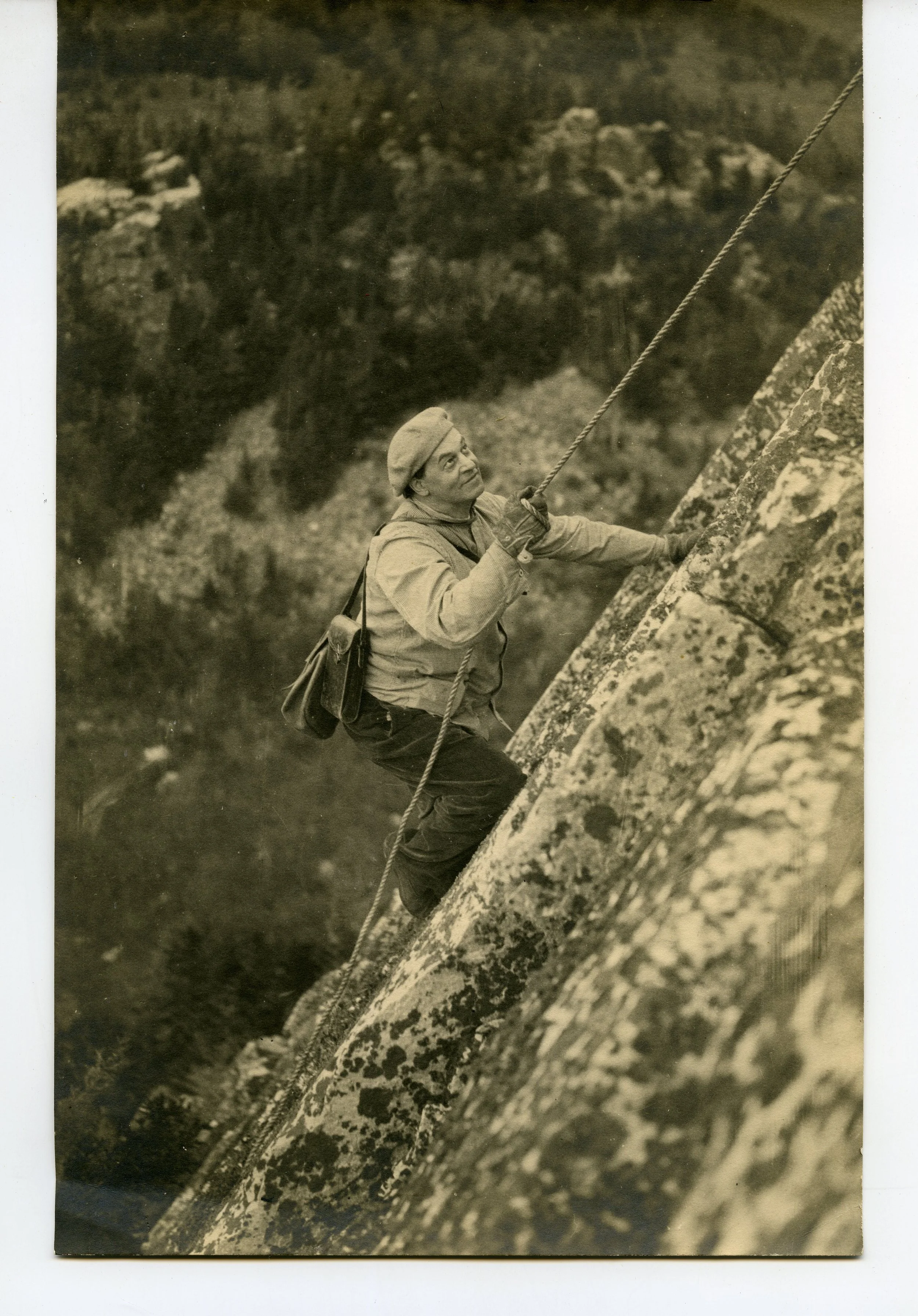
“I equip myself with a pair of corduroy trousers, rubber soled shoes and a denim coat or jumper with capacious side-pockets…and essay the negotiating of various Duck Hawk cliffs with reasonable hope of a successful photographic record of the proceedings.” Karl Pember
““It is the duty of those who feel the urge of seeking such out-of-ordinary things and enjoying the experience of attainment, to provide those who ‘keep the home fires burning’ with a record of their experiences.””
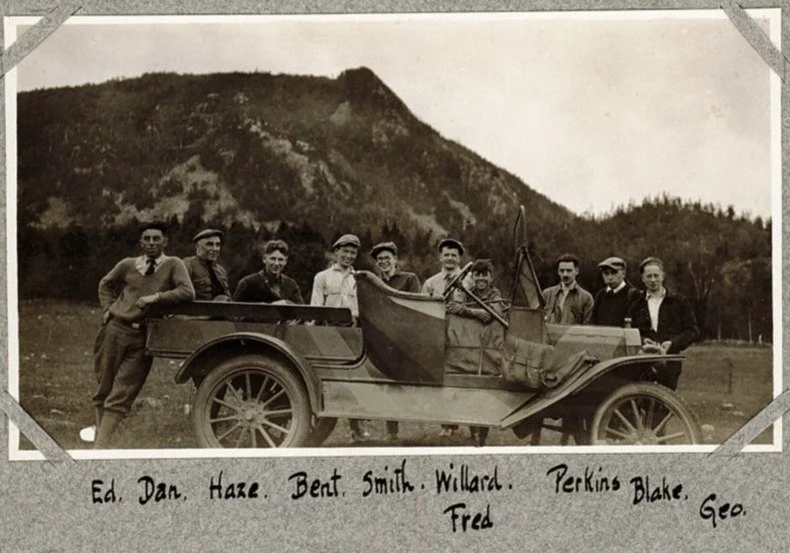
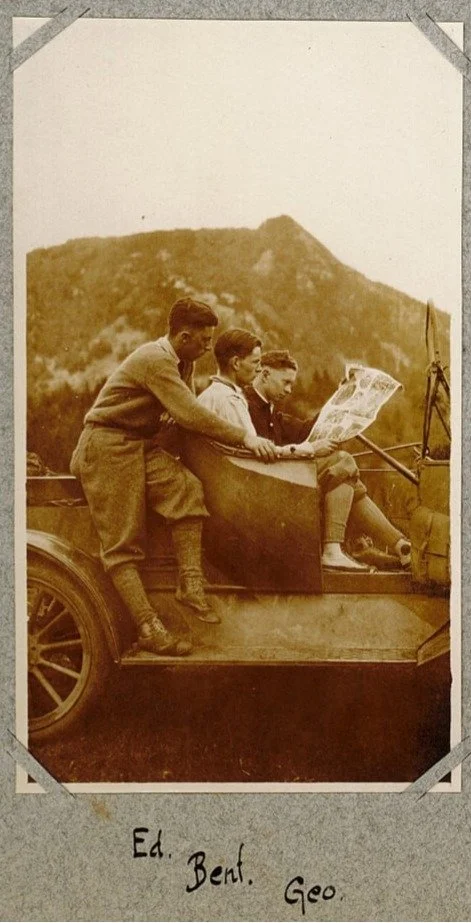
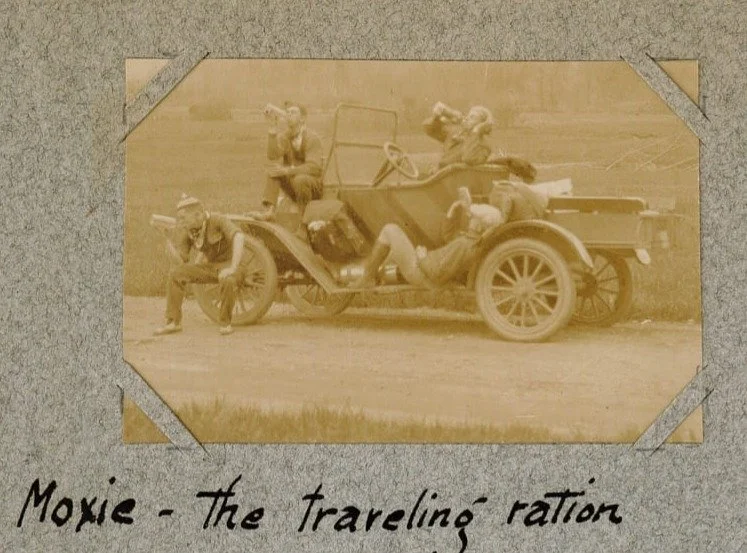
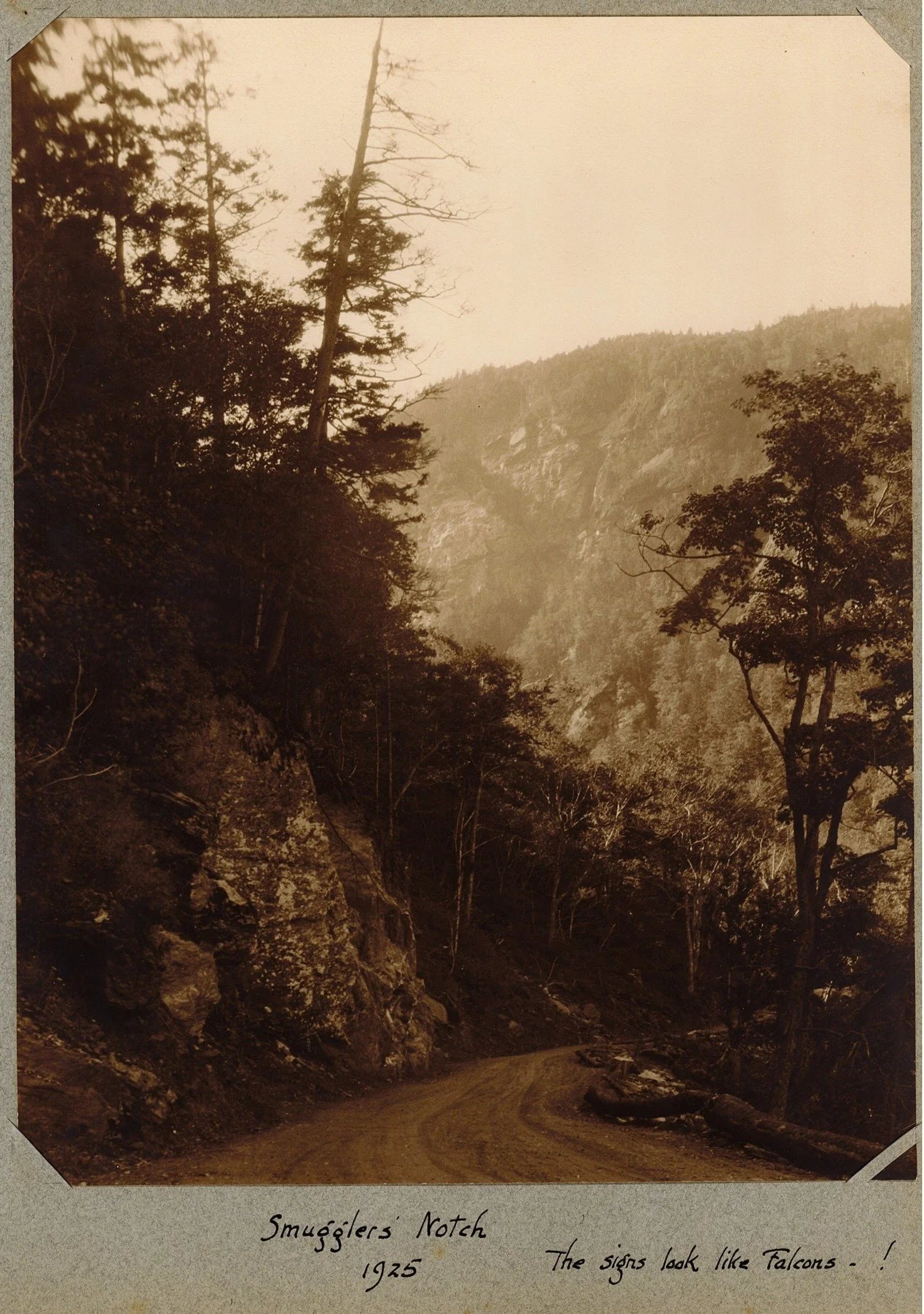
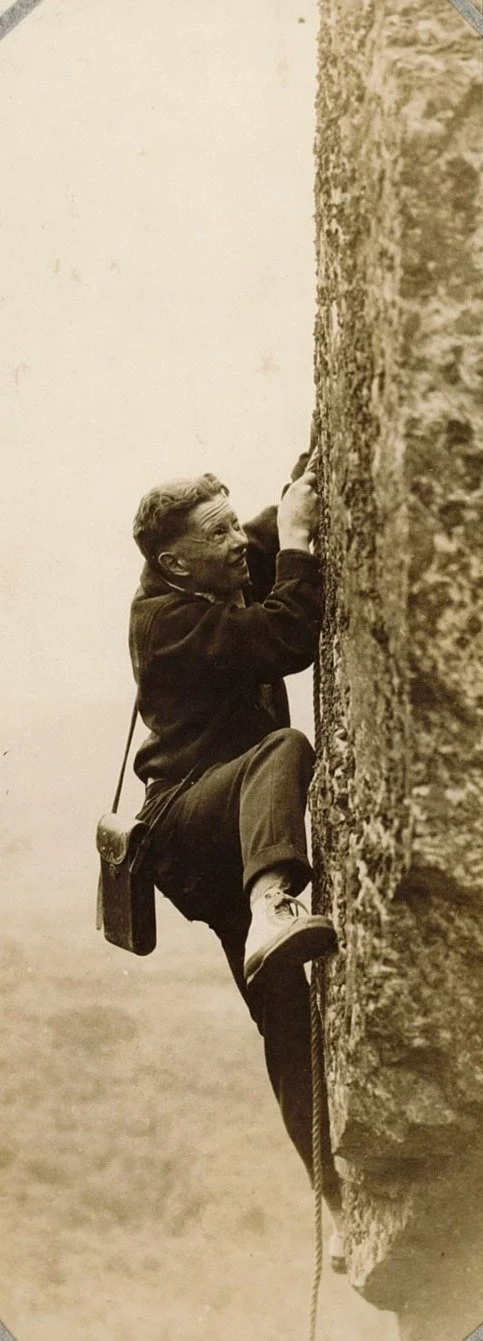
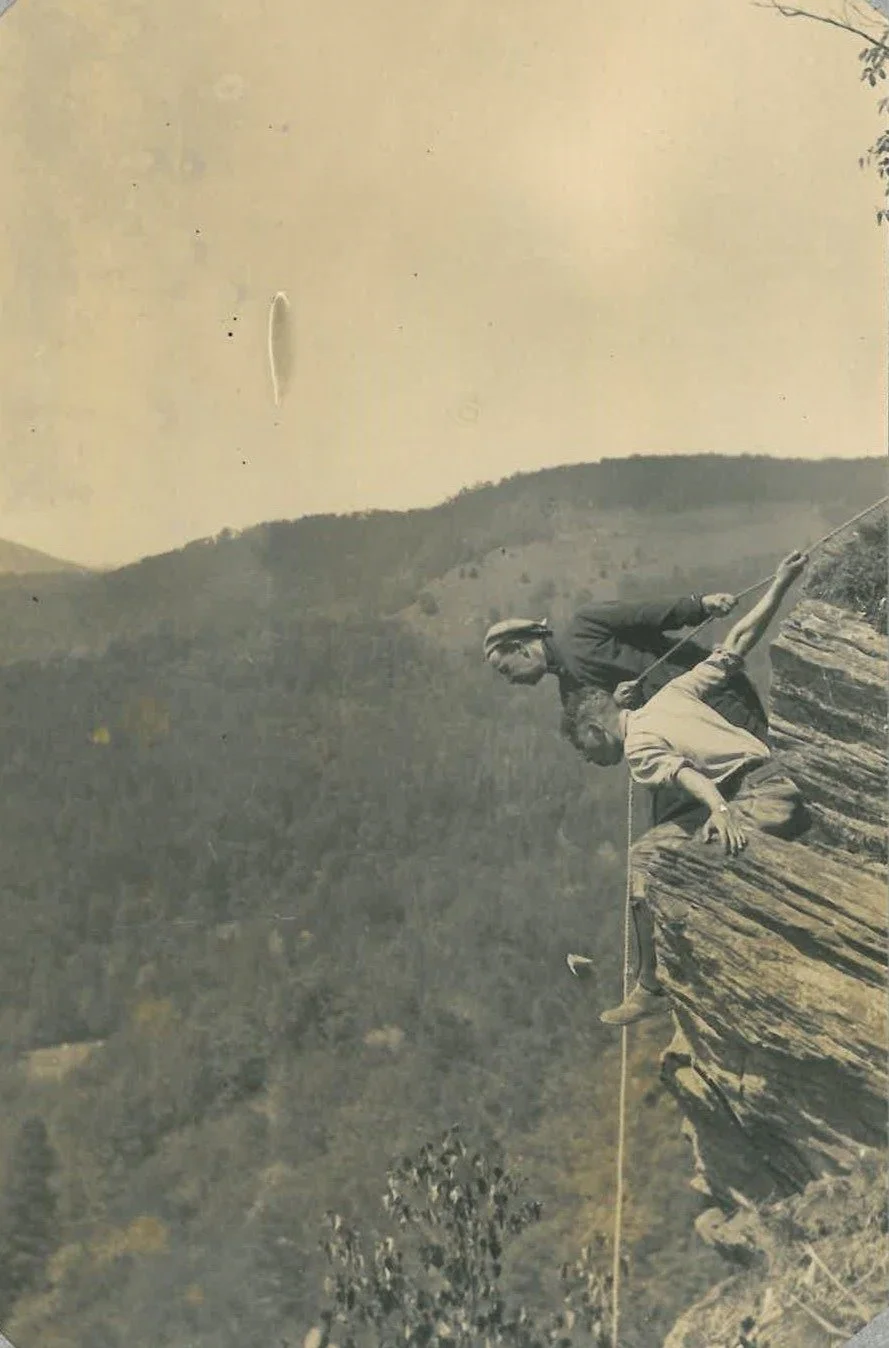
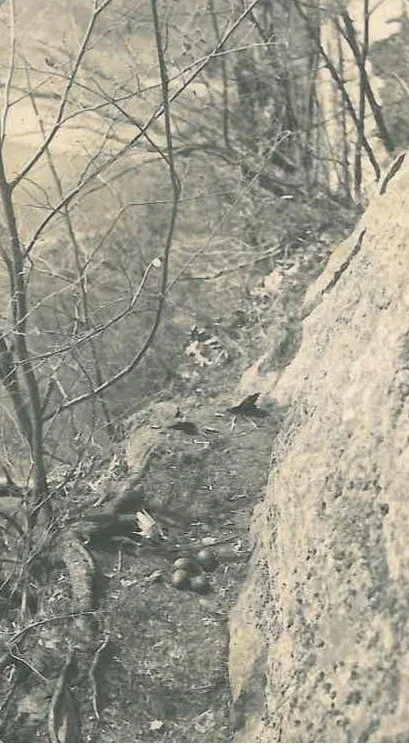
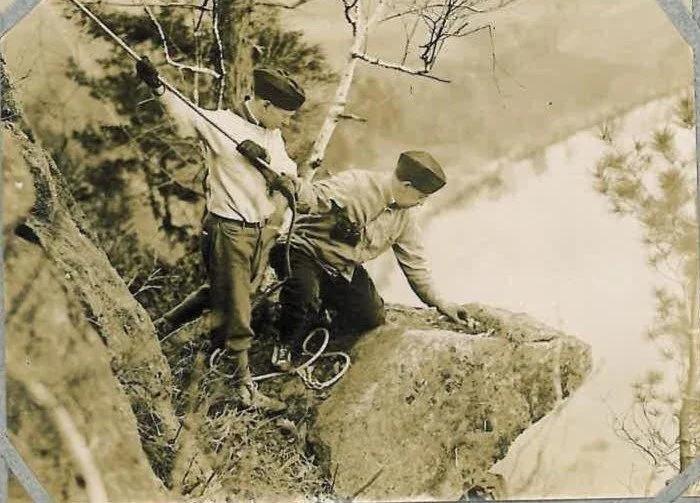
“The Lofty Order of Falconers”
A list of members and their official titles and attainments, 1924:
Peregrines (To attain the rank of Peregrine one must have taken eggs from the Falcon’s Eyrie): Herbert L. Grout 1908, Earl Little 1908, Everett Little 1918, Karl A. Pember 1920, Fred S. Whitney 1921, George C. Brockway 1921, Benton S. Pinney 1921, Edwin E. Howes 1922, Donald D. Nelson 1922, Eugene Roy 1923, Hazen Coffin 1924, Eddie Greene 1924.
Karl A. Pember- Eggor; Don D. Blake- Taloner; Daniel J. Dowd- Almoner; Joseph O. Stone- Fotographor; Edward Greene- Roycroftor; Willard D. Cabot- Keeper of the Blotting Paper.
Original Aeronors: George C. Brockway, Benton S. Pinney, Edwin E. Howes
Falconers (Falconers must have visited at least one cliff site or attended the Annual): Richard M. Marble 1920, Robert Whitney 1920, Robert Morrell 1920, Alonzo Howland 1921, Herbert G. Tupper 1921, Frank E. Gould 1921, Joseph O. Stone 1922, F. T. Pember 1922, Daniel G. Bixby 1922, Leland Griggs 1922, Charles Proctor 1922, Dr. Frost 1922, James E. Helyar 1922, David Carey 1922, Robert L. Coffin 1922, A. E. Cudworth 1923, Dr. W. R. Laviolette 1923, John A. Farley 1924, Don D. Blake 1924, Daniel J. Dowd 1924, Malcolm Perkins 1924, Willard D. Cabot 1924, Warren Smith 1924, John Dowd 1924
Junior Falconers: Allan Bryant 1922, Jane A. Pember 1922, Freddie Howes 1924
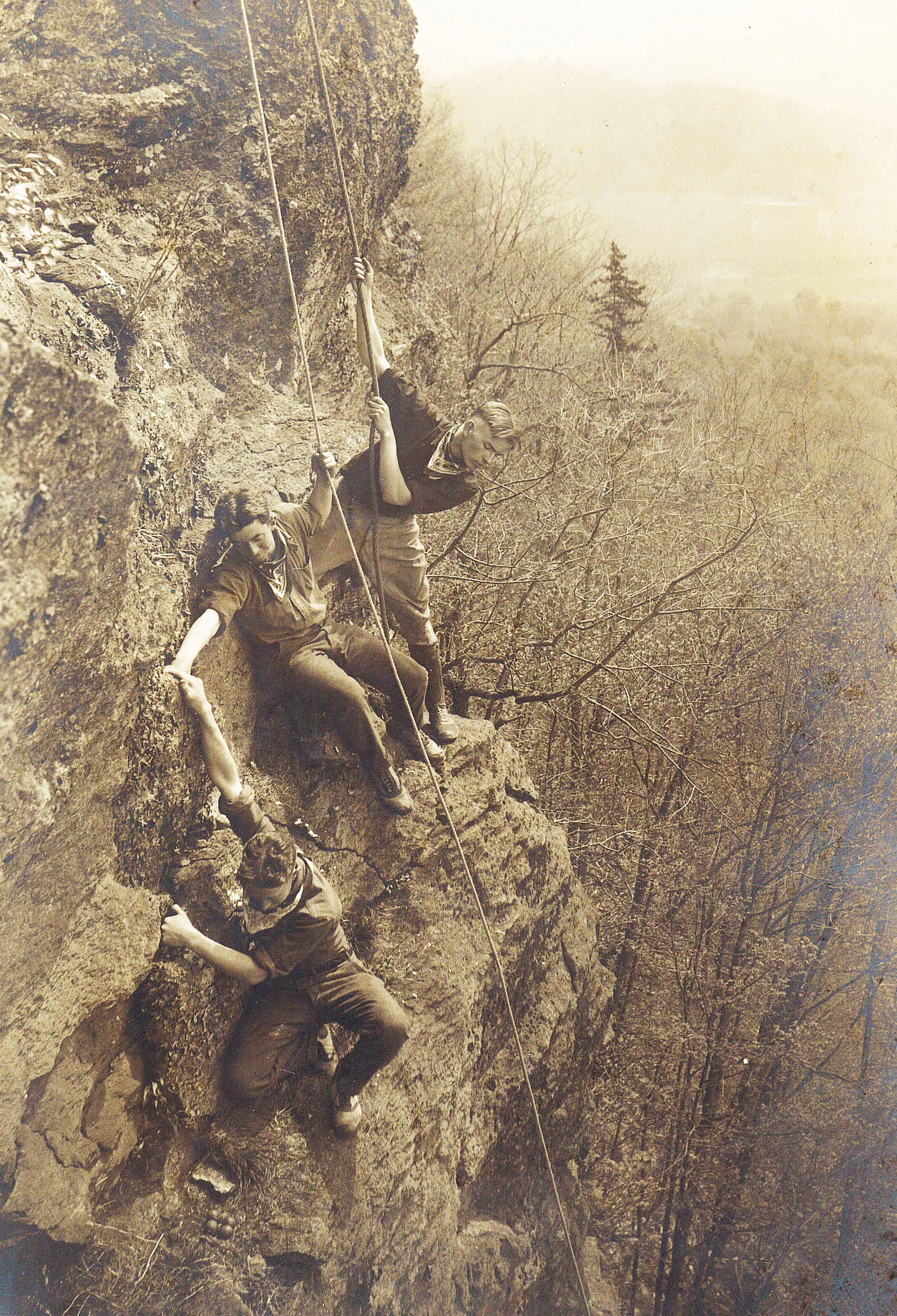
“The Objective- Eyrie with Eggs”
Museum Collections and Environmental Organizations
Many vintage egg collections have found their way into museums or other types of research institutions. The Pember Collection, which originally consisted of 47 clutches of eggs (141 eggs in total) in 1930 are currently a part of the Zadock Thompson Natural History Collections at the University of Vermont. The collection now contains some five cases of bird eggs. Additionally, Karl Pember’s two photo albums showcasing the Falconer’s activities were used for many years by biologists at the Vermont Center for Ecostudies to track historic and current breeding sites of Peregrine Falcons before they were donated to the Woodstock History Center.
The scientific and historic value of these collections as well as the accompanying documentation is important. From the historical research on breeding distribution to the ground-breaking research to unveil the biology of eggs helps us to better understand bird taxonomy and evolution, as well as the affects of environmental pollution and climate change to current bird populations. Even archaeologists find these specimens helpful when identifying the eggshells discovered in digs.
Today, the collection of bird nests and eggs is significantly regulated and in many cases illegal. In the U.S. there are laws and treaties, such the Migratory Bird Treaty Act and Endangered Species Act, prohibiting these actions for recreation or market. Although the pastime of oology is no longer viable, there are countless opportunities for the 21st century bird hobbyist and enthusiast to study birds and in turn help scientists.
Karl Pember Photographic Album #1: The Falconers
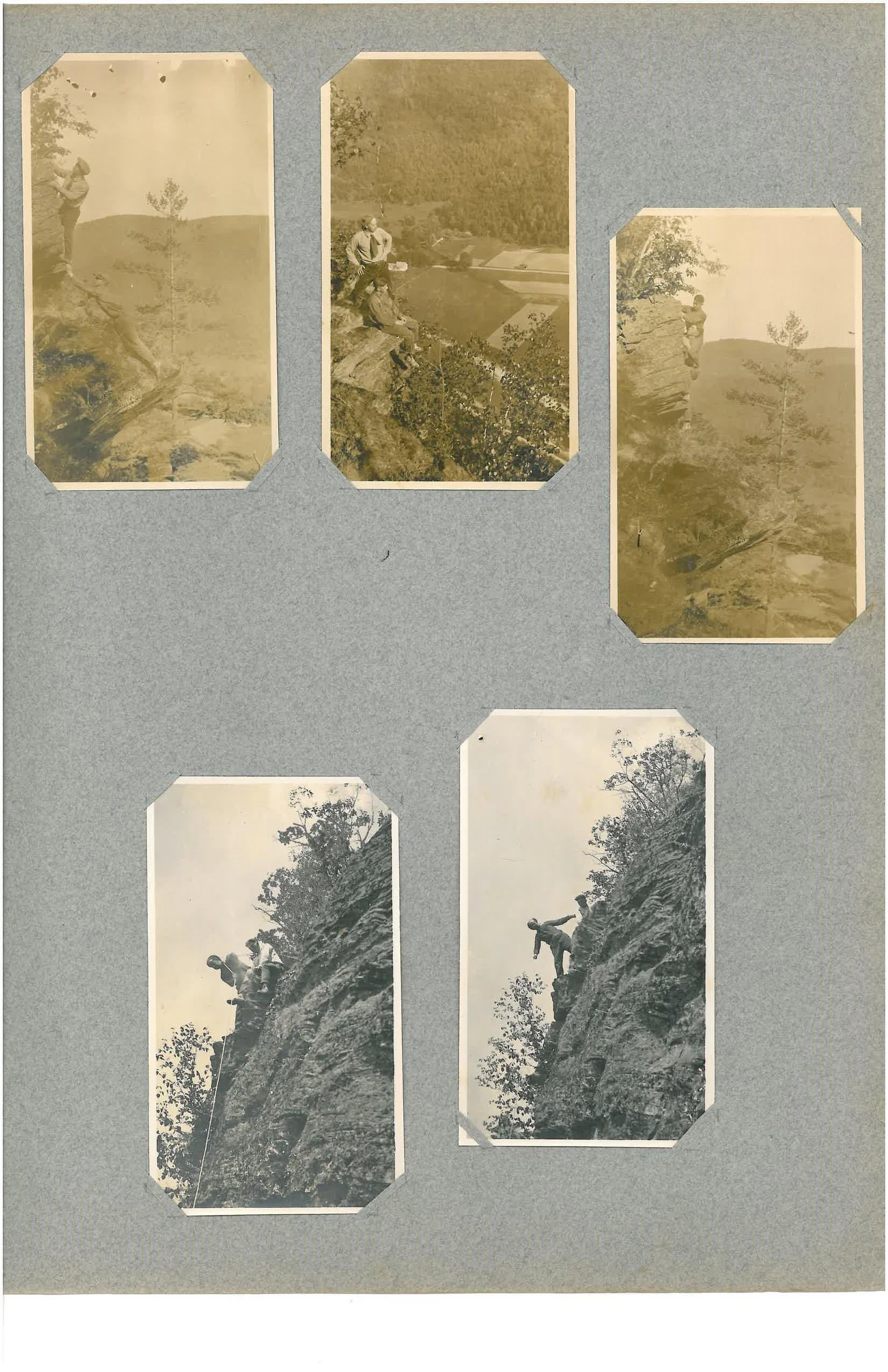
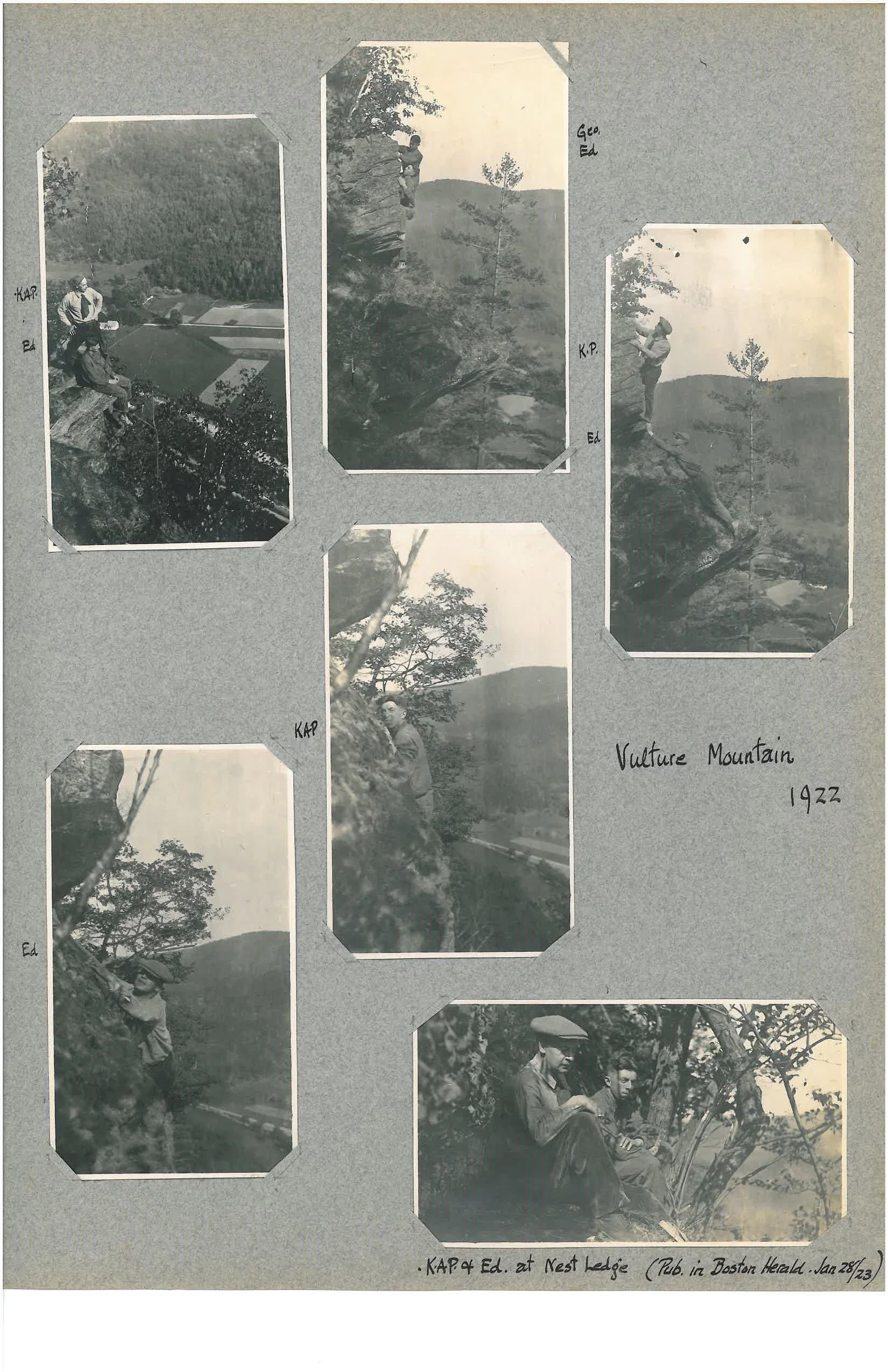
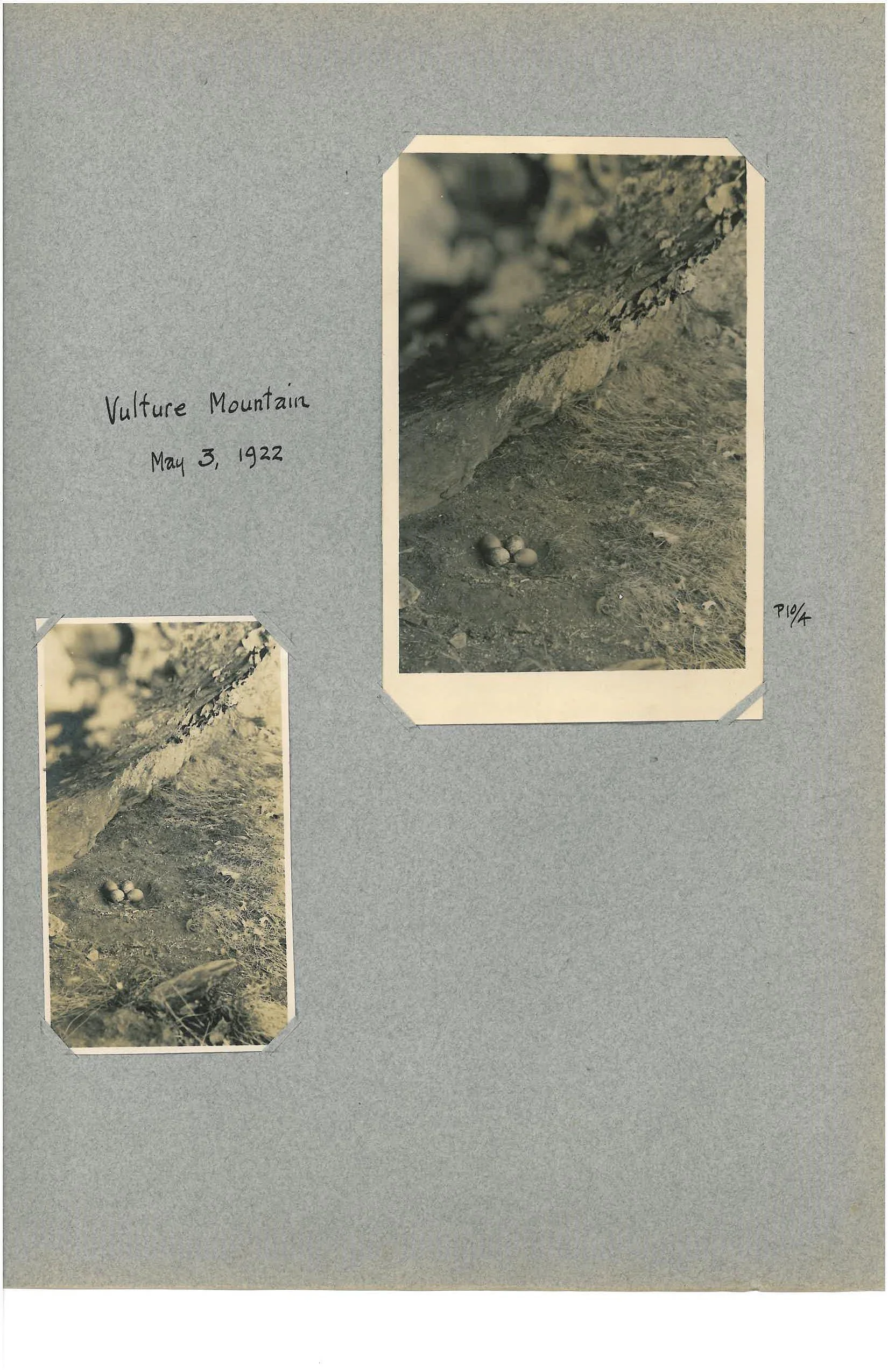
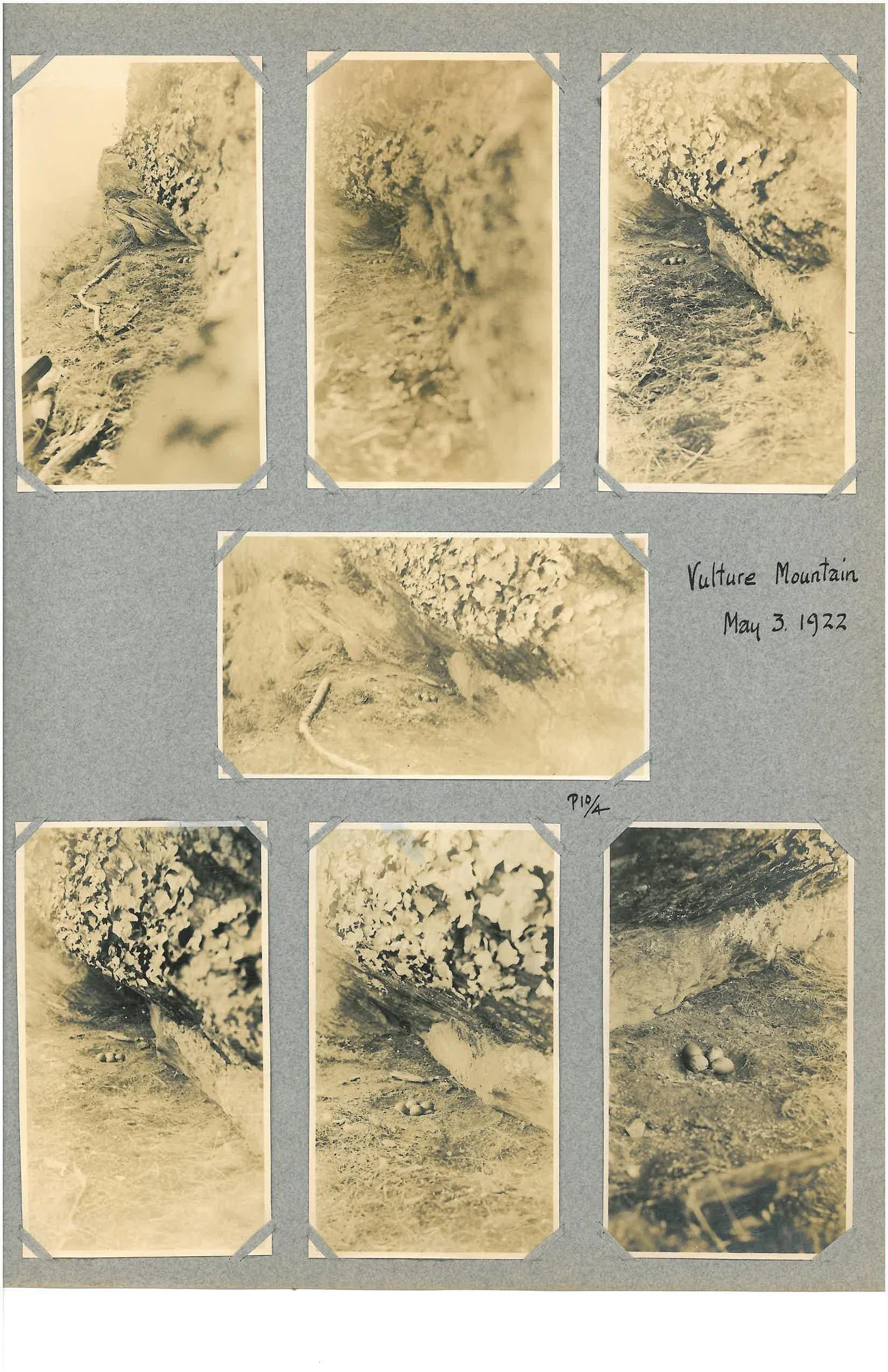
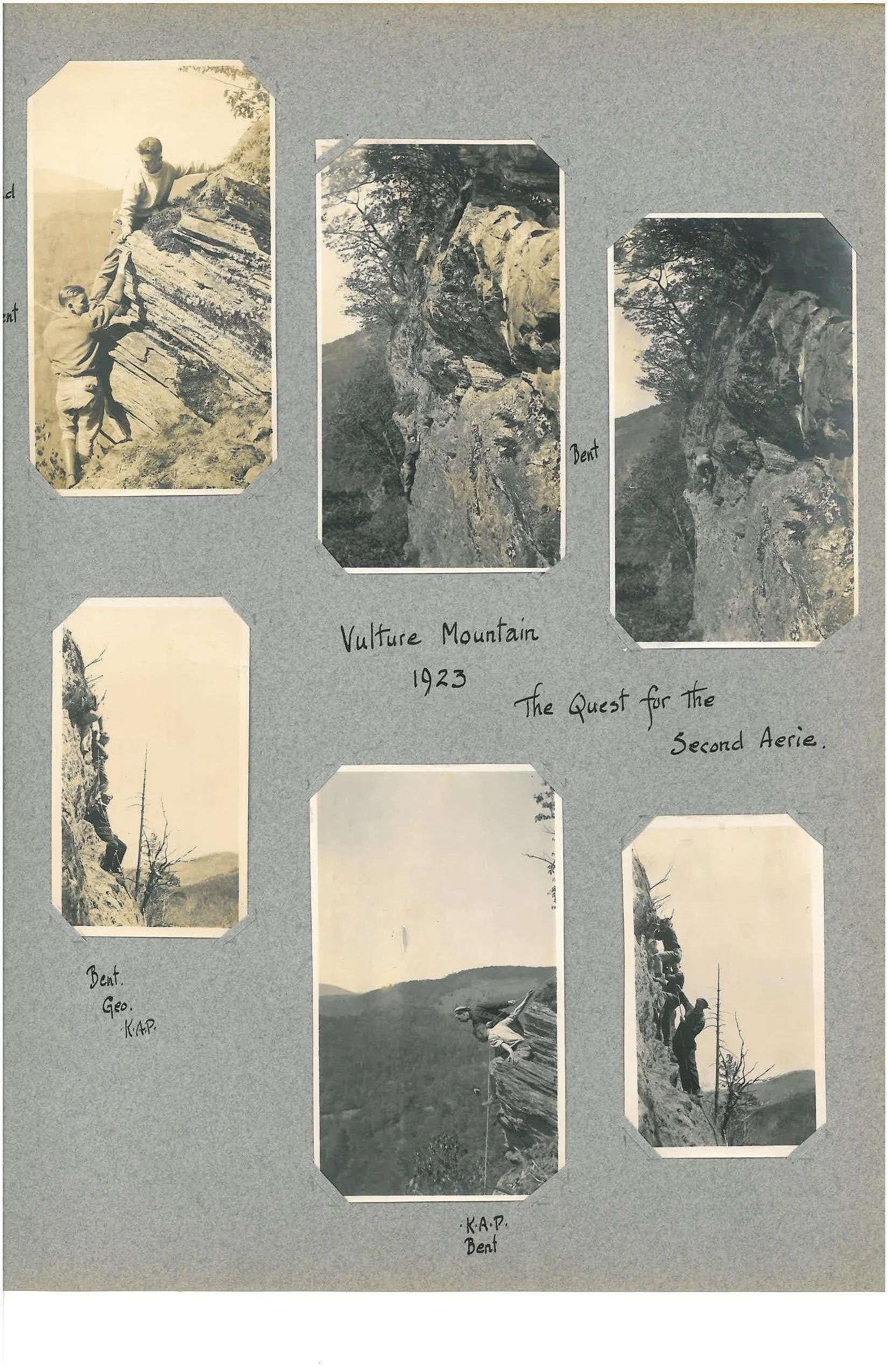
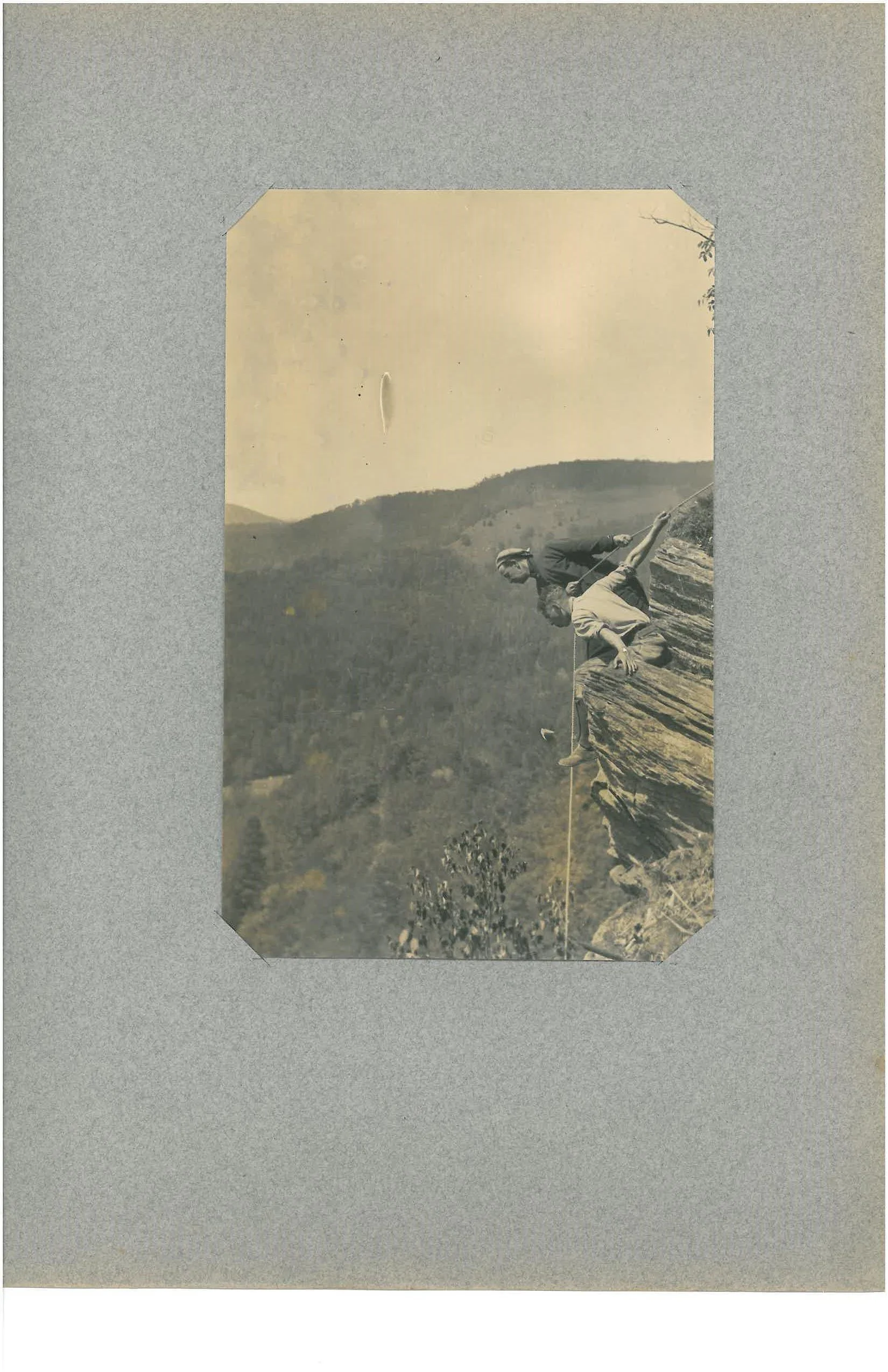
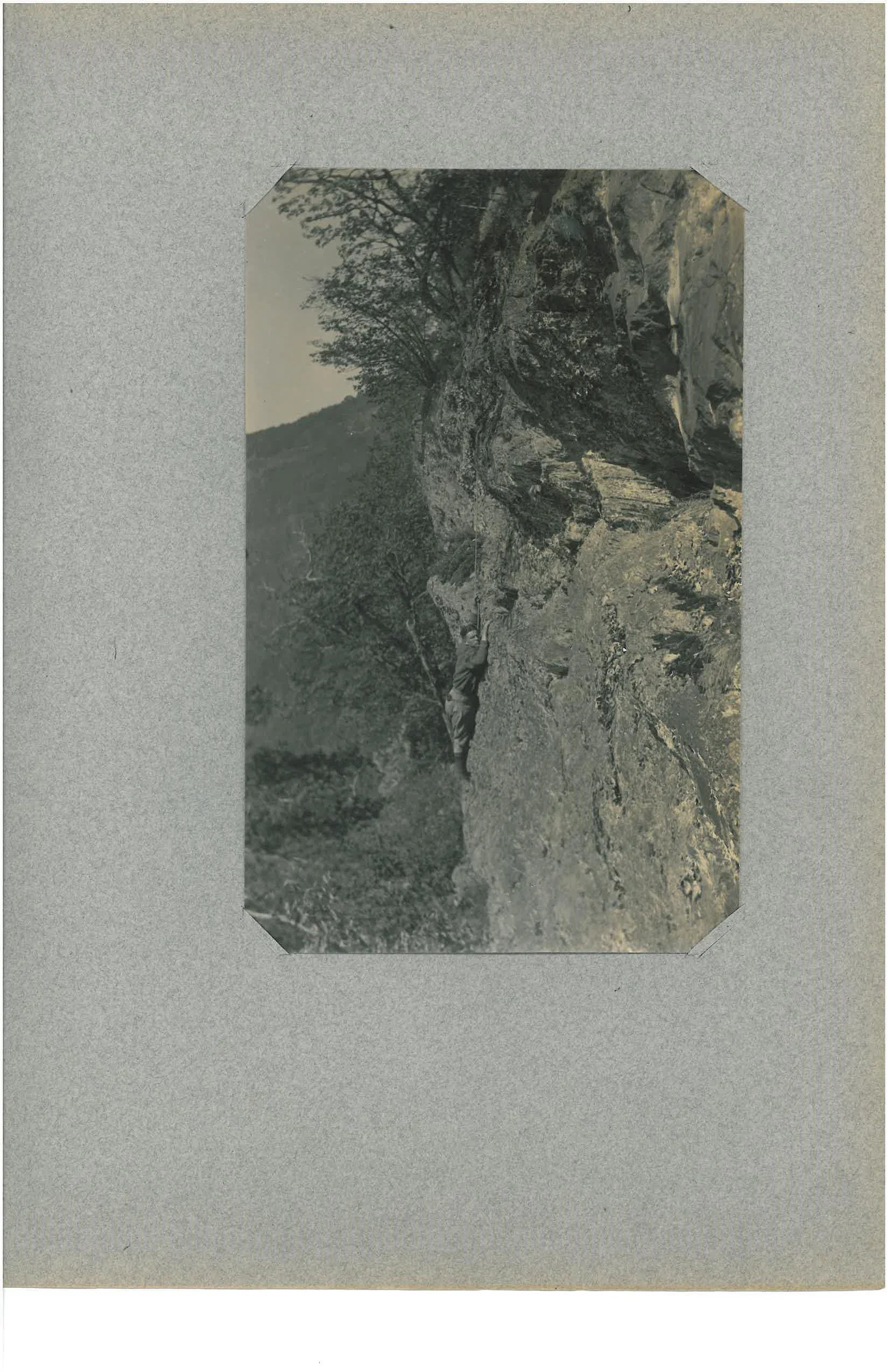
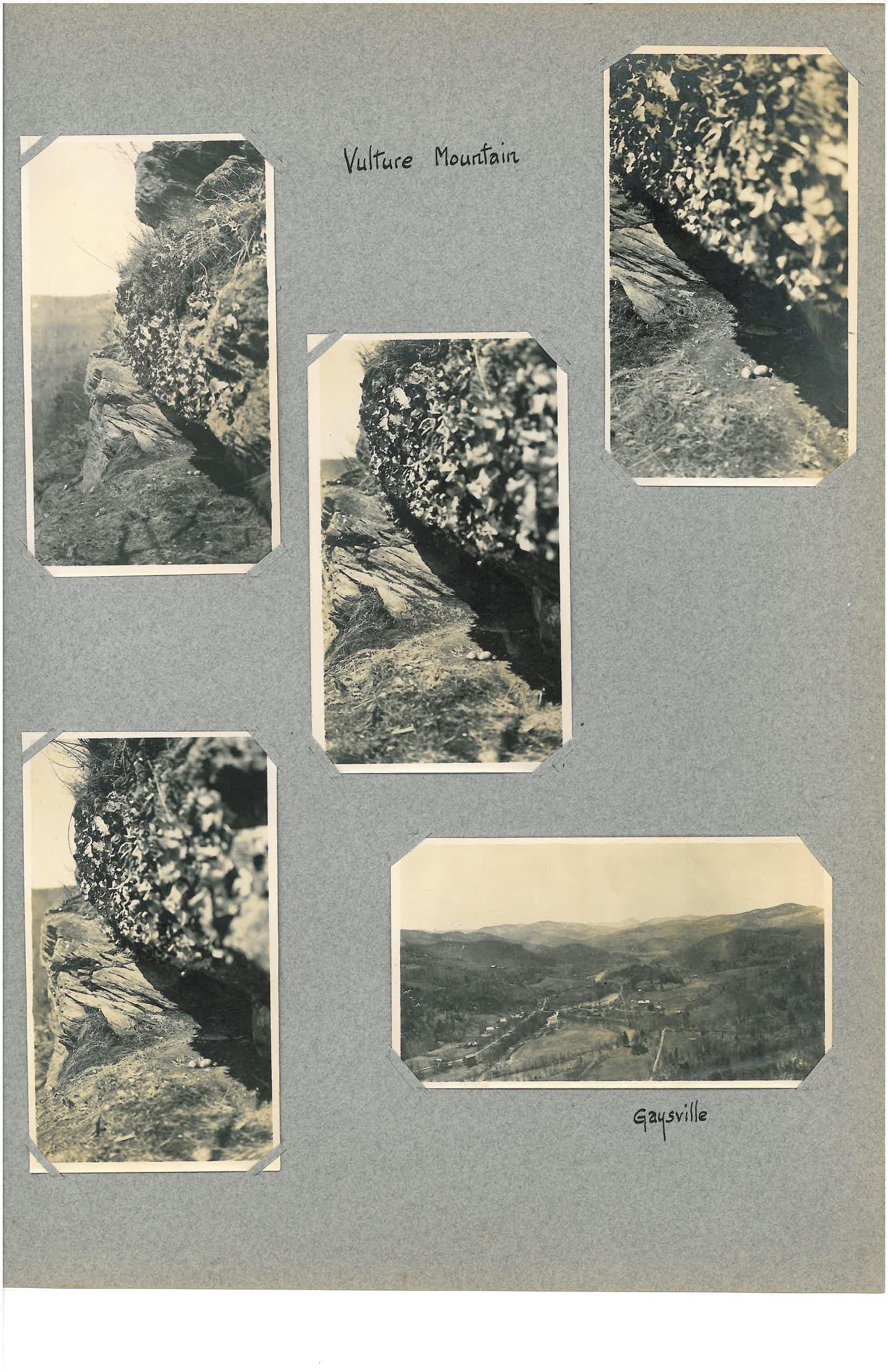
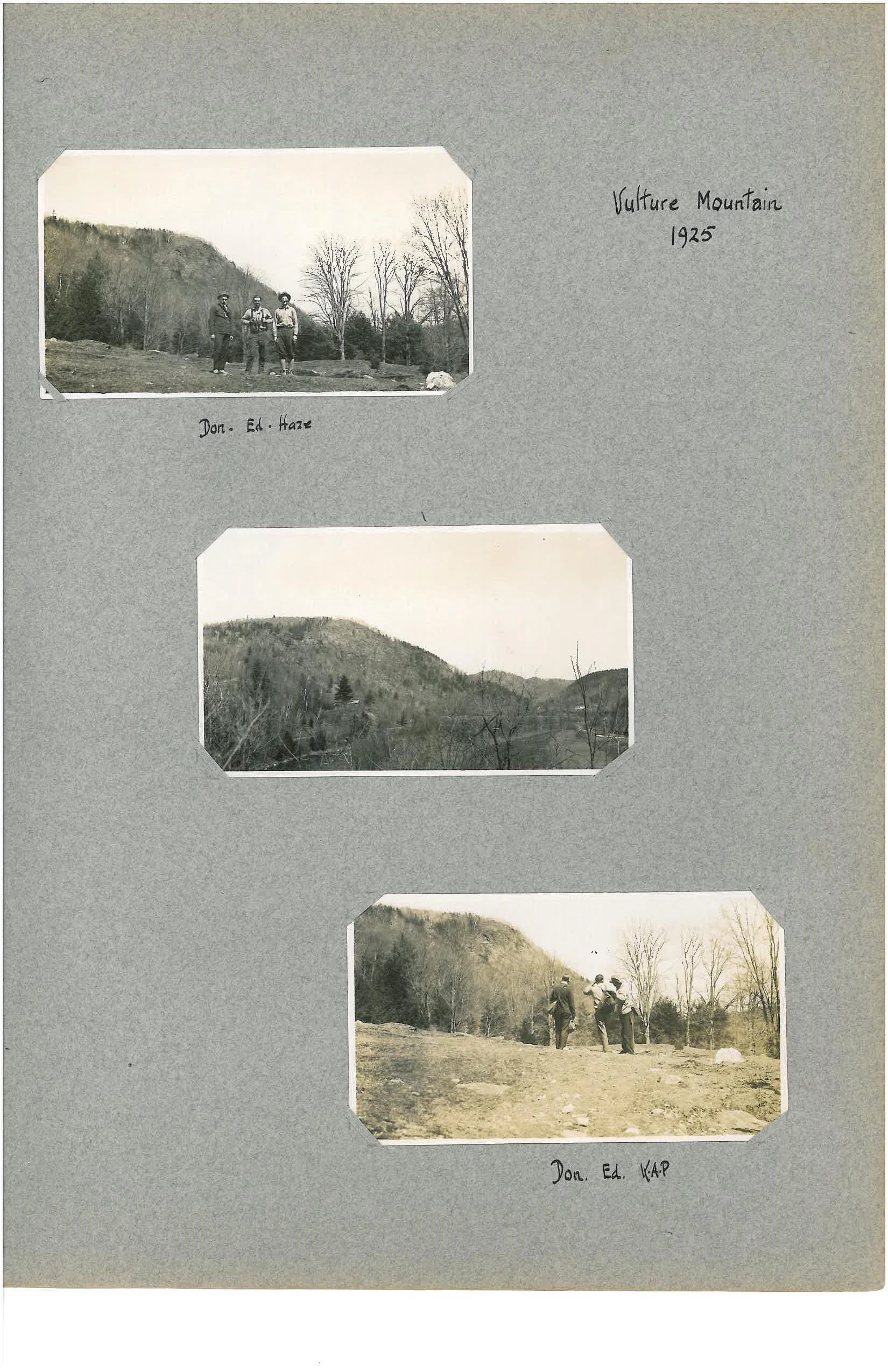
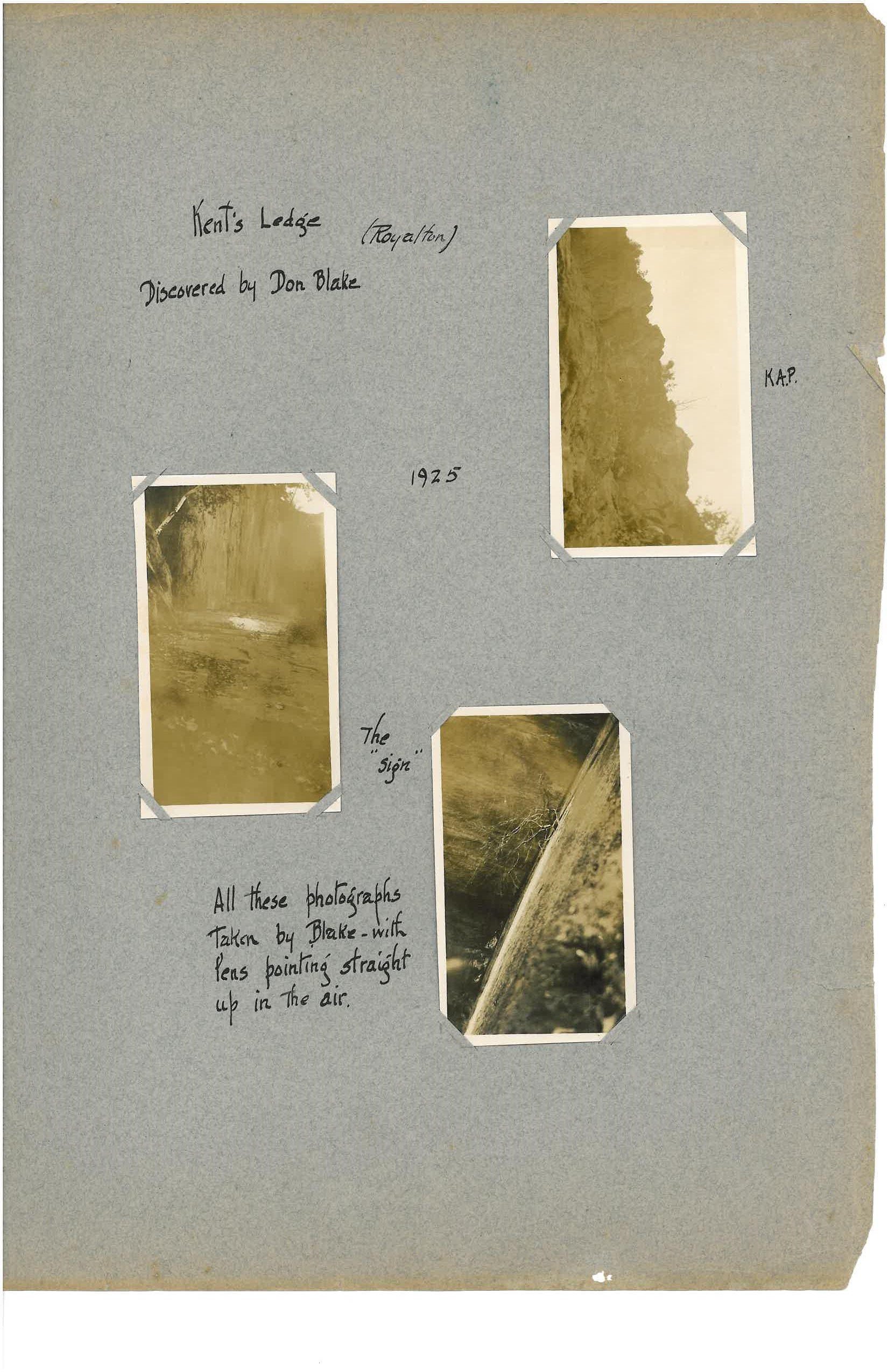
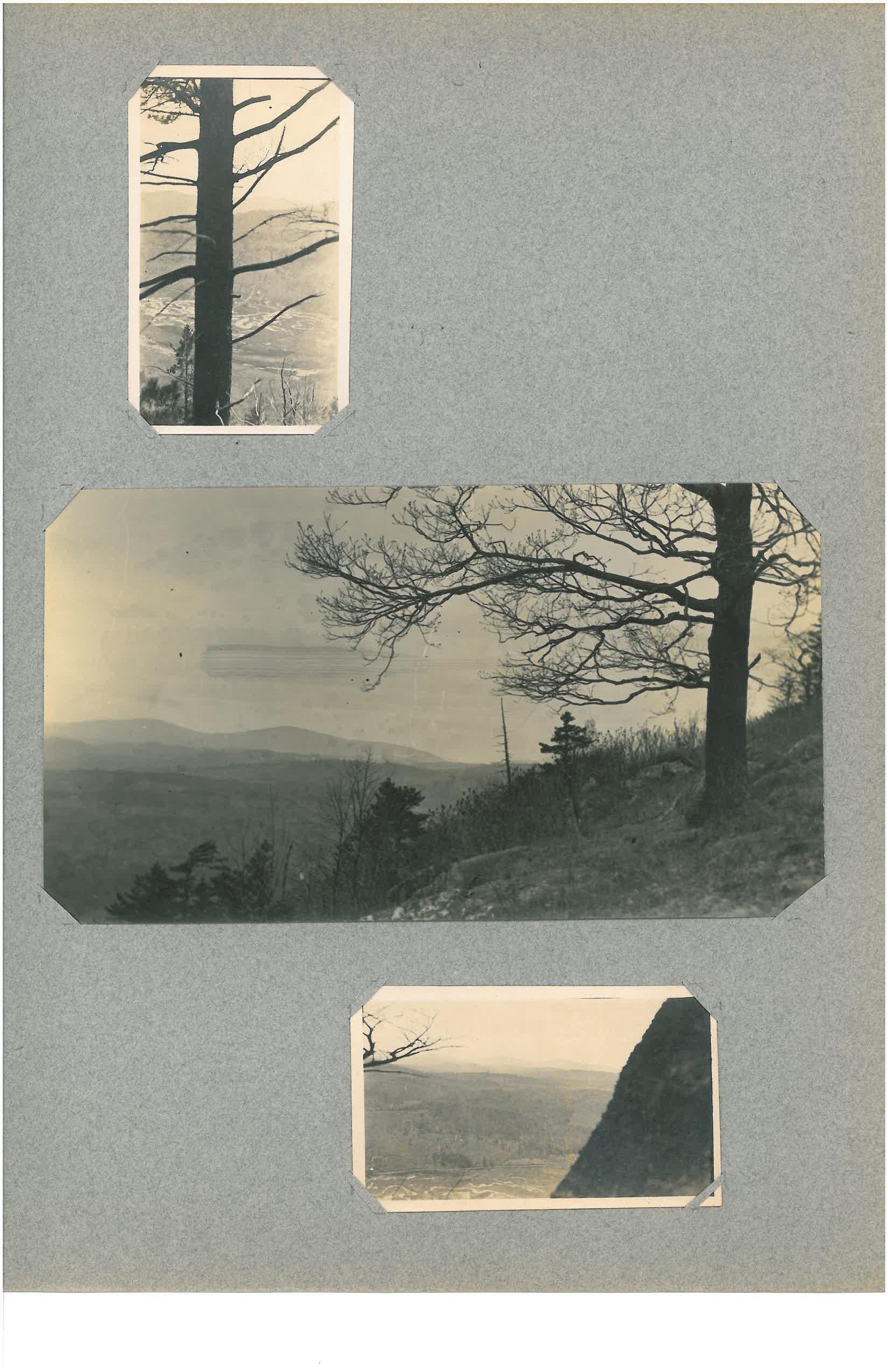
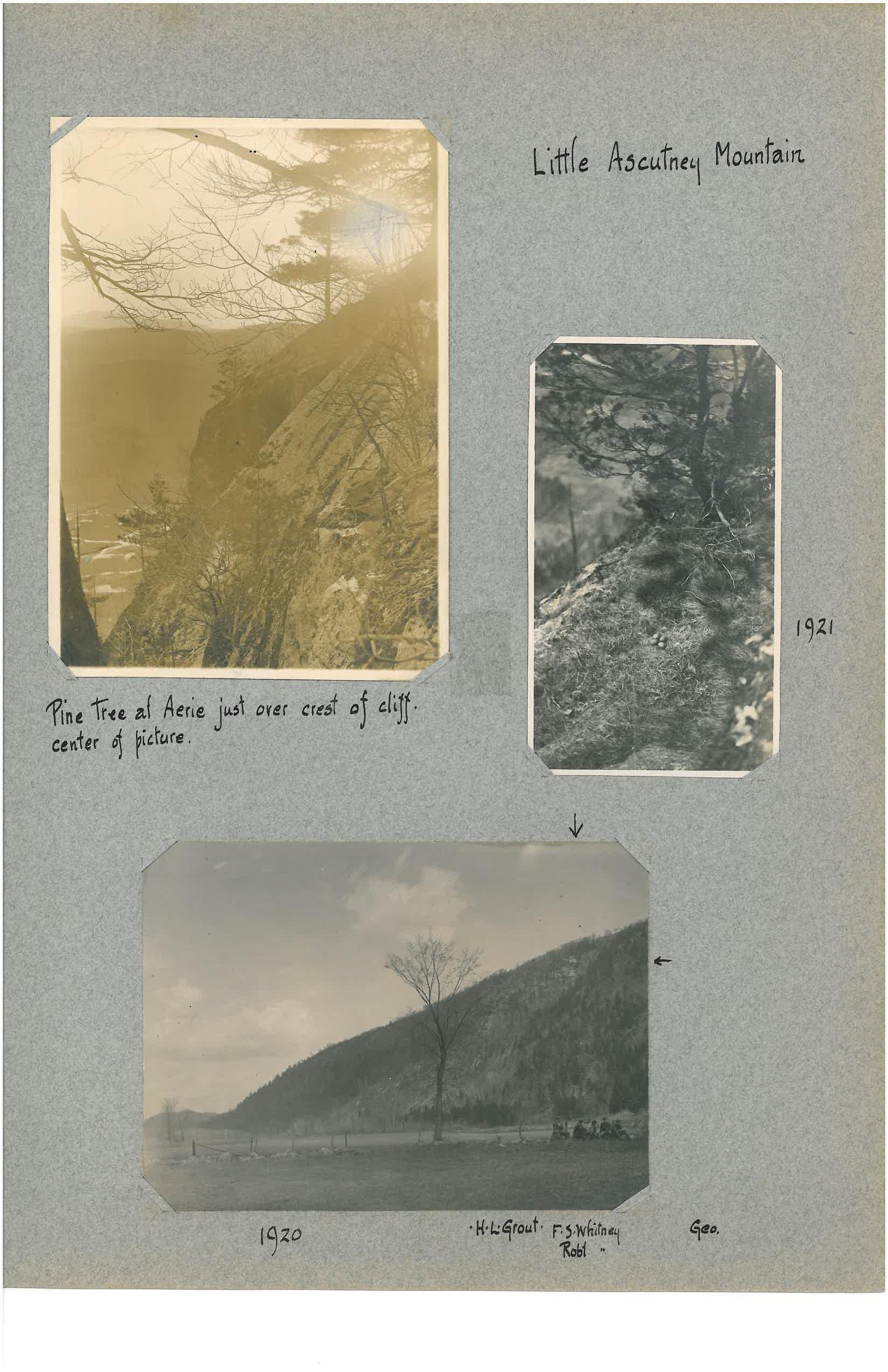
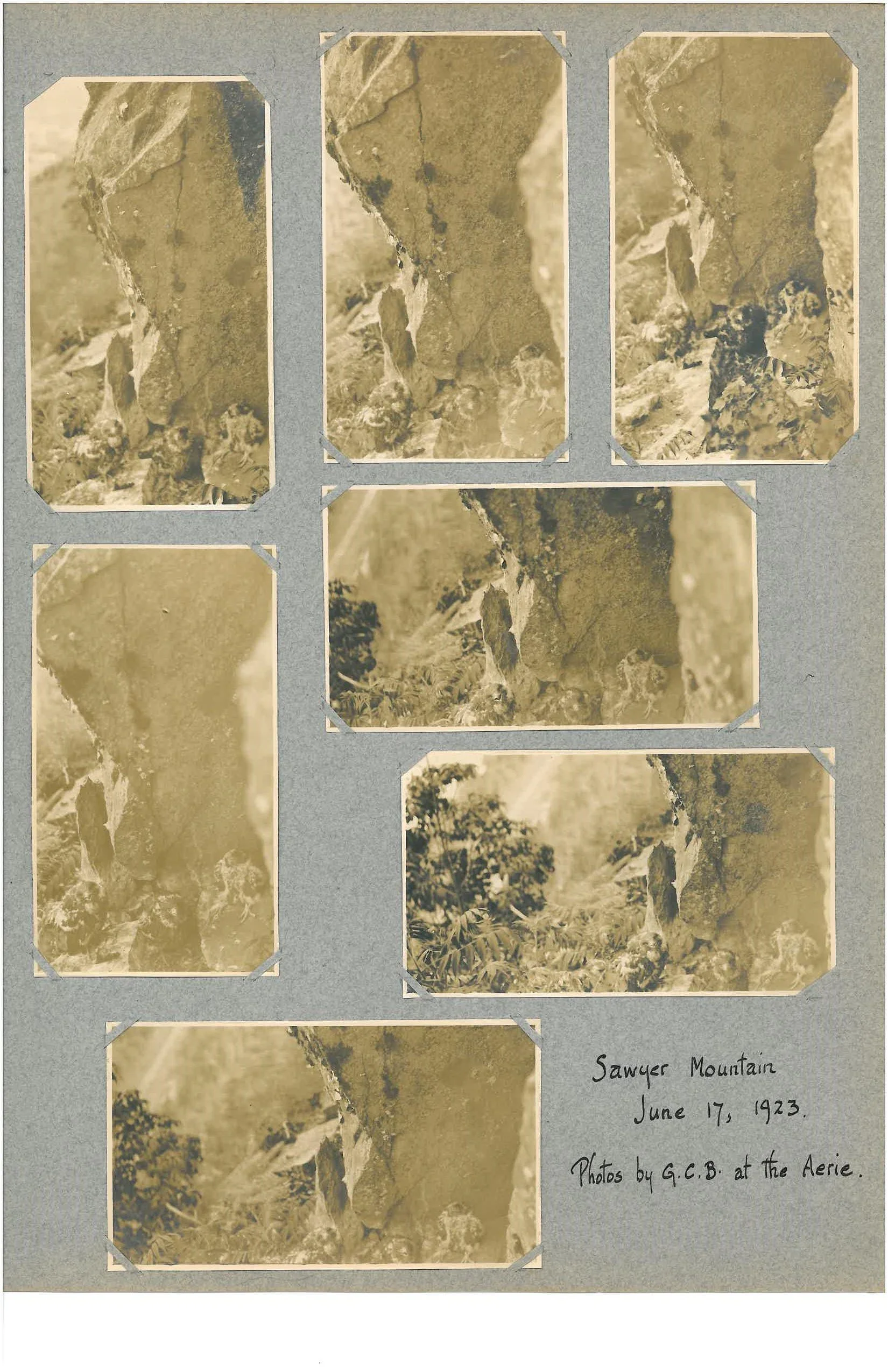
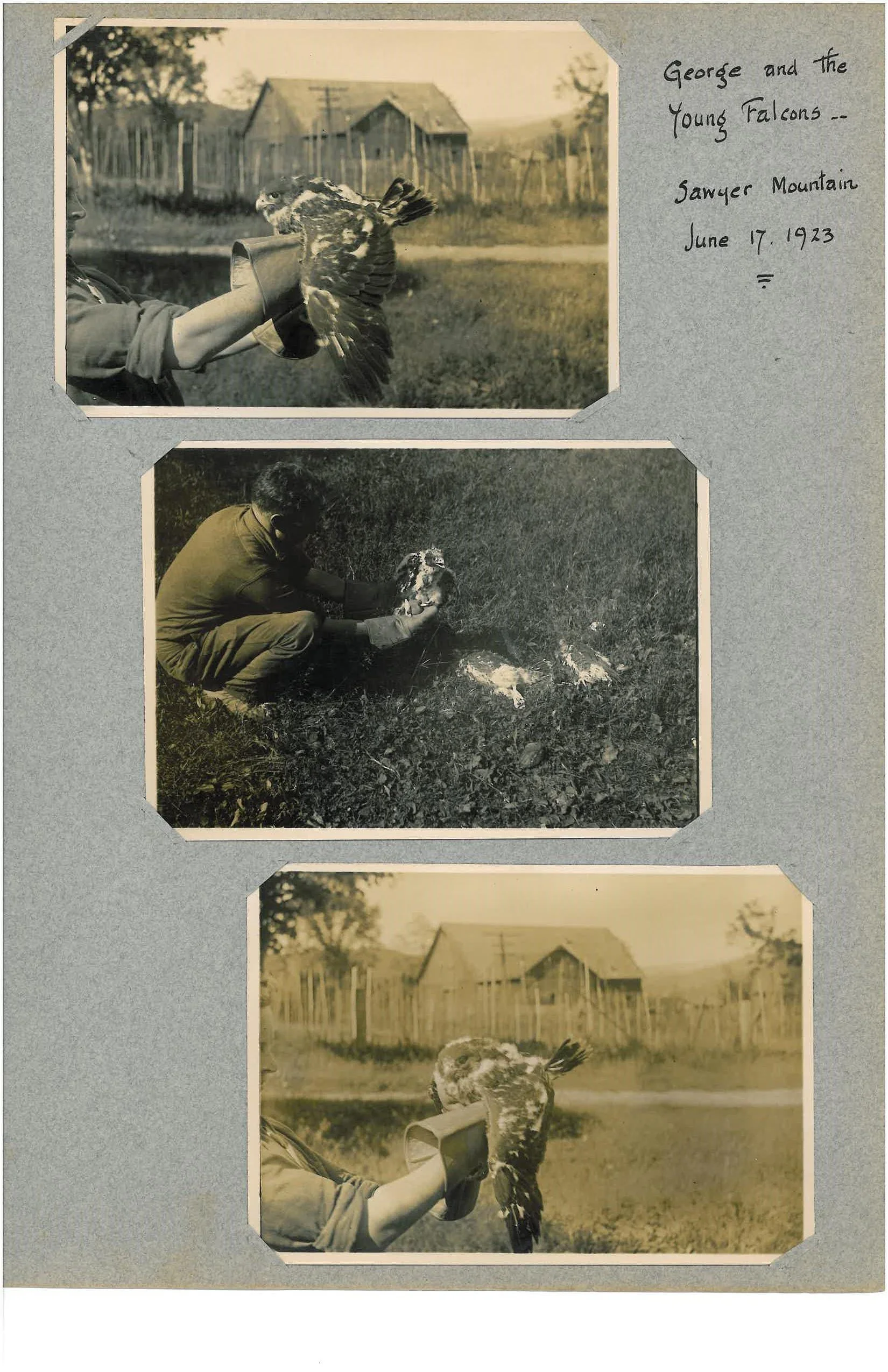
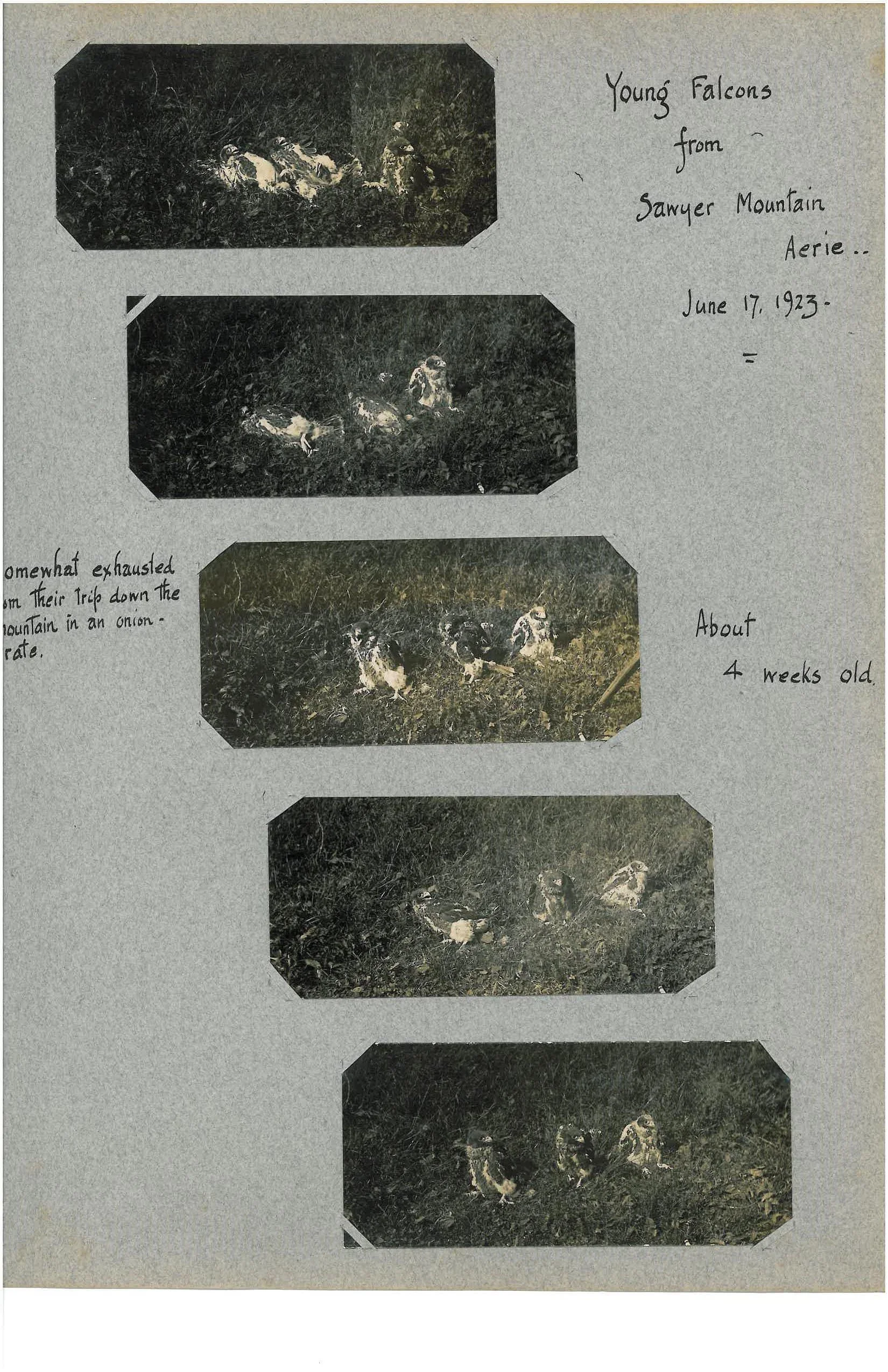
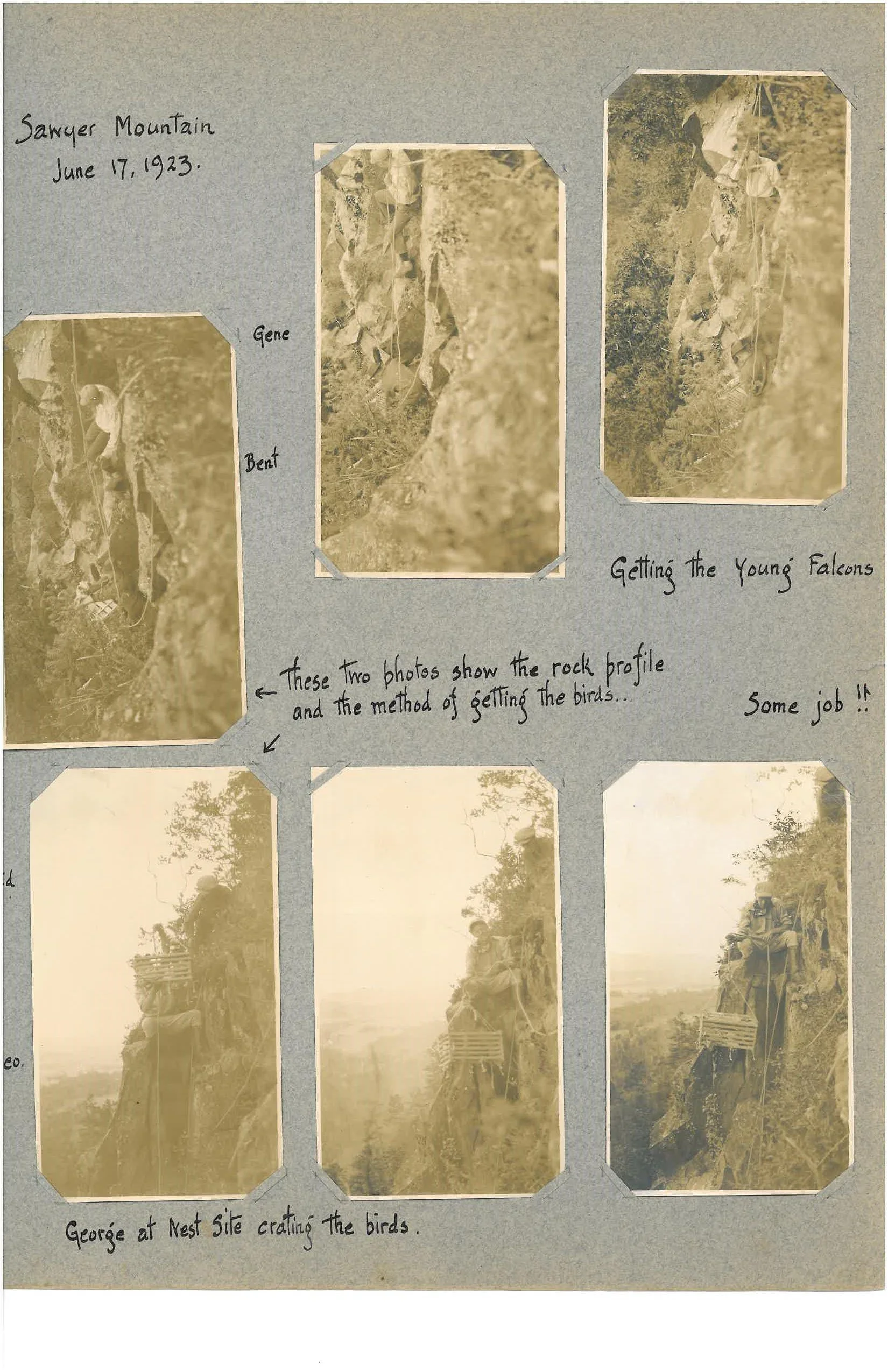
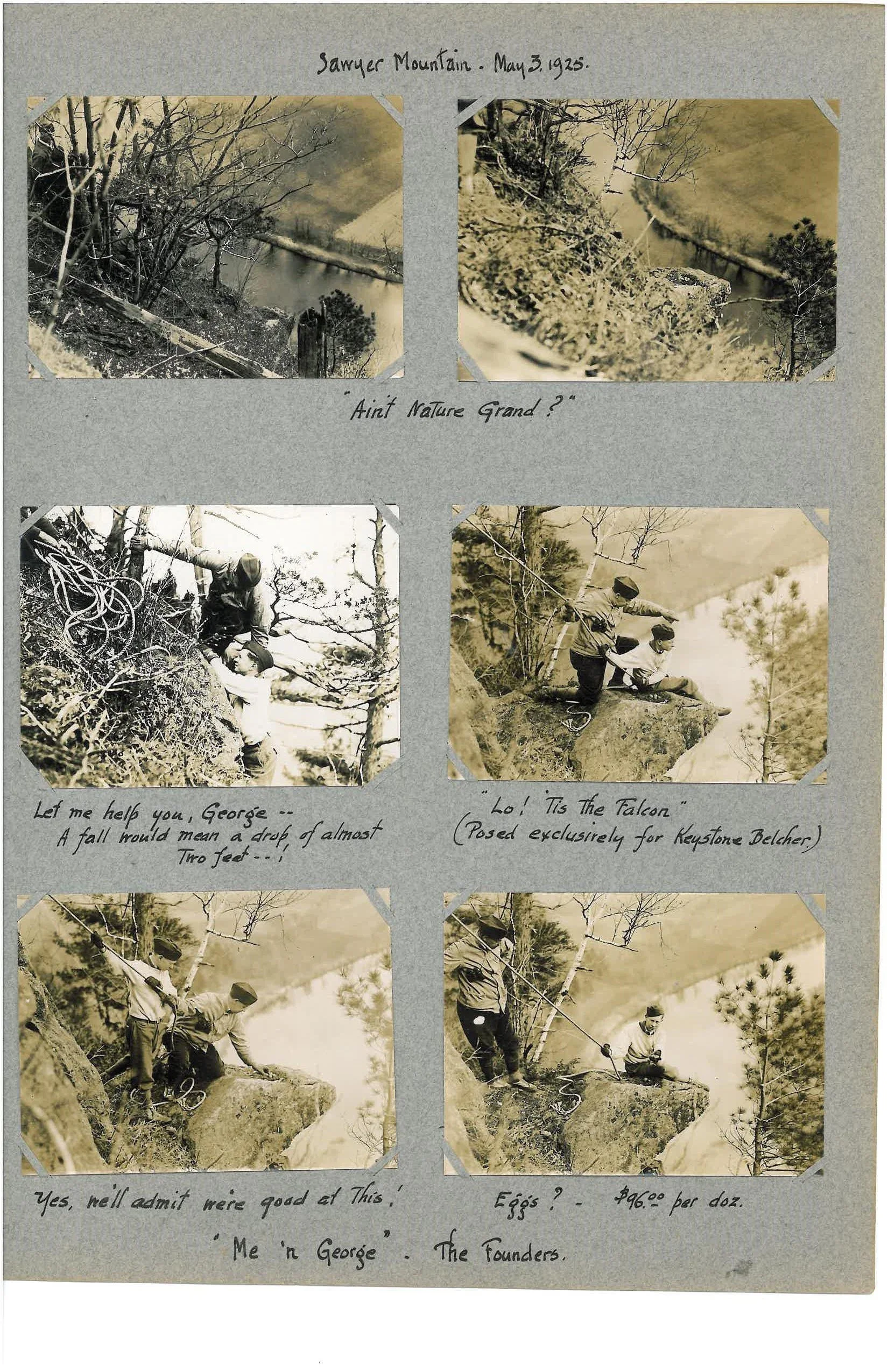
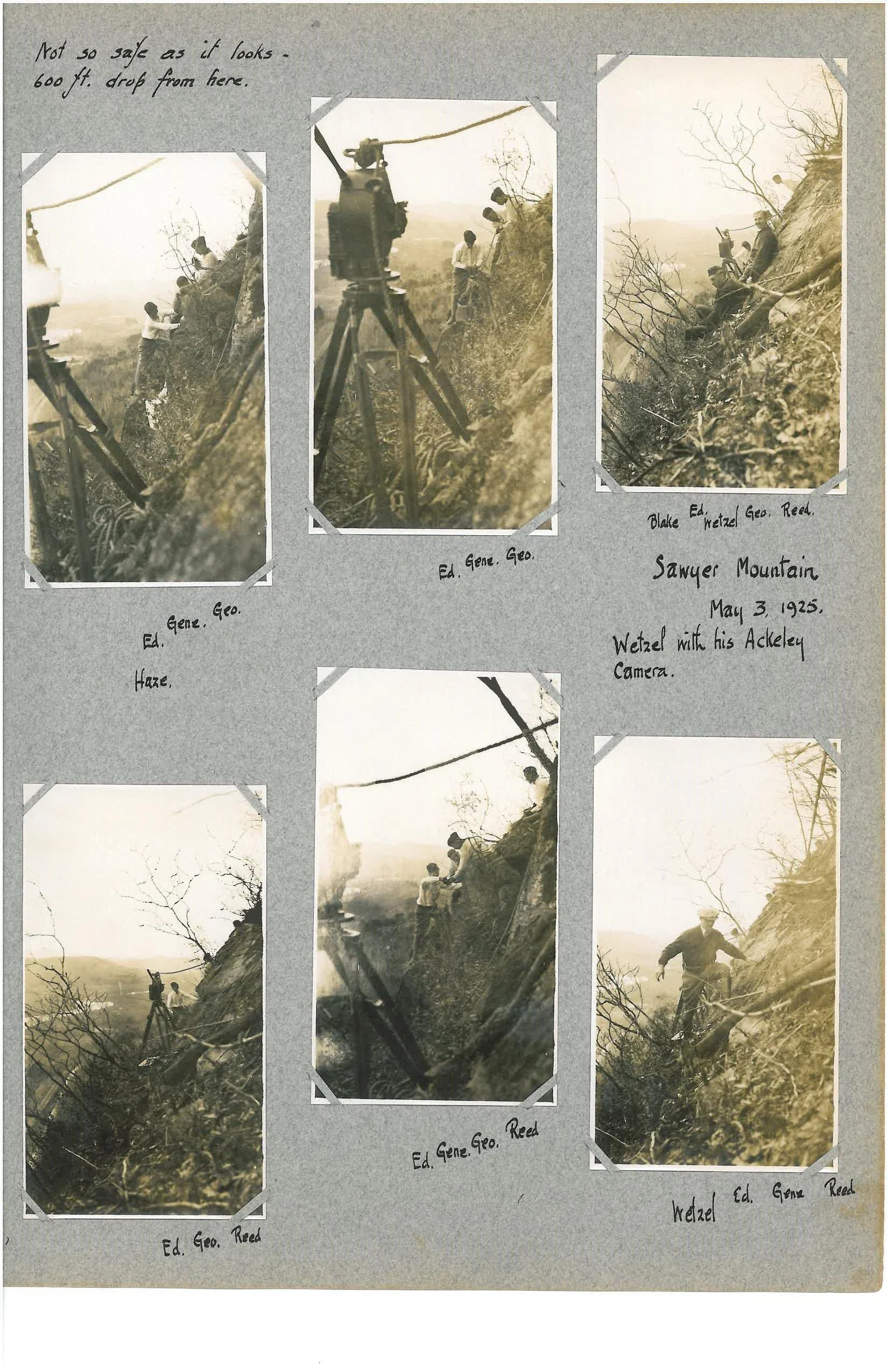
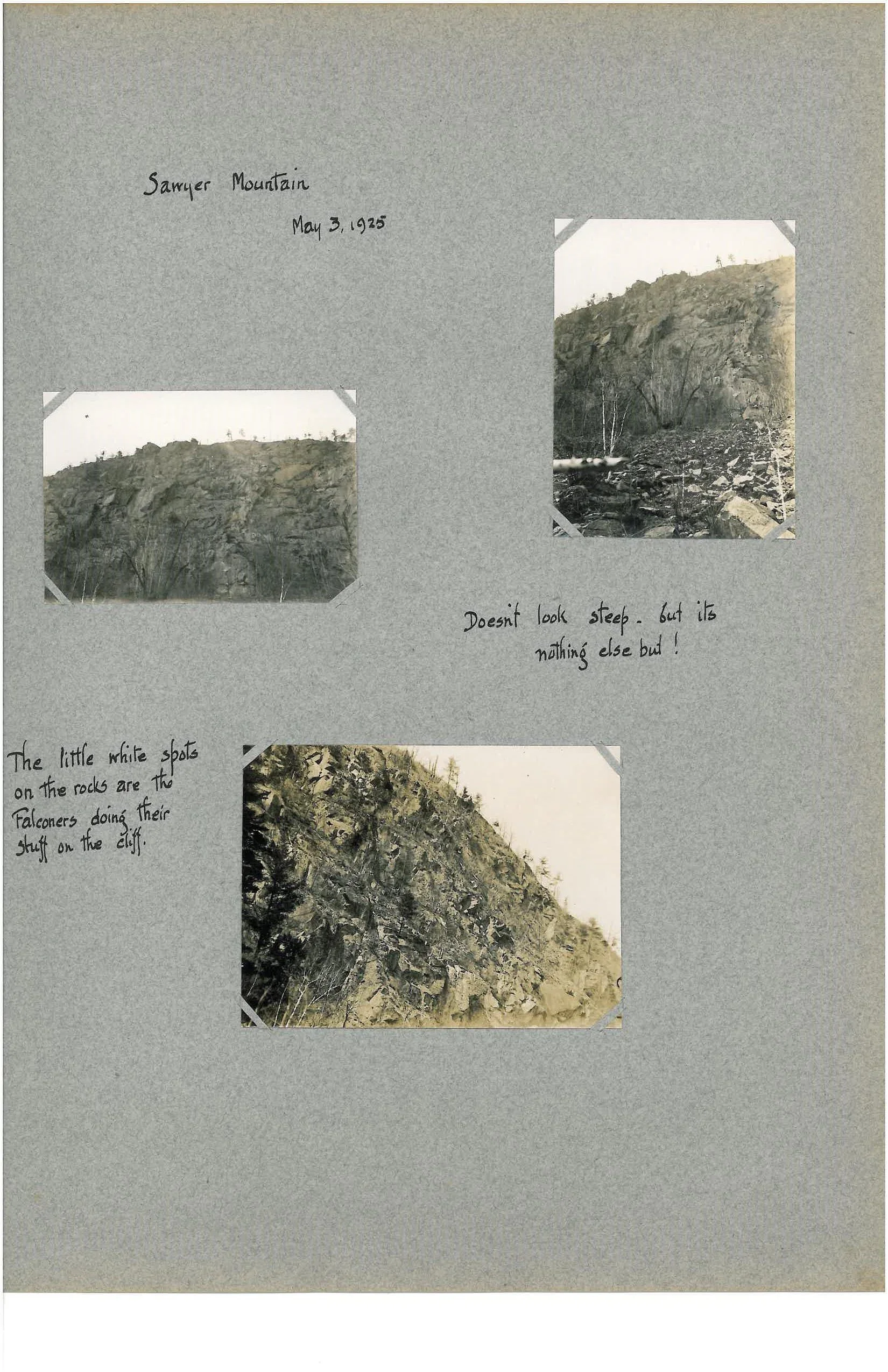
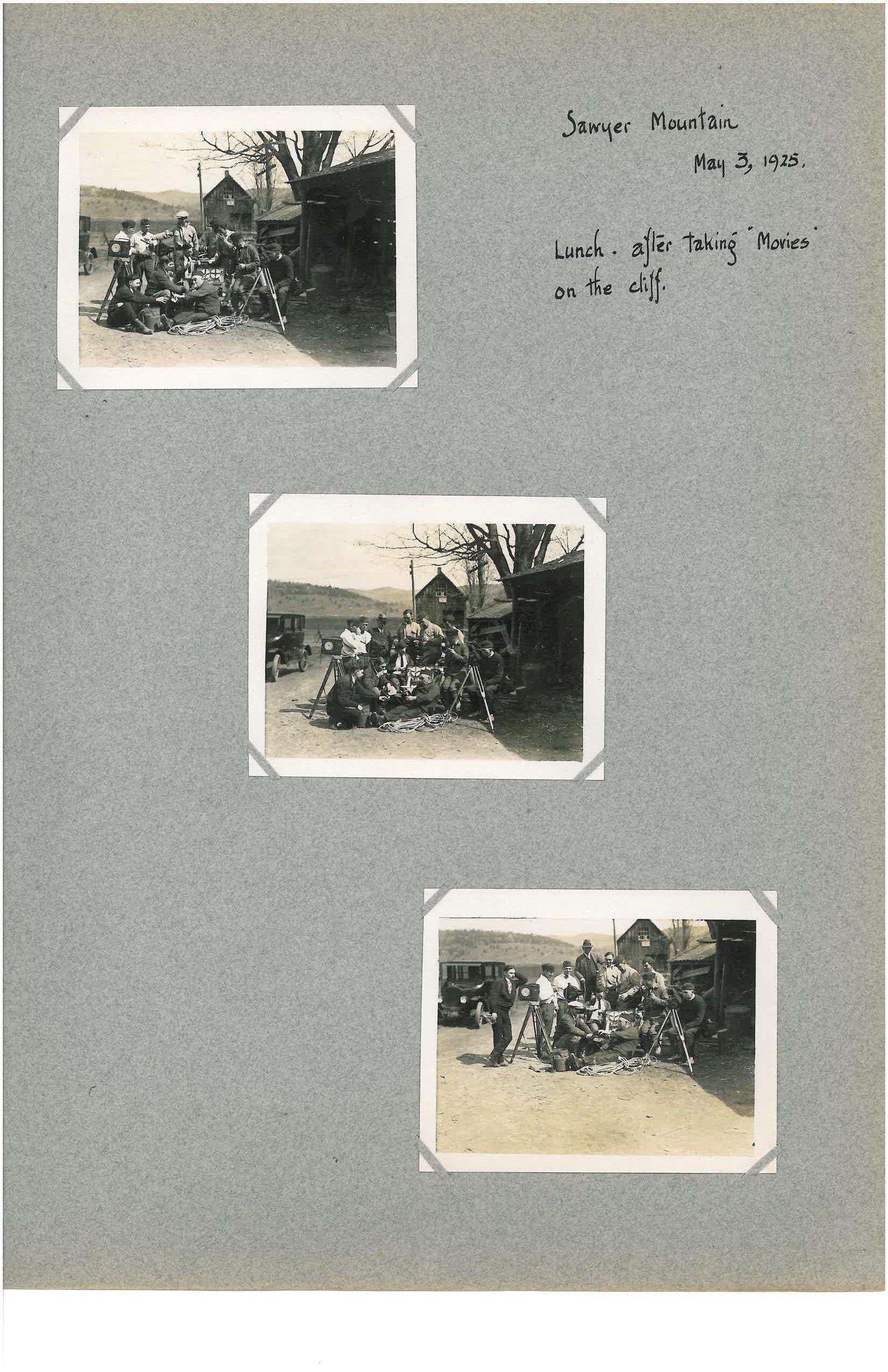
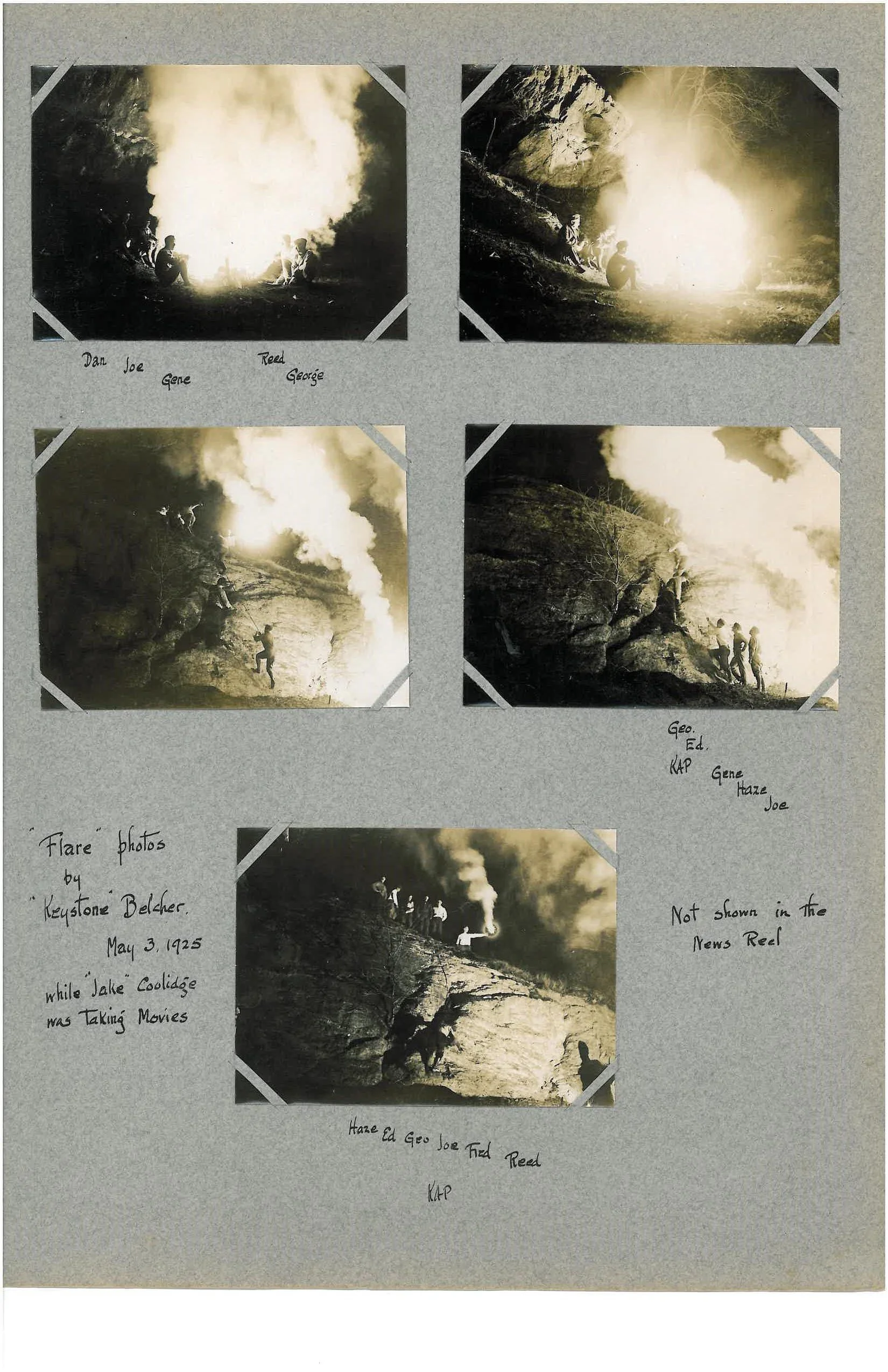
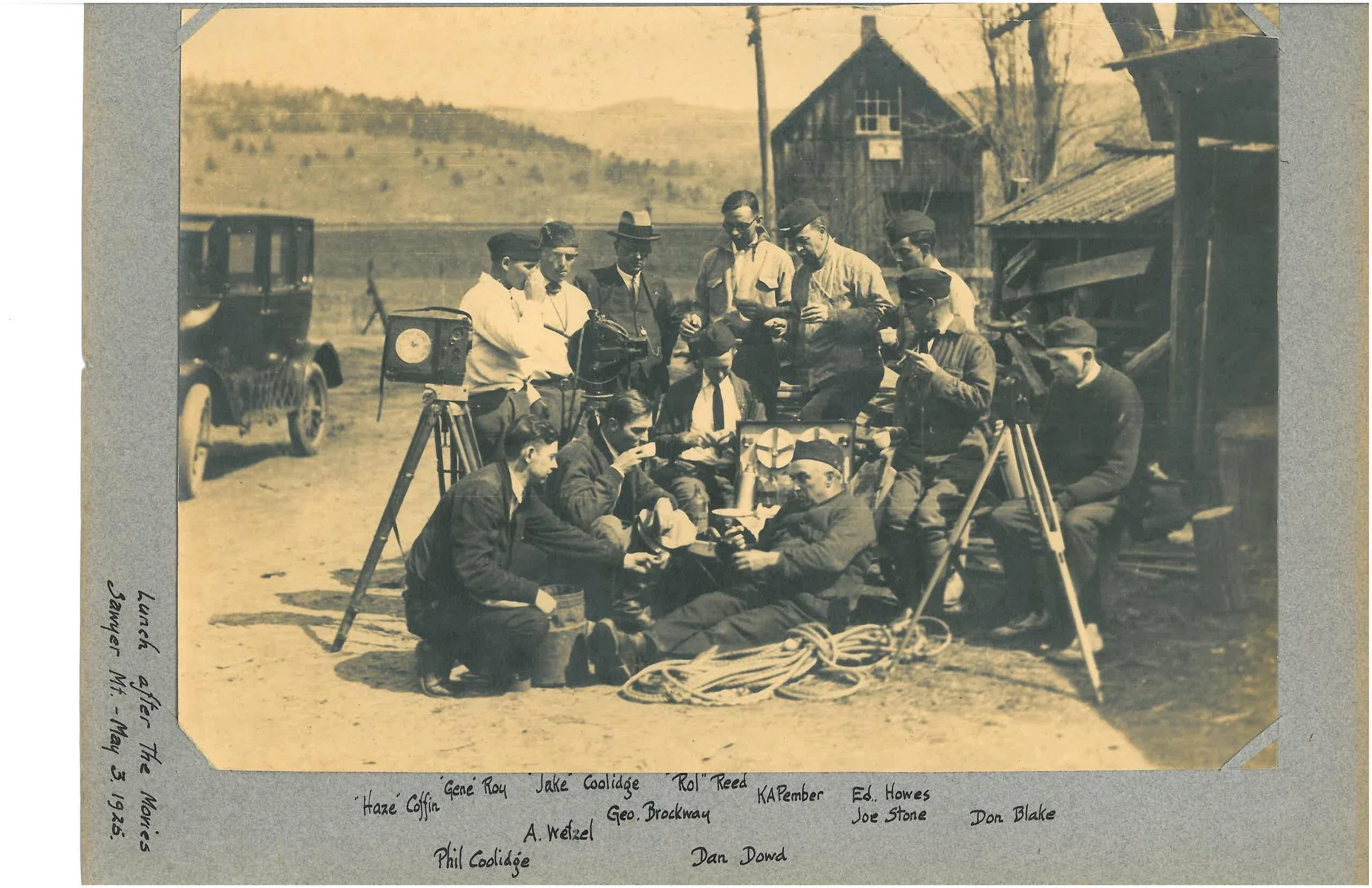
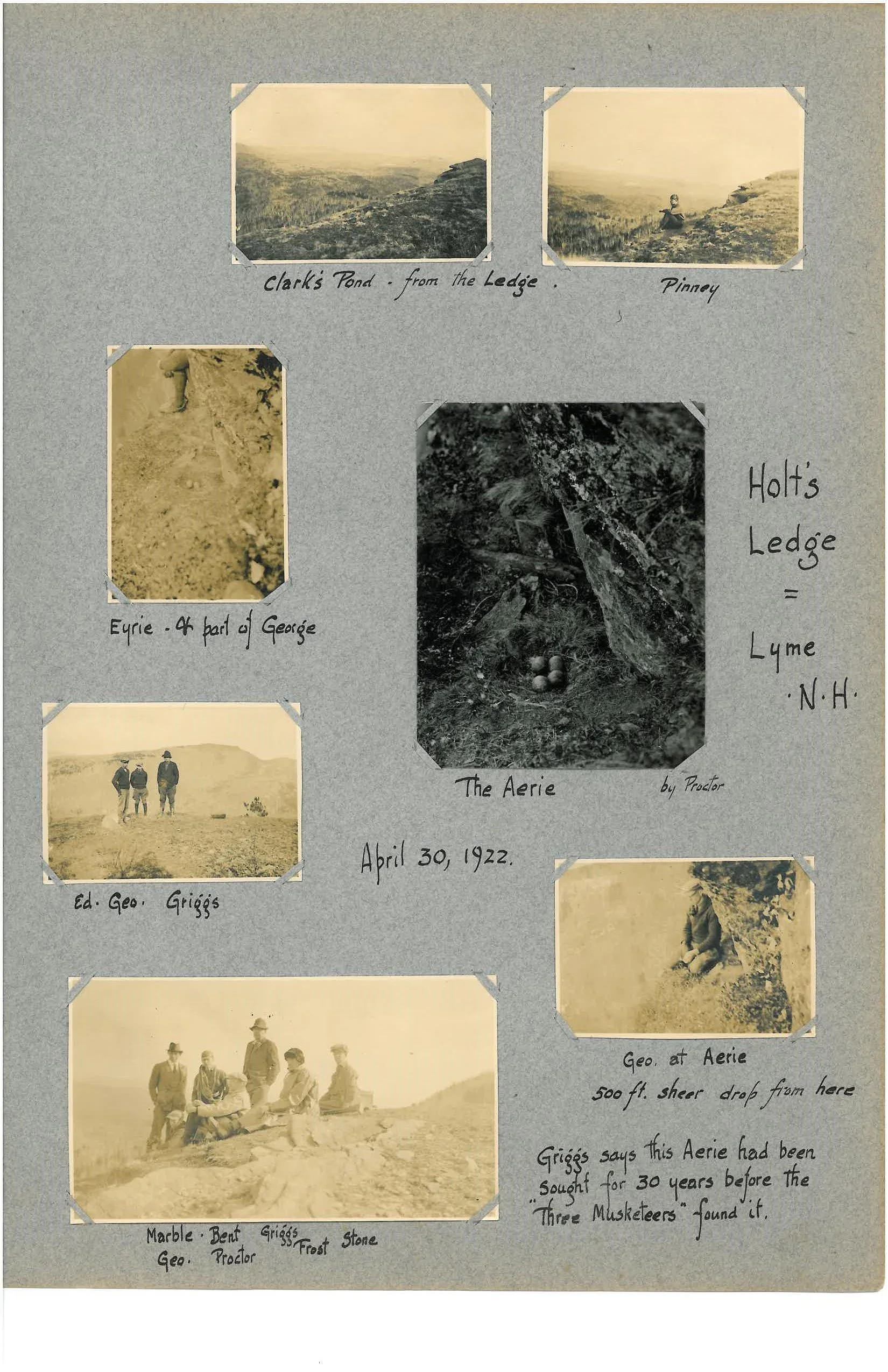
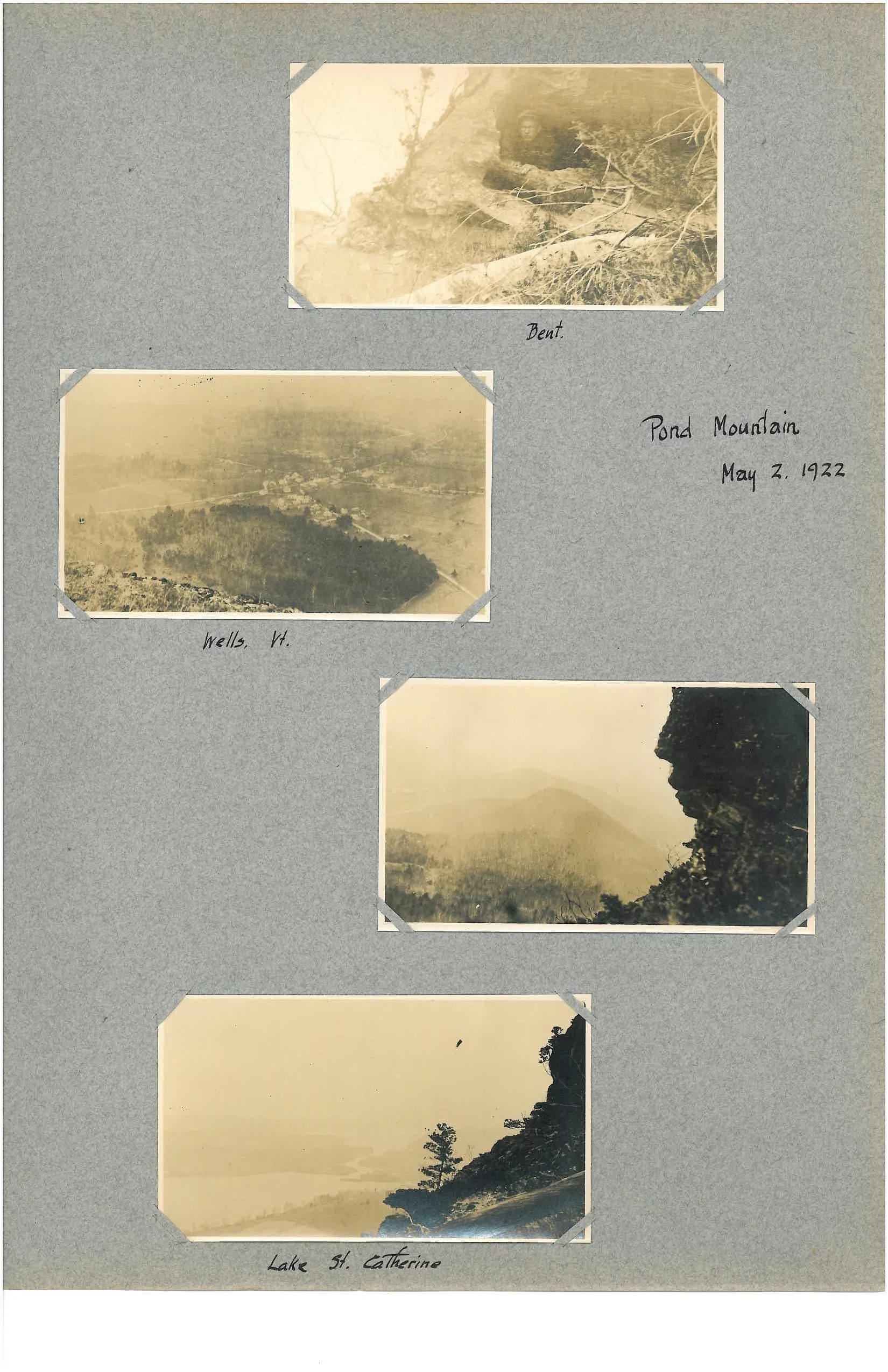
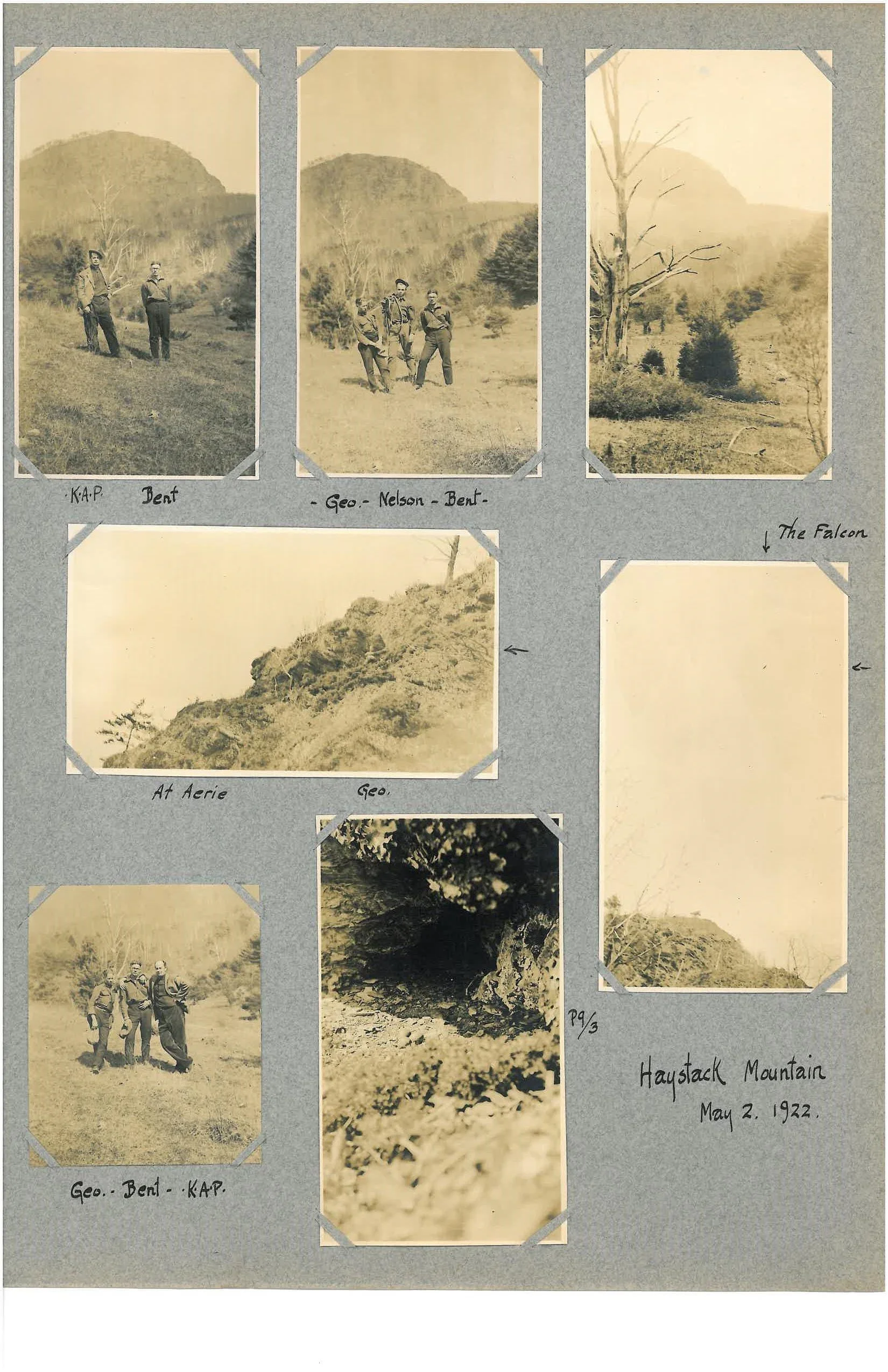
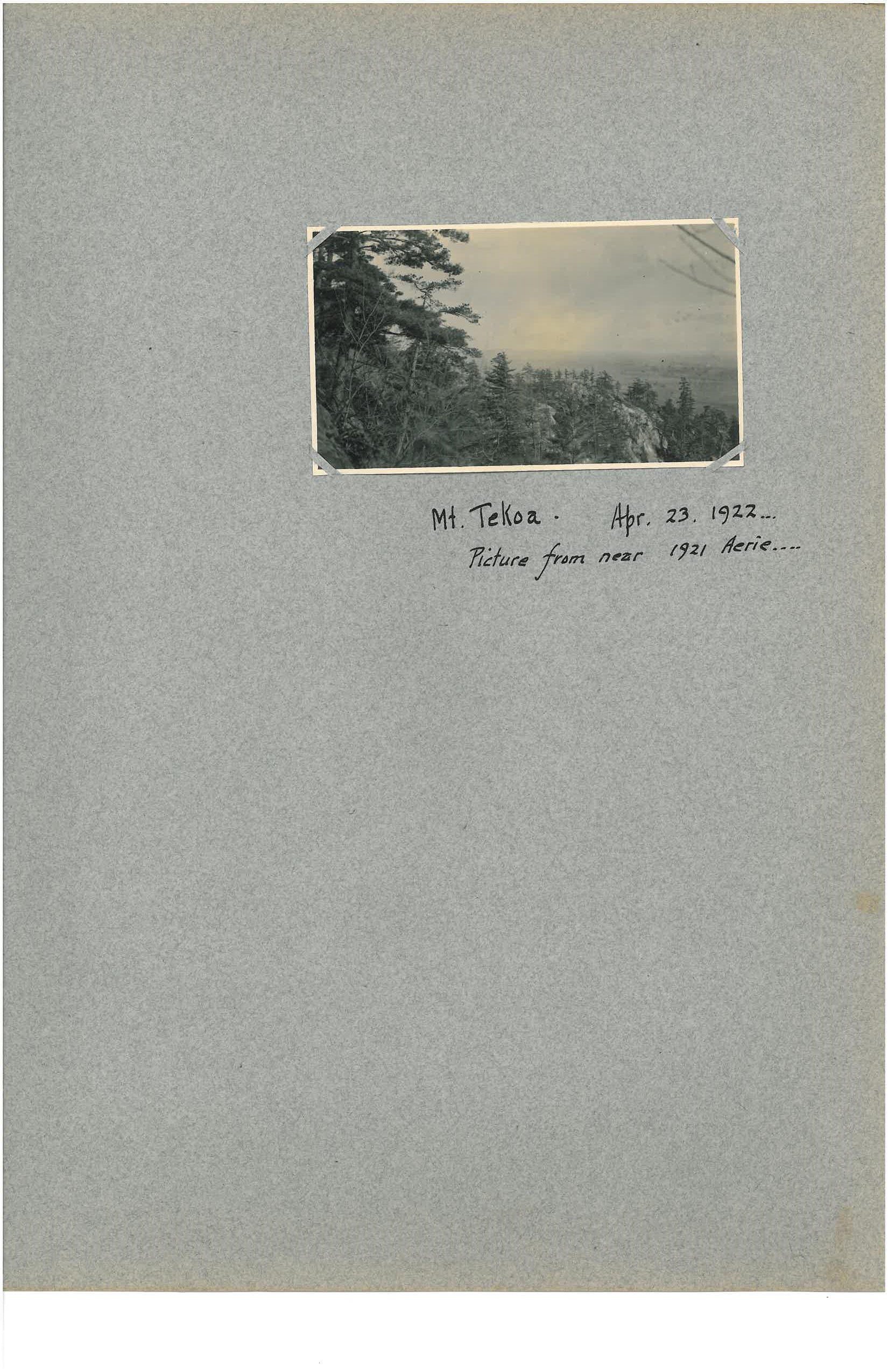
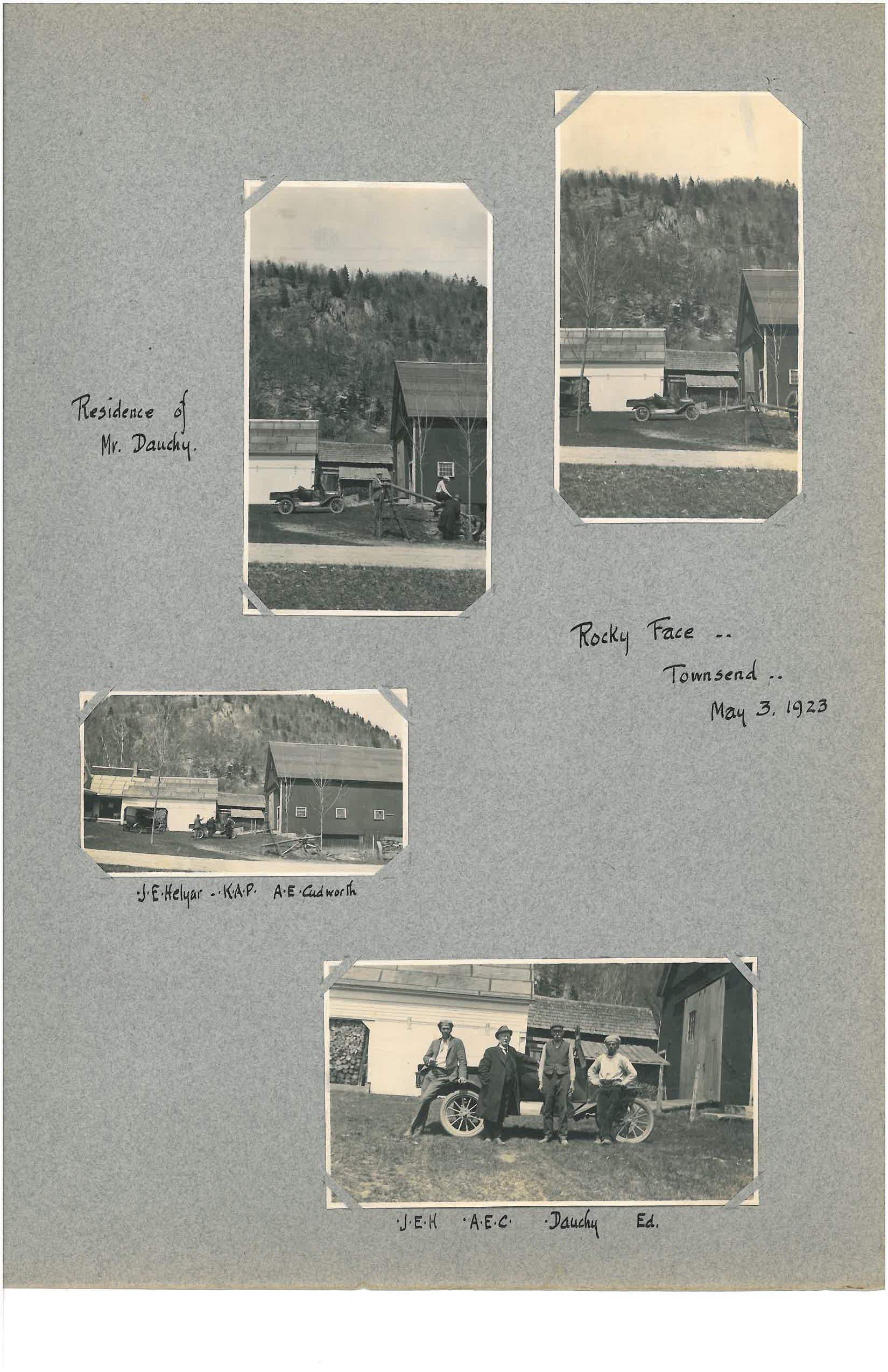
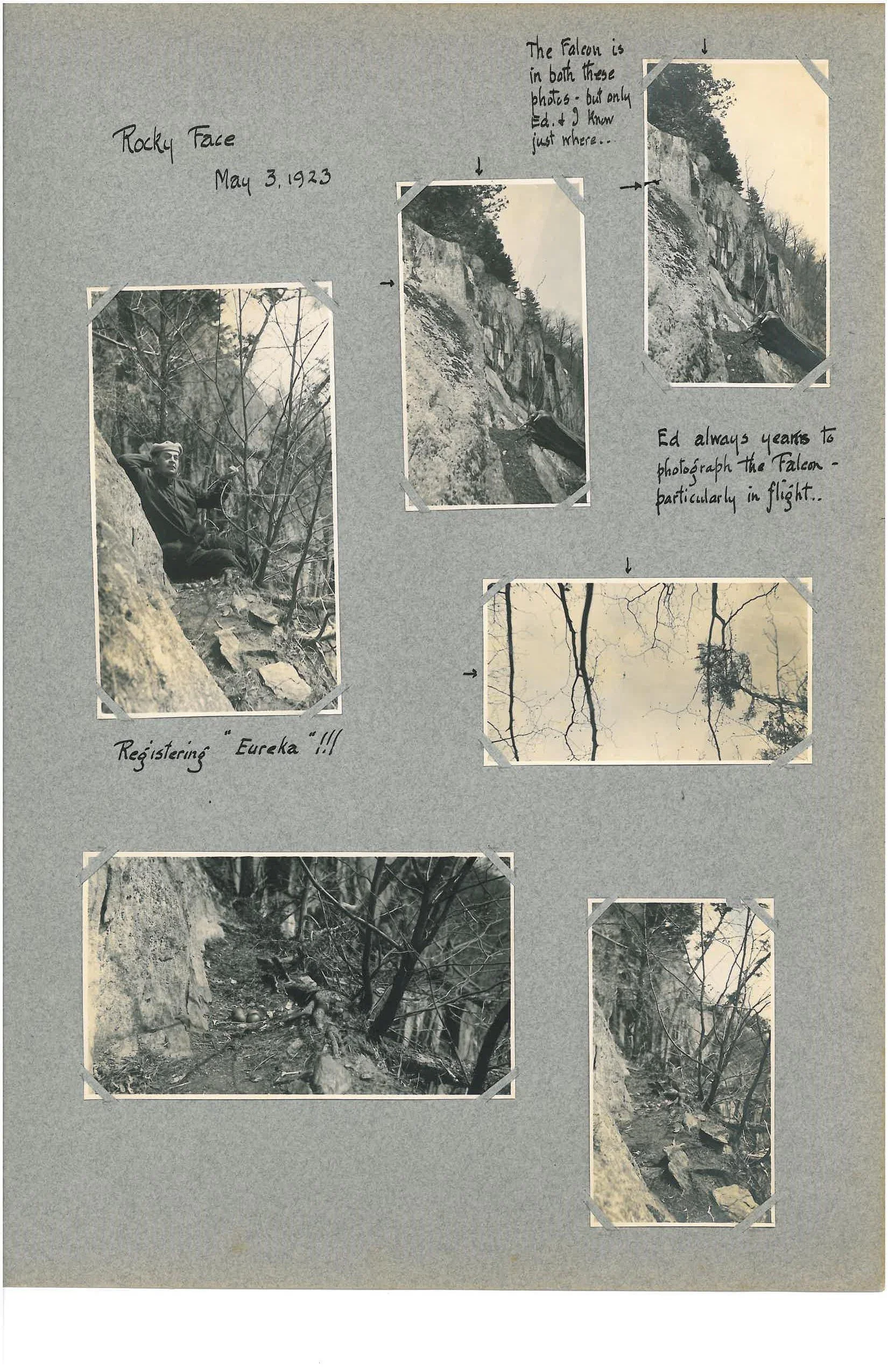
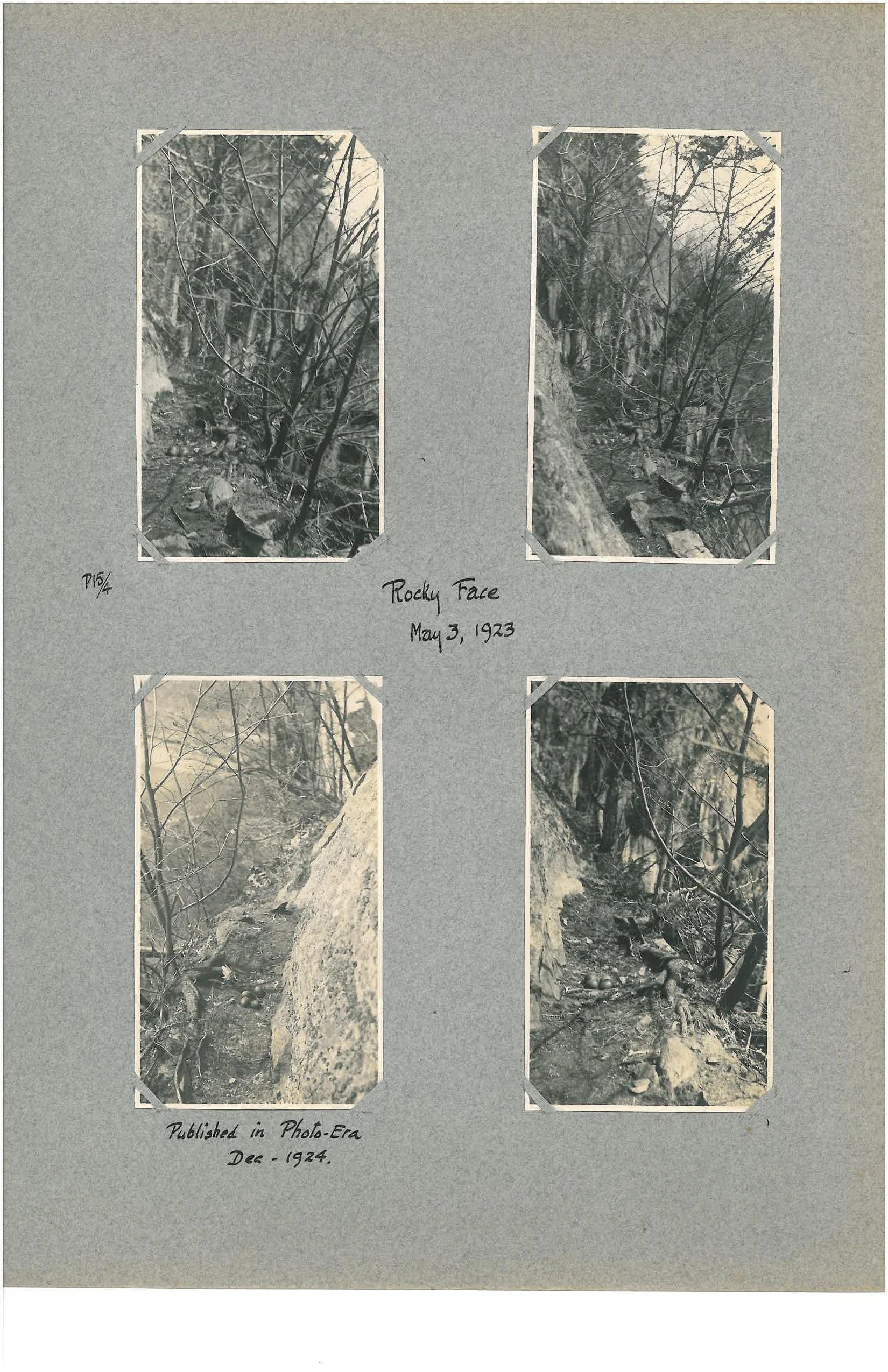
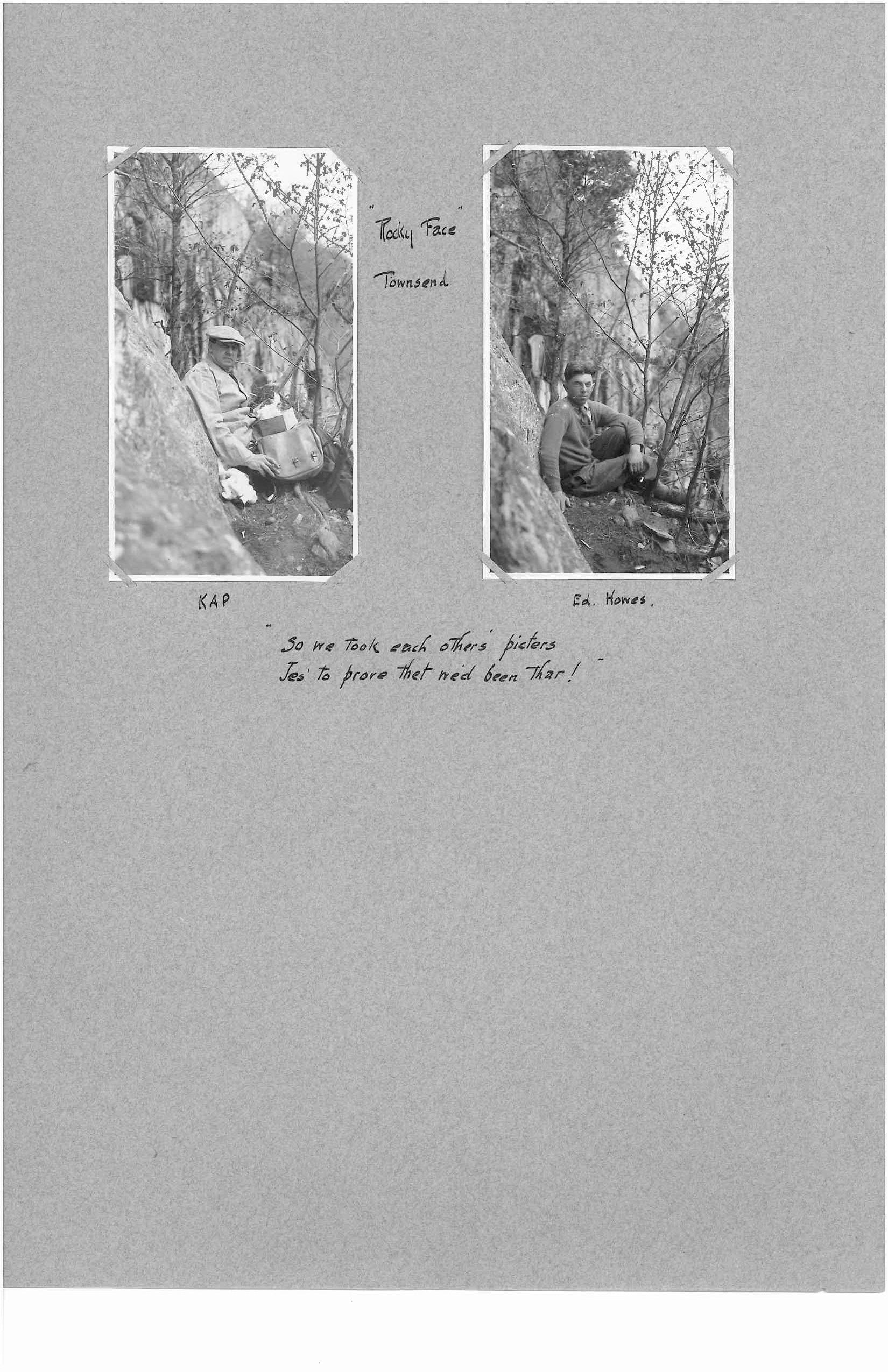
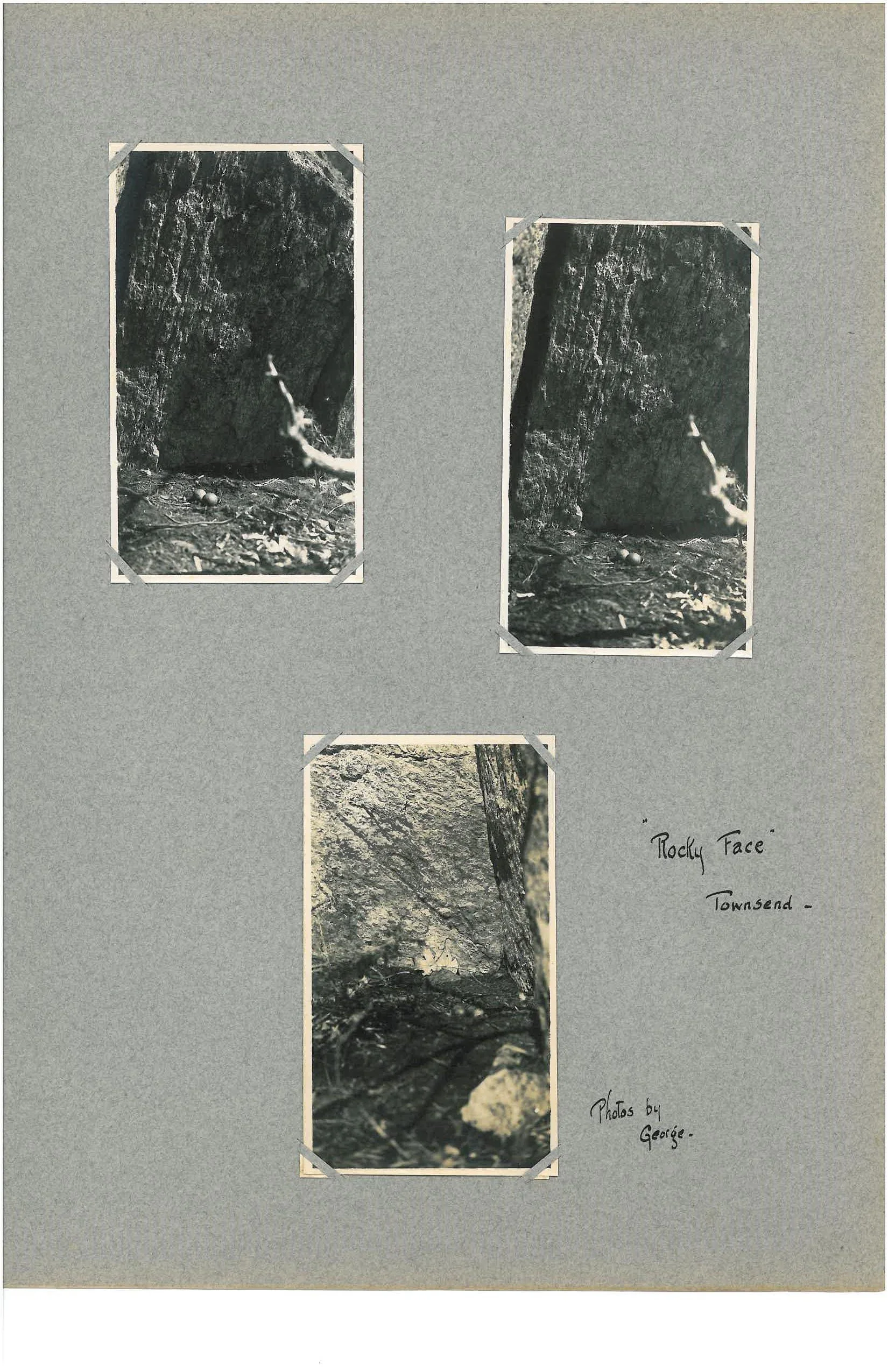
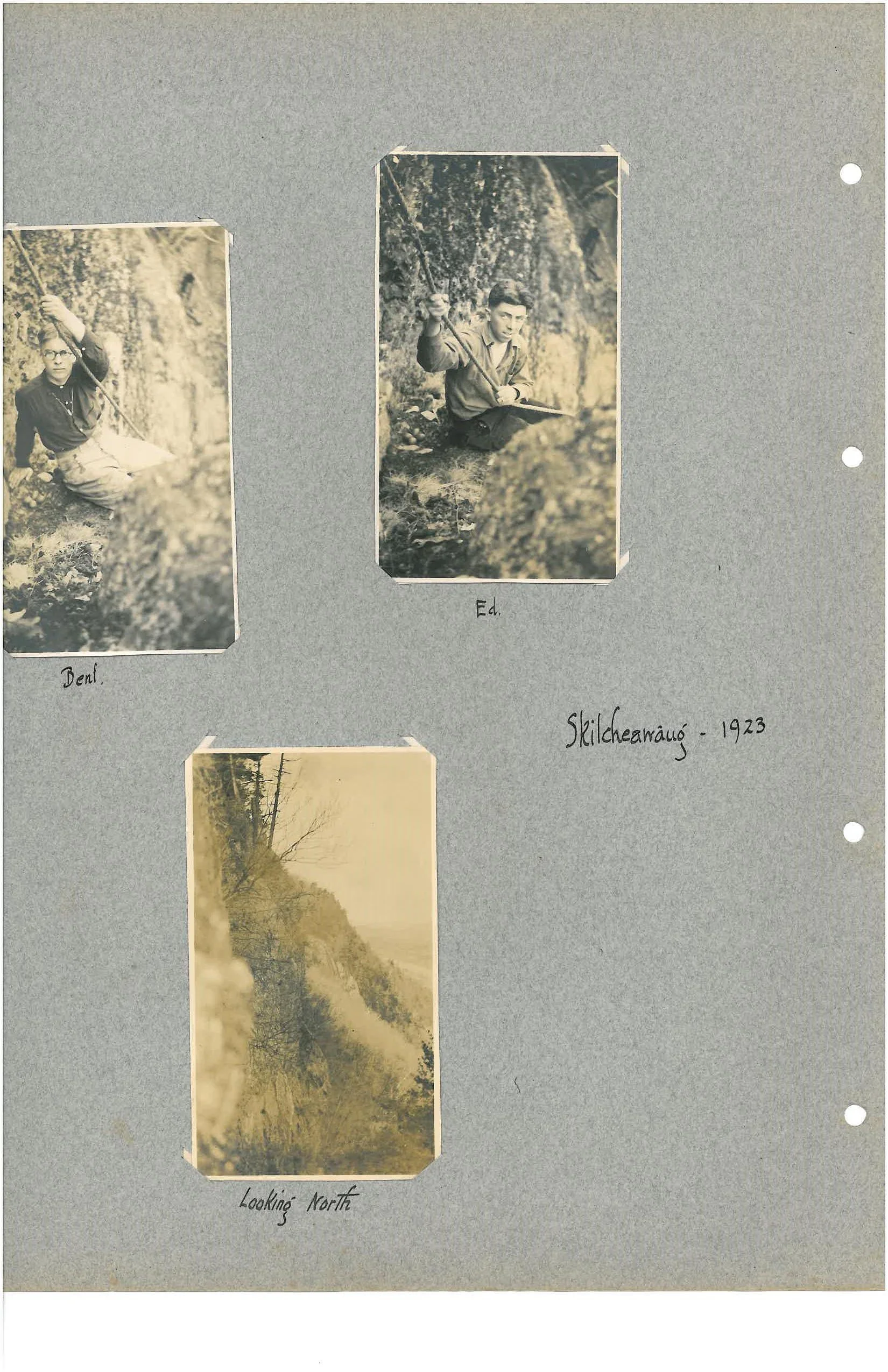
“Photographic Falconry” by Karl Pember. Photo-Era Magazine: The American Journal of Photography. December 1924.
Vermont Center for Ecostudies: https://vtecostudies.org/
Falconer’s Photo Albums. Karl Pember. Collection of the Woodstock History Center