
ZOOM PROGRAM
PADDLING THROUGH TIME: THE LONG HISTORY OF CANOES IN NEW ENGLAND
WITH PROFESSOR ROBERT GOODBY
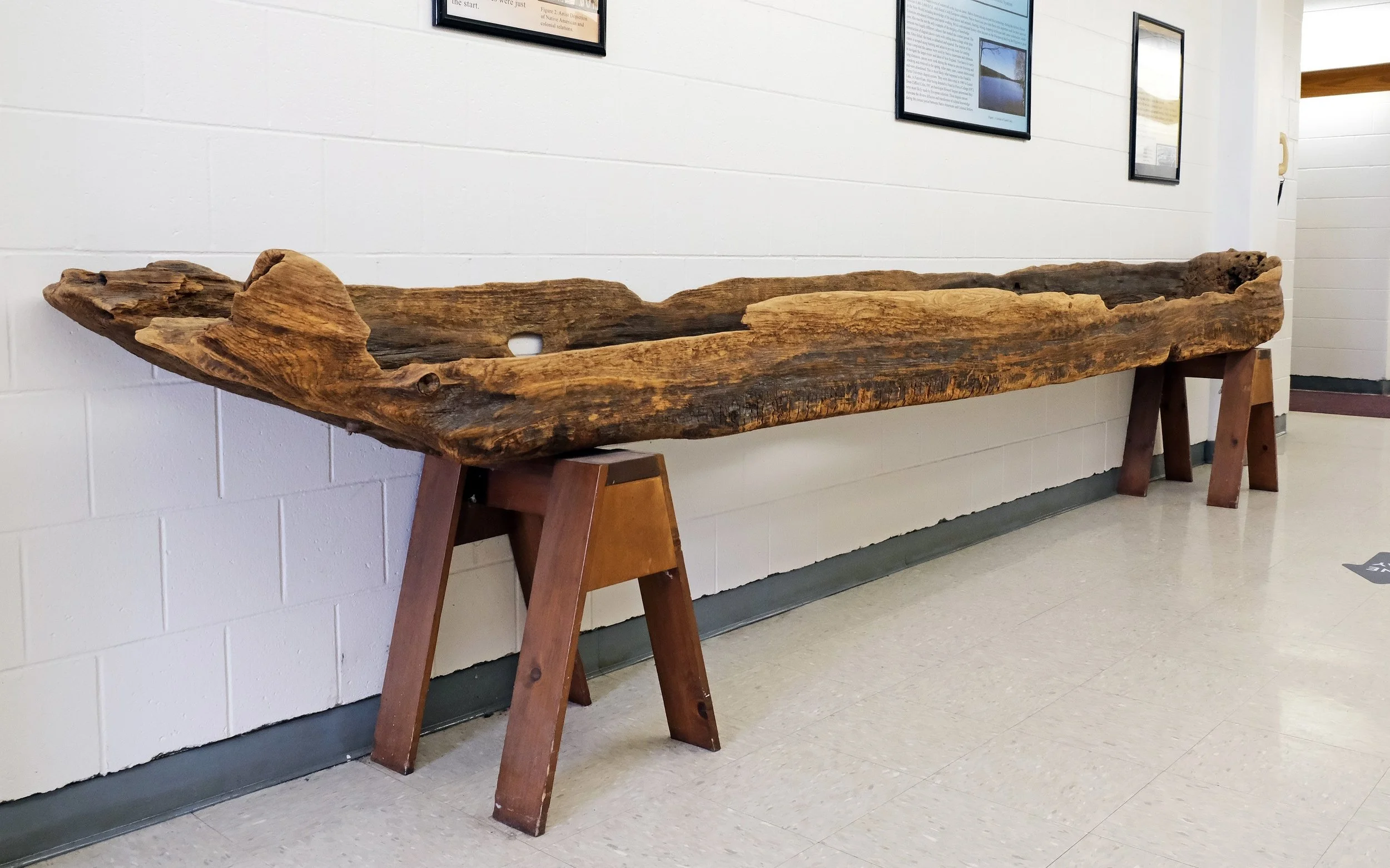
Native American dugout canoe recovered from the bottom of Laurel Lake in Fitzwillian, New Hampshire, radiocarbon dated to between 1660 and 1720 AD.
For thousands of years, canoes were central to the lives of Native Americans in New England. Travel by canoe connected people within and between the major watersheds, creating social and economic alliances and distributing scarce resources to far-flung communities linked by ties of kinship and common culture. European settlers, traders, and explorers adopted Native canoe technology in the 17th and 18th centuries, and a few dozen dugout canoes have since been recovered from the bottoms of ponds and lakes across northern New England. Join archaeologist Dr. Robert Goodby to discover what we've learned from these recovered canoes, including six from New Hampshire that have only recently been carbon-dated.
To link to this program, click the button below.
You may also link to this program by copying and pasting the following link into your browser:
https://us06web.zoom.us/j/89618899956?pwd=n7LXYWrea5Jfh3UTPyakt0DUQGyphv.1
This program is sponsored by the Woodstock History Center. Any views, findings, conclusions, or recommendations expressed in this program do not necessarily represent those of the Woodstock History Center or its partners.