
Woodstock's Newspapers
By Jennie Shurtleff
The Woodstock History Center has a wide array of historic newspapers in its collection. Prior to the advent of 20th century media, newspapers were perhaps the most common avenue for disseminating information and influencing public opinion. In fact, the author of the The History of Windsor County Vermont (published in 1891) states:
“The newspaper has become one of the chief indexes of the intelligence and progress of the community in which it is published, and its files are the foot-prints of the advancement and refinement of the period of its publication; and the printing-office is now deemed as essential as the school-house or church. It has taken the place of the rostrum and the professor’s chair, and become the great teacher. No party, organization, enterprise or calling is longer considered perfect without its “organ” – the newspaper – as a mouth-piece.”
Given the importance of newspapers in both sharing information and influencing public opinion, it is not surprising that historically newspapers have tended to flourish in times when polemical issues caused controversy and political strife.
Woodstock’s First-Known Newspaper: Northern Memento
The first newspaper published in Woodstock was the Northern Memento. This paper was started by Isaiah H. Carpenter in 1805. Carpenter printed the paper from his house, which was located near the east end of the Green. In a prospectus that was issued in October 1804, Carpenter laid out his reasons for printing the paper and his vision in hopes of attracting subscribers. He noted that the Northern Memento would be a weekly paper and stated that it would be “uninfluenced by the violence and spirit of party rage… and open to the communications of all.”
So what types of information did this early paper include? Everything from articles on “female charms,” to what toasts were given at the Fourth of July celebration that year, to how to use potatoes to extend the use of one’s coffee.
Although Carpenter received 128 subscribers, the paper only ran for about nine months. Despite its upfront proclamation that it would be uninfluenced by “party rage,” it ran some attacks on Benjamin Swan, the state treasurer, who was also a well-known Woodstock businessman and Federalist. This break from the paper’s stated mission appears to have led in a decline of its supporters.
The next paper published in Woodstock was the Woodstock Observer. This paper was established by David Watson in 1820, and it changed its title with some frequency, at different times being known as the National Republican, Jacksonian, and Windsor and Orange County Gazette.”
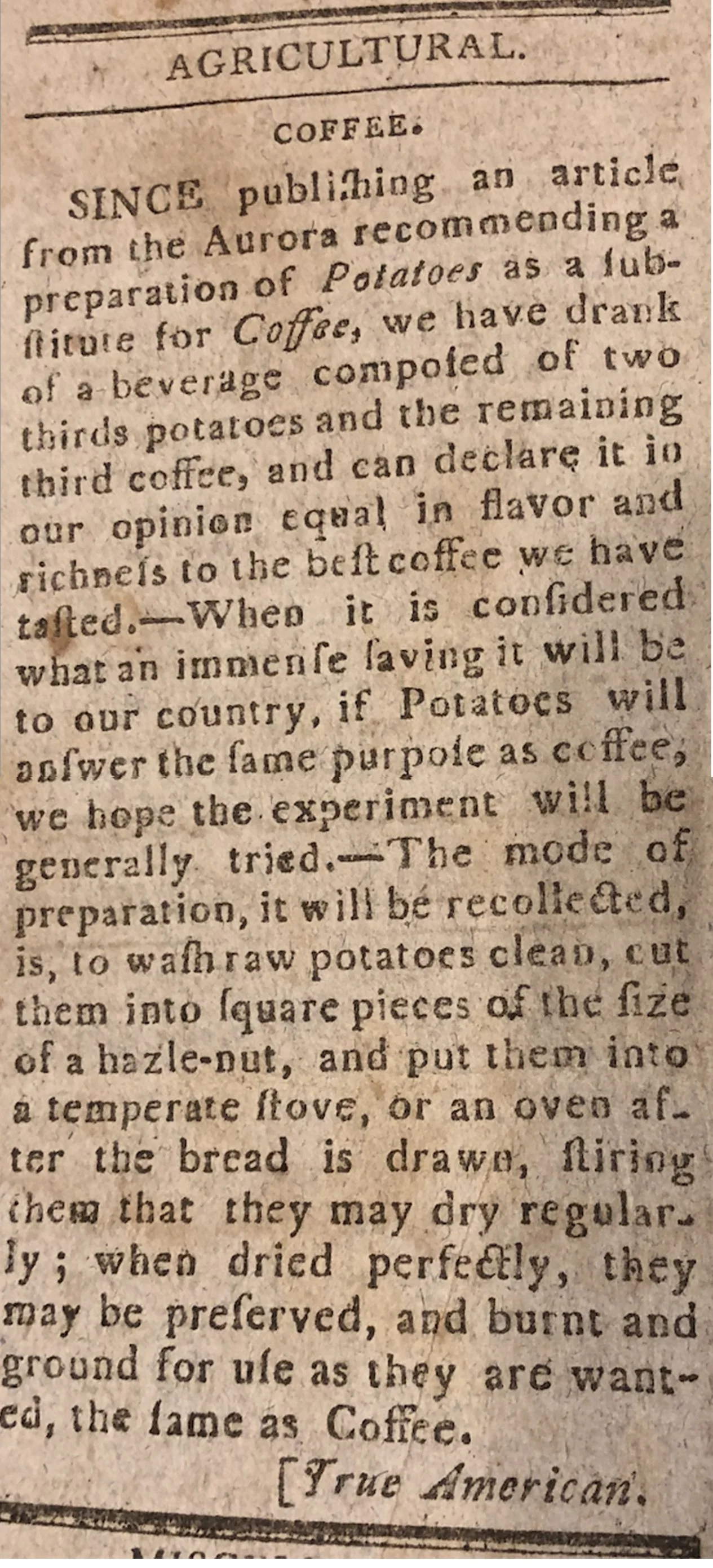
Above: How to use potatoes to extend coffee
Religious Papers
In the years that followed there were a number of short-lived religiously-oriented publications, starting in 1821, when Rev. Walter Chapin started the Evangelical Monitor that was published every other week. It was followed by the Gospel Banner, published by Rev. Jasper Hazen and Abner D. Jones, and the Universalist Watchman (started by Rev. Samuel C. Loveland and later carried on by Rev. William Bell). Ultimately, this paper was moved to Montpelier where it was renamed the Christian Repository.
Not all the religious papers of the period advocated the same religious views. One such paper that was published about 1830 was decidedly different than the others. An outgrowth of a club that included in its membership Thomas E. Powers, John D. Powers, Thomas Russell, Nahum Haskell, Thaddeus Haskell, and Benjamin Metcalf, for a year or so, this small monthly magazine, called Liberal Extracts published articles noted for their infidel character. Thomas Powers appears to have been the main editor, and Thaddeus Haskell and Benjamin Metcalf the main printers.
Mid-Century Papers
The 1830s saw the rise of other newspapers, most of which had a political slant, including the Henry Clay and Advocate of the American System (which changed names several times being known alternatively as Vermont Courier and Farmer’s Manufacturer’s and Mechanic’s Advocate, Republican and Courier, and finally the Vermont Courier.
Around 1831, an agricultural paper, called the Workingman’s Gazette was established by William W. Prescott, but like the Village Balance, The Constitution, the Hornet, and many other papers of the period, it ran for just a short time.
An article published in Spirit of the Age notes that “Pretty much all Woodstock newspapers in these days were largely filled with personal abuse of political opponents of such character as would have found little favor in the absence of extraordinary political excitement, and the little campaign papers were often fairly scurrilous.”
In 1837, the Vermont Mercury was first printed by Nahum Haskell and Augustus Palmer. The paper continued under this name for about a decade before being changed to the Woodstock Mercury, a title later expanded with the addition of the words “Windsor County Advertiser.” While Haskell, a book binder by trade, was the original editor, the editorial work in later years was largely done by Norman Willimas and Thomas E. Powers.
In 1842, a “campaign edition” of the Vermont Mercury was published under the name of the Whig Advocate. The editor was Charles P. Marsh, who was at this time a law student, but later became a noted Woodstock lawyer.
Another newspaper in circulation in the 1840s was the Spirit of the Age, which for a couple of years went by the name the Woodstock Age, before the original name was re-adopted.
While the Spirit of the Age was a Democratic paper, the Temperance Herald, also published in the 1840s, was committed to the publicizing the dangers of alcohol. Support for temperance ran strong in Woodstock, and by 1853, a new paper known as the Vermont Temperance Standard was started with Thomas E. Powers as the editor and Lewis Pratt Jr. as the publisher. The paper described itself as “An Independent Family Newspaper, — Devoted to Temperance, Morality, Literature, Agriculture, Amusement, and to Political and General Intelligence.” Articles in the Vermont Temperance Standard often focused on violence, accidents, and indigence caused by alcohol.
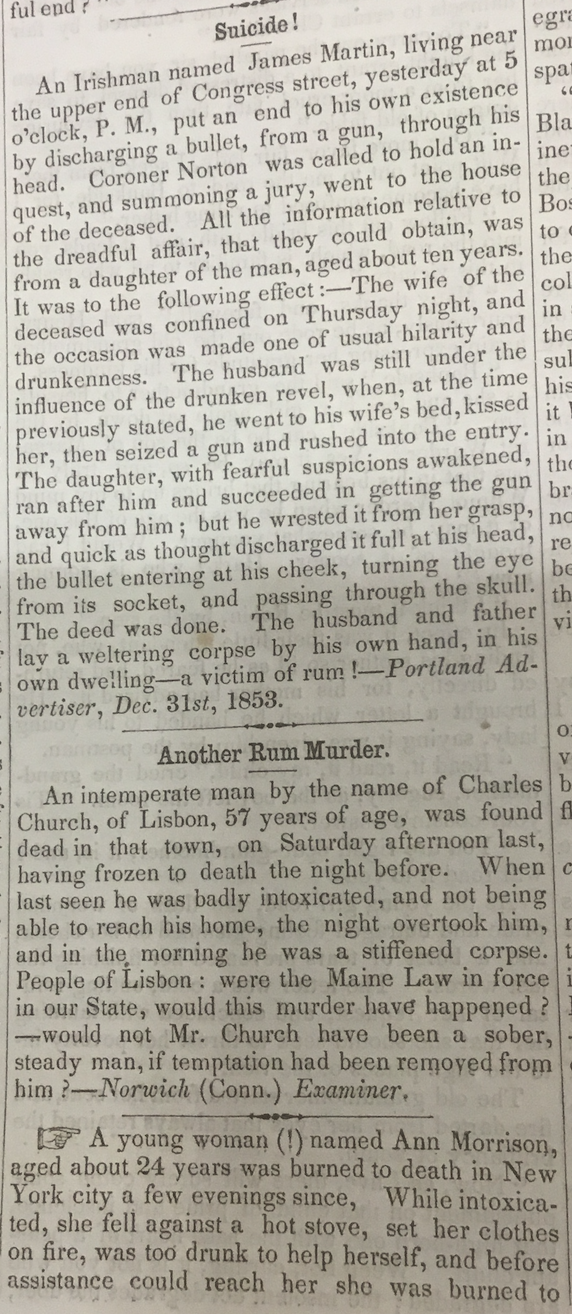
Above: Examples of articles/notices from the Vermont Temperance Standard
Within a year, the The Vermont Temperance Standard’s circulation had soared to 3,000 – higher than any of its predecessors. However, by 1855, when Powers stepped down as editor, the circulation numbers began to wane and the topic of temperance faded as a rallying point. In 1857, Luther O. Greene and Wilbur P. Davis purchased the paper, dropped the word “Temperance” from its title, and refocused the paper away from temperance to local issues.
Over the next few decades, several other newspapers arose including the Northern Farmer and the Ottauquechee Post (later changed to Woodstock Post). Most of these papers were weeklies, and most were distributed by subscription.
Amateur Papers
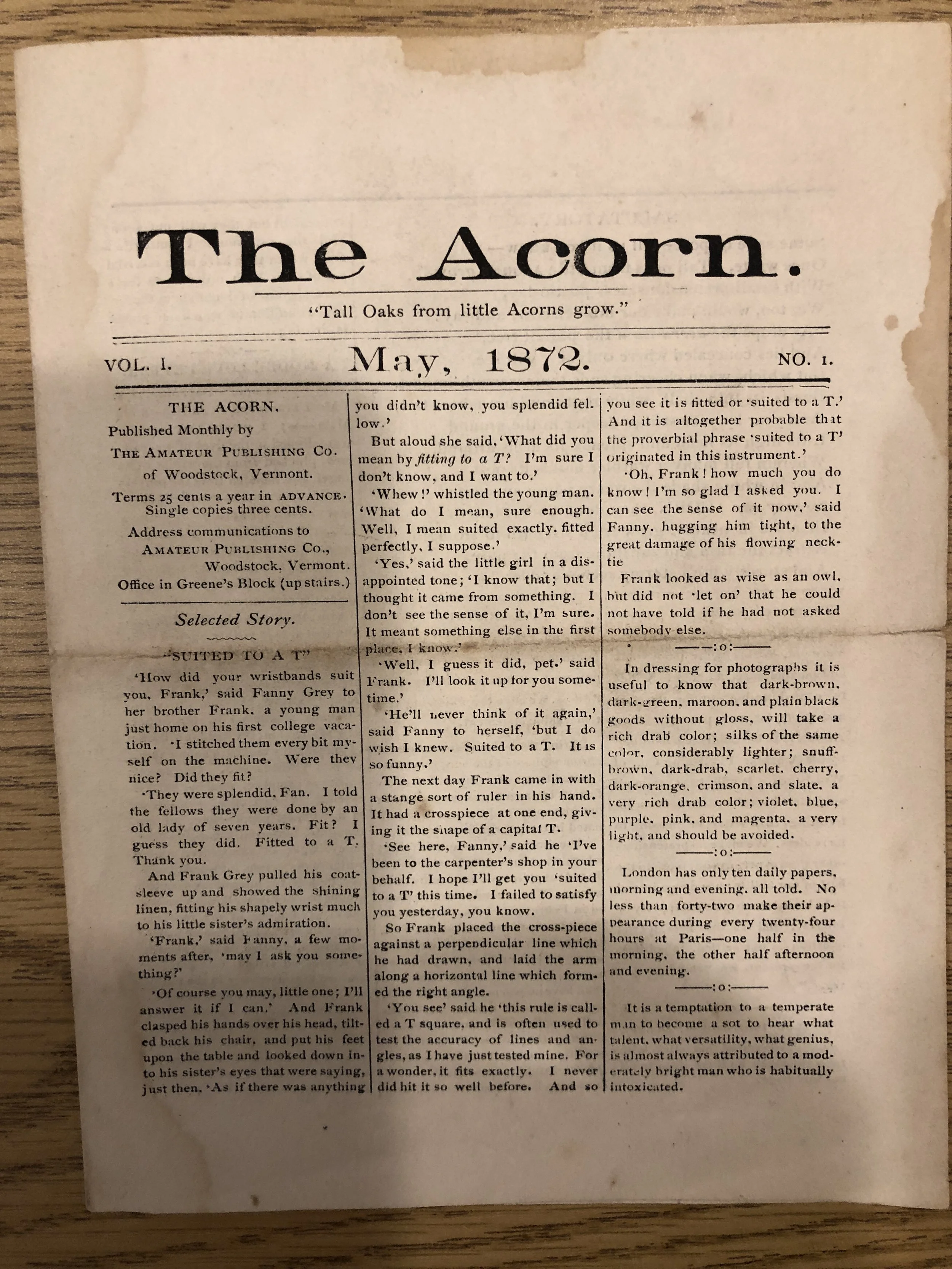
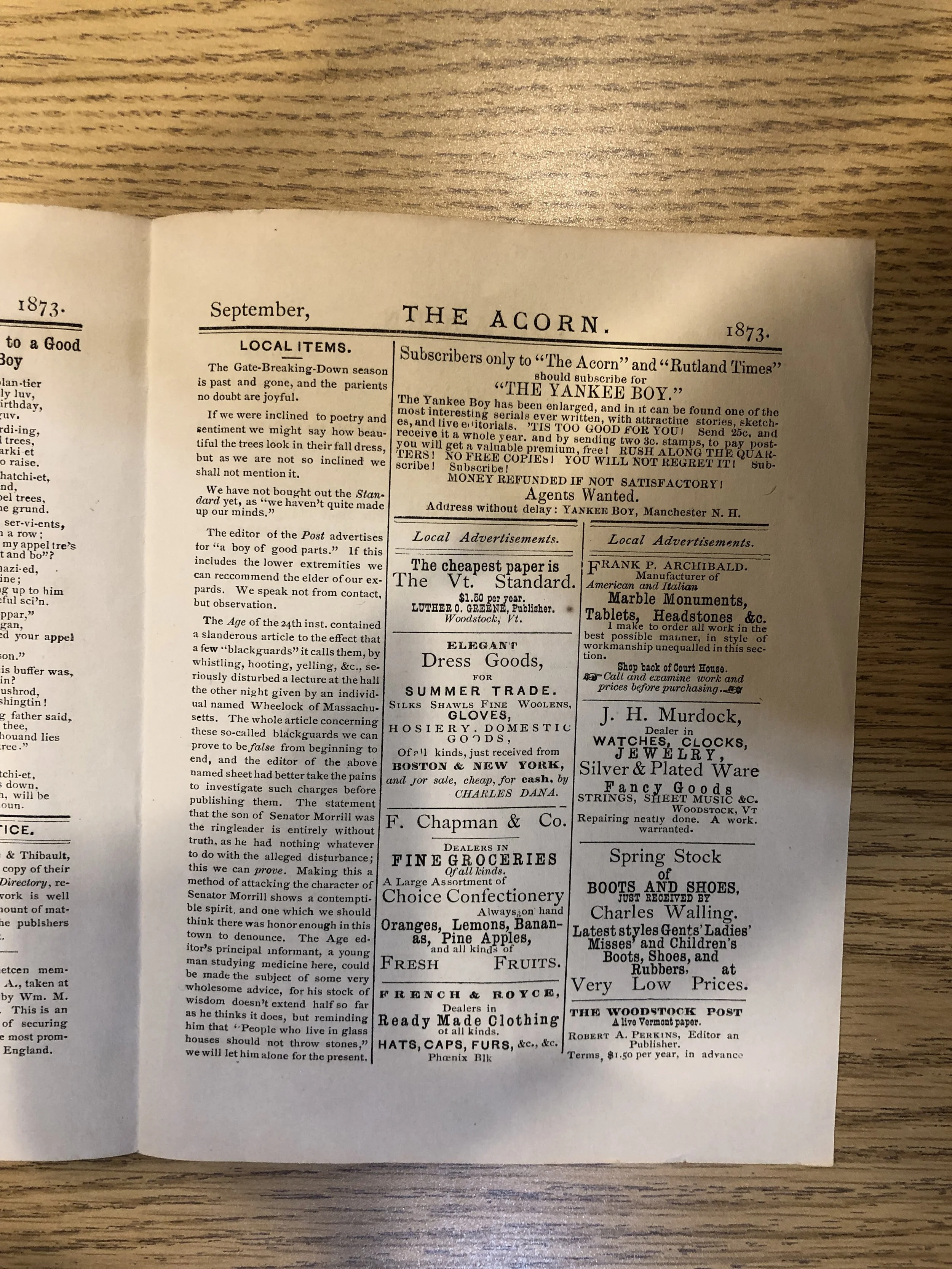
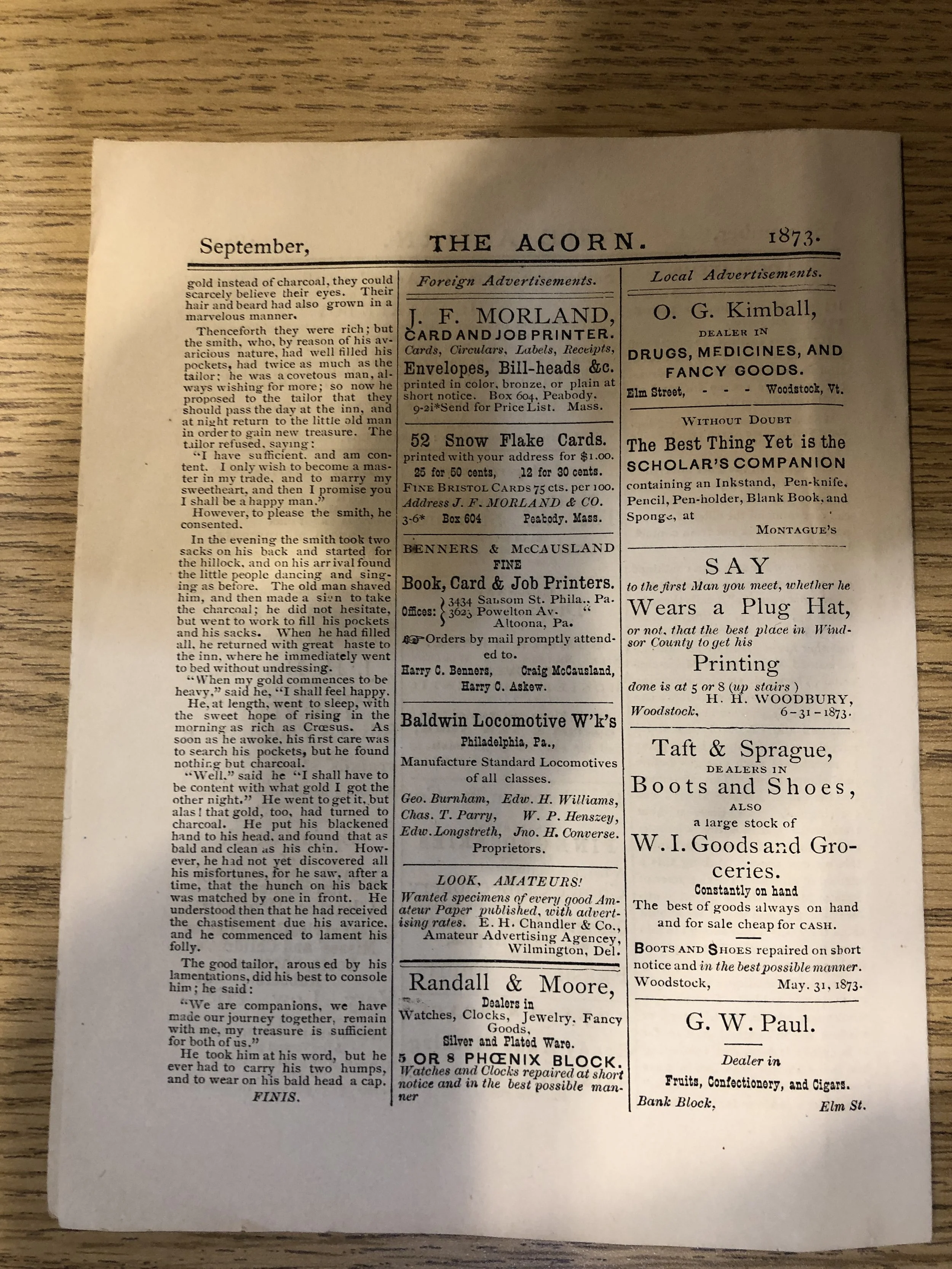
Another Woodstock newspaper that was published in the first seventy-five years of the 19th century was a small publication called The Acorn. This amateur newspaper was first published in 1872 by a group of four local teenage boys: John C. Dana, William N. Campbell, Harold S. Dana, and Edward G. Bailey. Published monthly, it had four three-column pages, and measured only 4.25 by 6 inches. The annual subscription price was a whopping 25 cents. After the first year, Harold S. Dana and Edward G. Bailey dropped out, leaving John C. Dana and William N. Campbell to publish it alone. The paper was discontinued after 17 months.
While The Acorn was not a long-lived paper, it undoubtedly provided a creative outlet for young John C. Dana, who would years later make his mark as both a renowned librarian and as an editor for his two younger brothers’ publishing venture – The Elm Tree Press – which was located at 24 Elm Street in Woodstock, the commercial building adjacent to the Dana House.
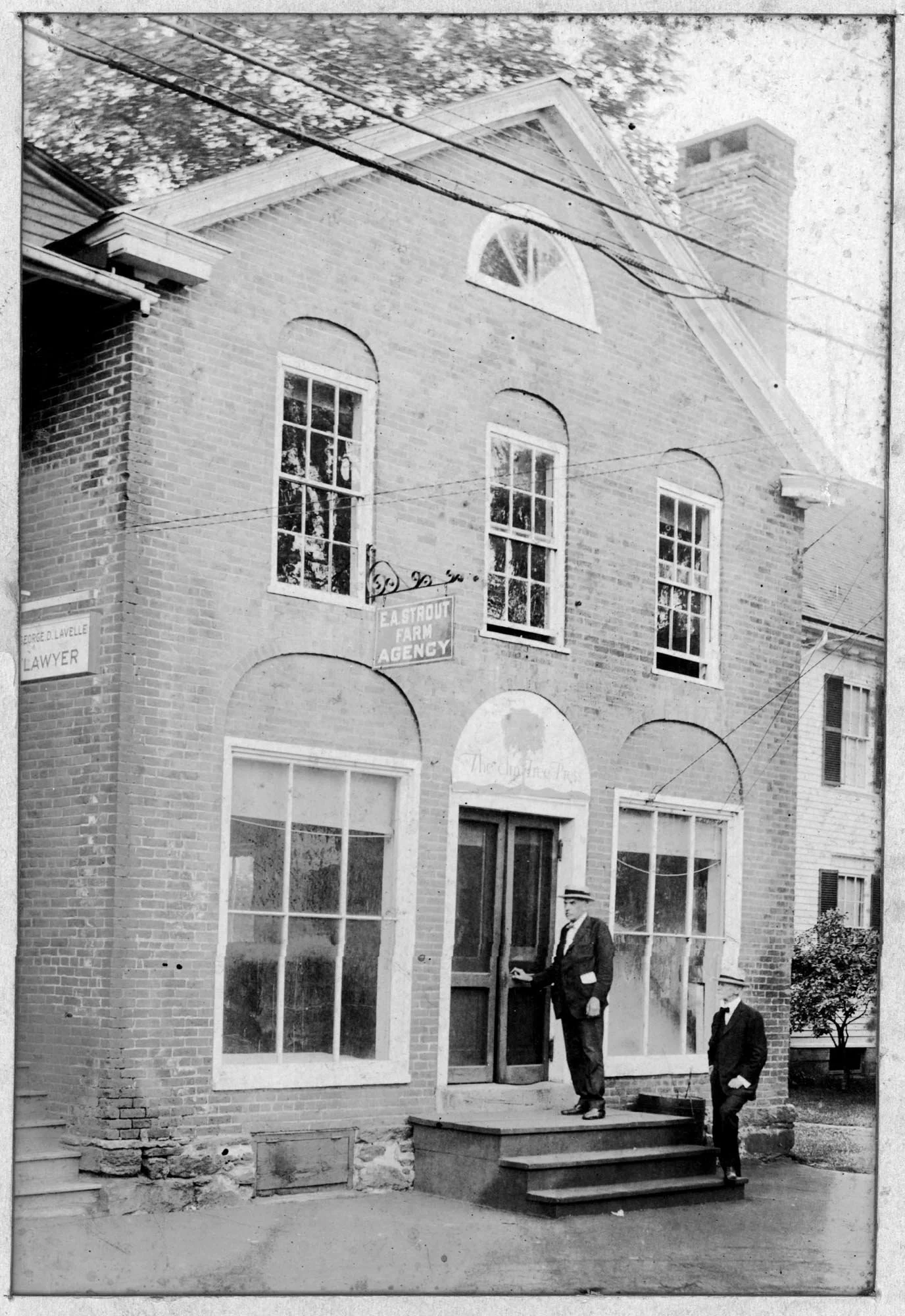
Above: John Cotton Dana entering The Elm Tree Press, which was owned and operated by his two younger brothers.
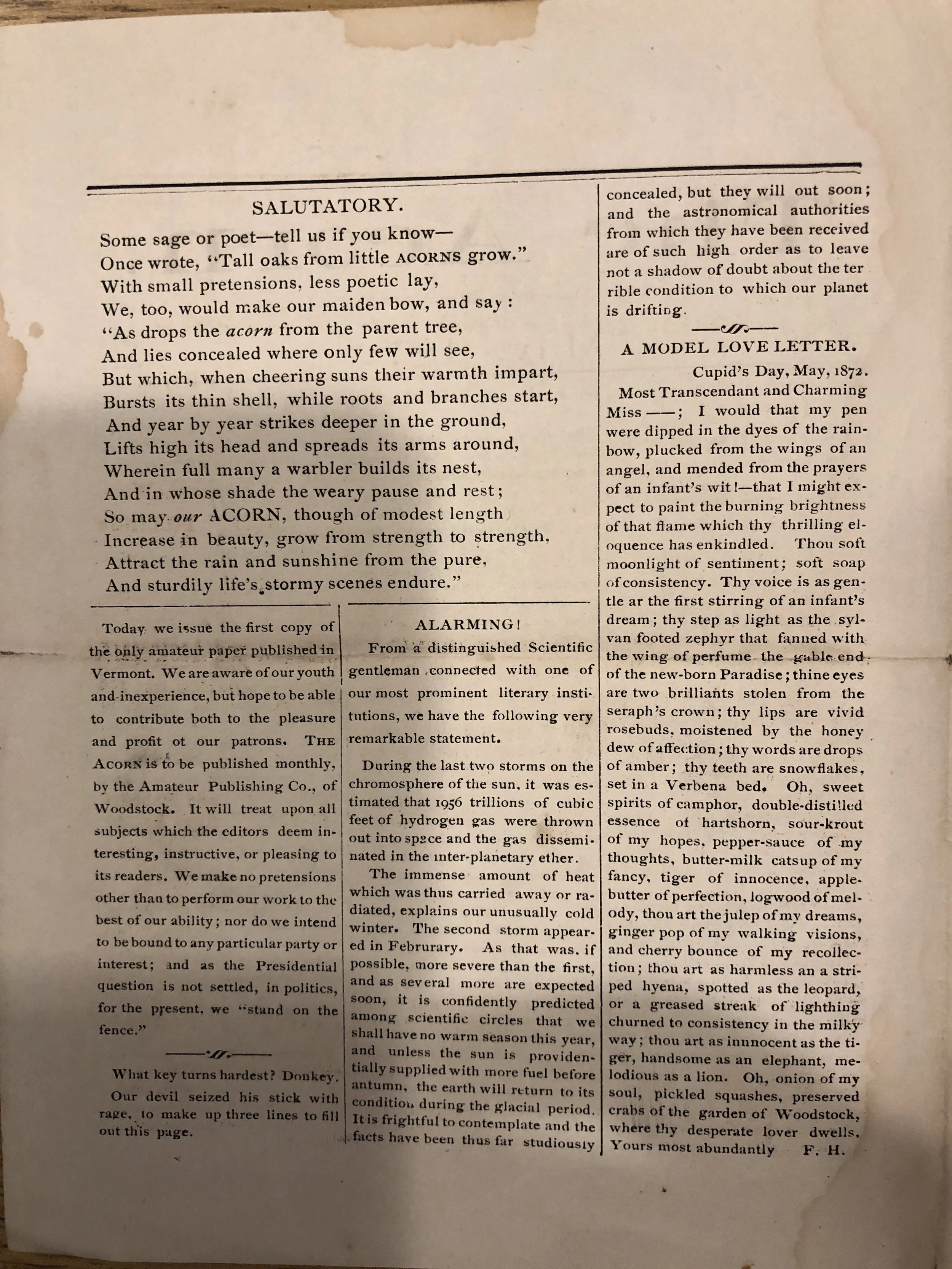
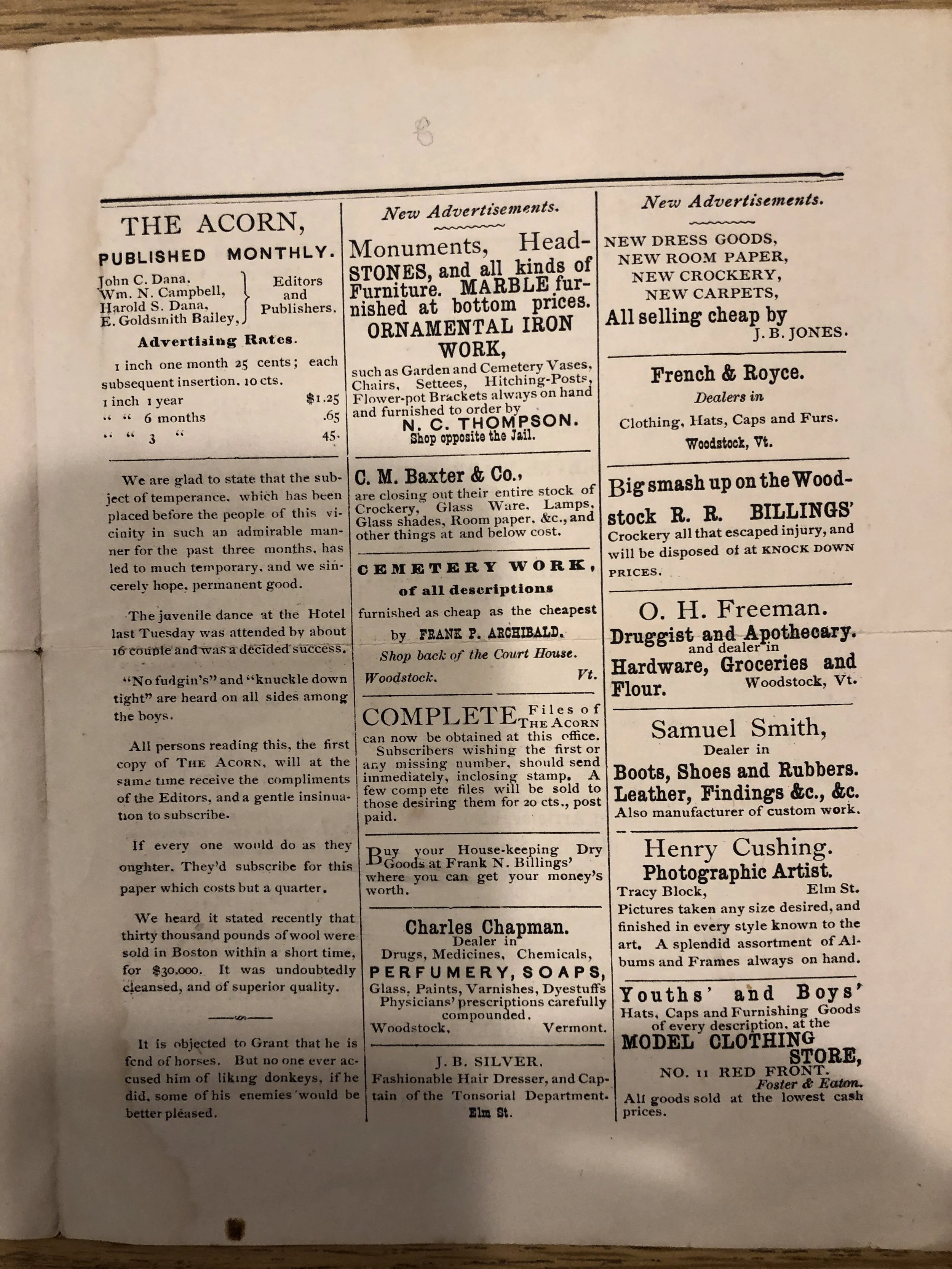
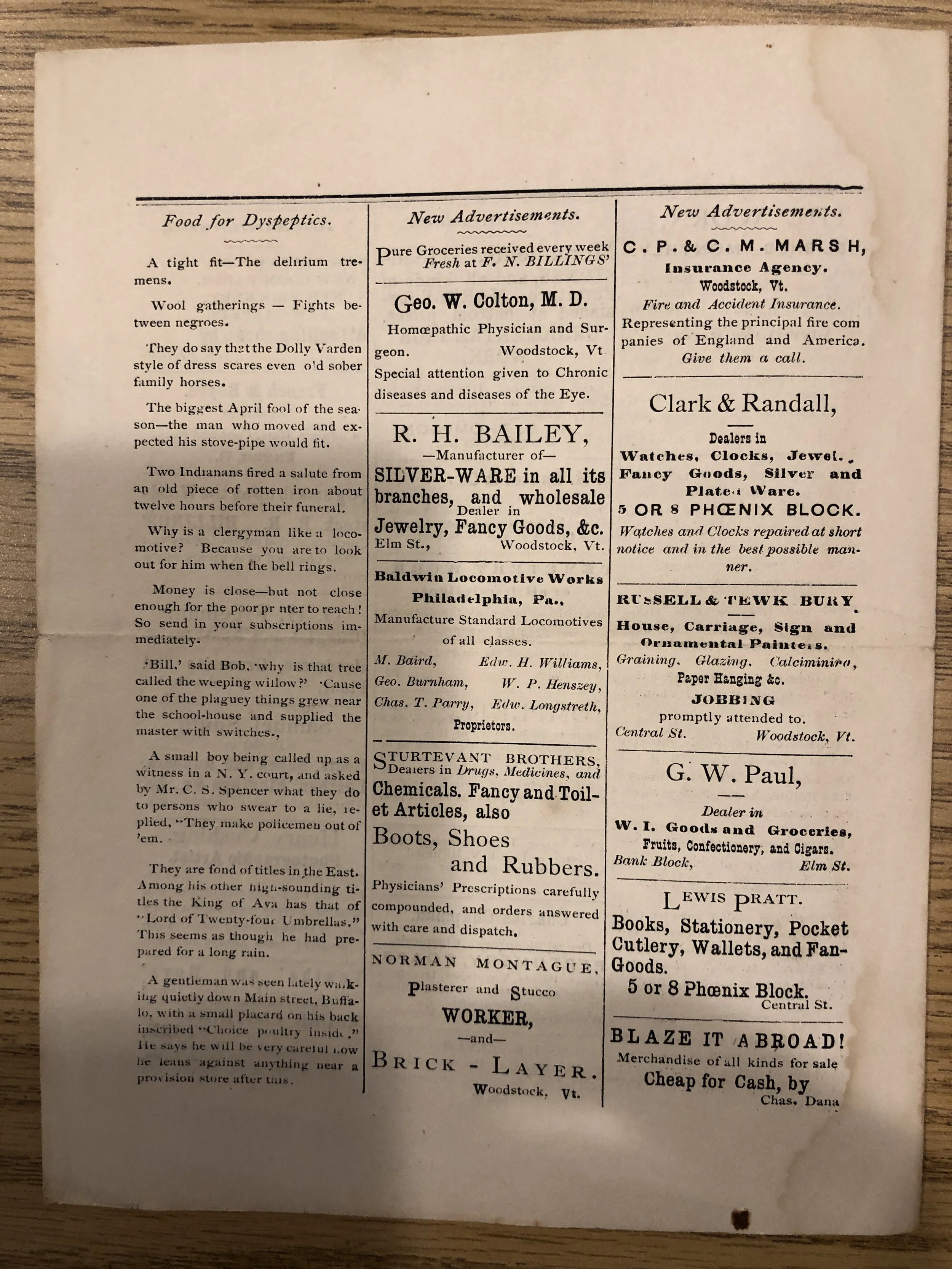
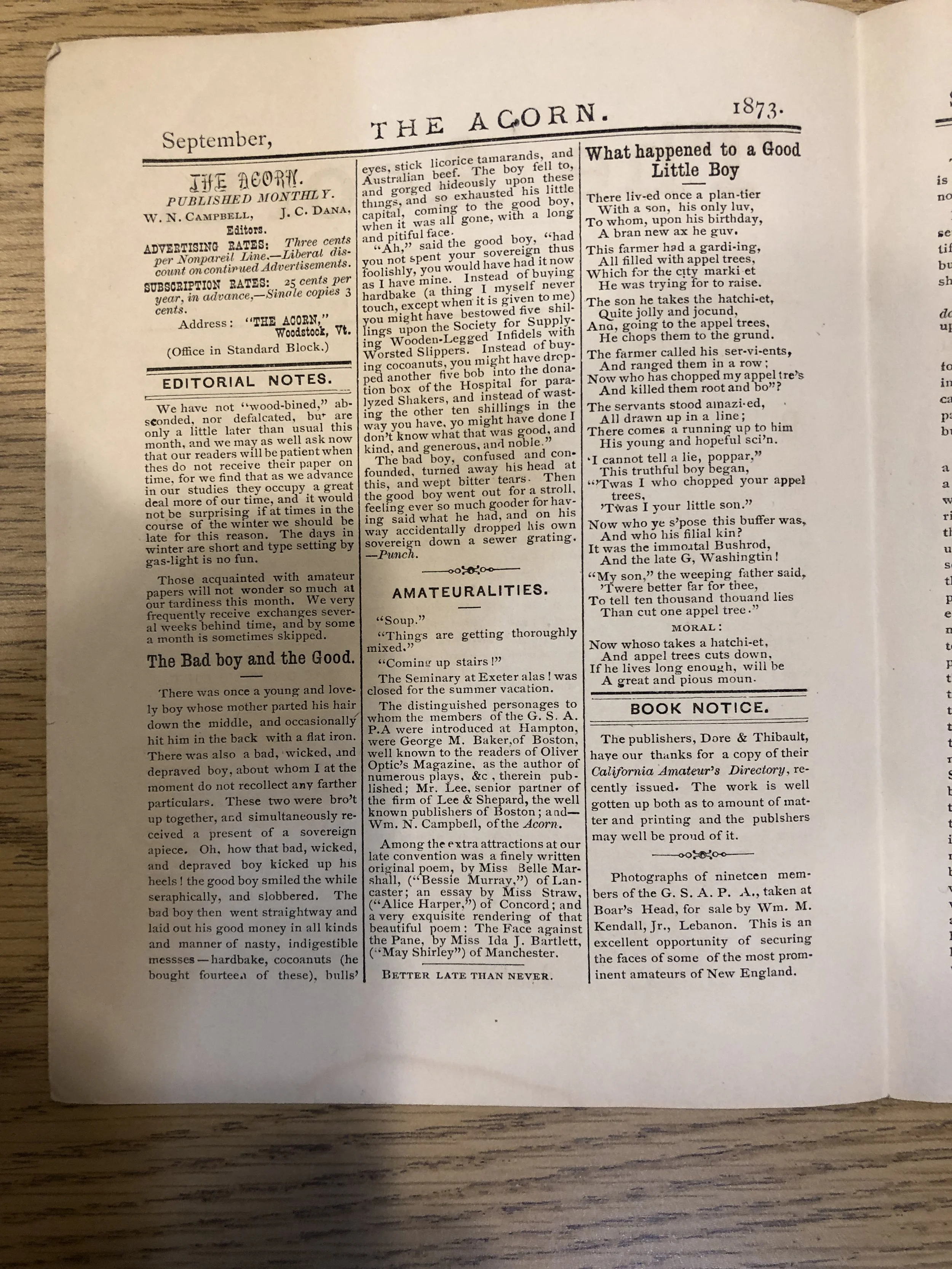
Another small, amateur newspaper that preceded The Acorn was The Owl. This paper was published in 1853 in Woodstock. Satiric and full of “inside” jokes and innuendo, the editors of The Owl claim to have their lodgings at ‘“the Wood Pecker House, on the east side of Pogue Hole.” It also claims to be “Independent in every thing. Neutral in nothing.” This little paper railed against such things as drinking, ostentatious fashions, mistreatment of African Americans, and bowling allies. It is filled with pithy observations that are reminiscent of the fictional Lady Whistledown’s writings and often end with threats of revelation if the indecent behaviors were not corrected.
A few excerpts are shown below.
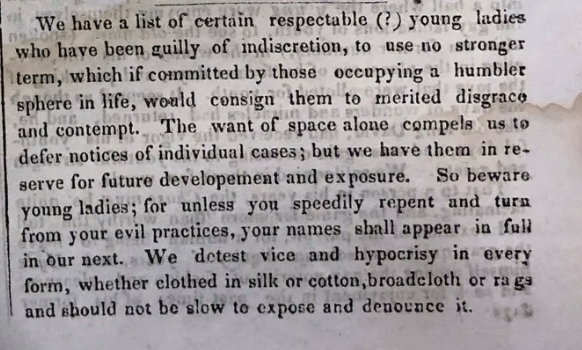
Above: This notice warns young women that their indecent behavior will be exposed if they do not change their ways.
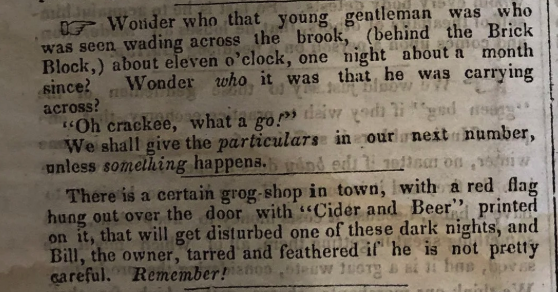
Above: In this notice, the author(s)’ temperance stance is exposed followed by a veiled threat to “disturb” the flag that says “Cider and Beer.”
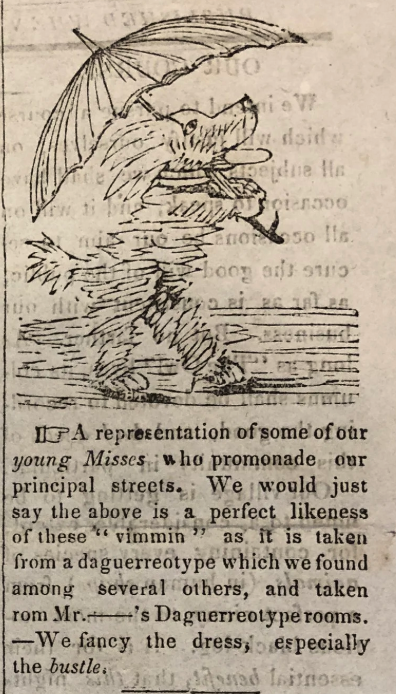
Above: The fashions worn by “young Misses” are the subject of this piece which obliquely criticizes women’s sartorial choices — likening bustles to a dog’s tail.
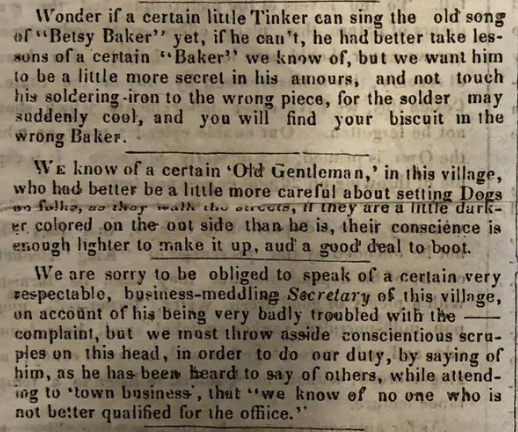
Above: These notices cover a variety of topics including a two-timing tinker, an “Old Gentleman” who is harassing people because of their race, and an incompetent “business-meddling Secretary.”
The Owl was not the only short-lived paper of the times. There were at least four other Woodstock papers – Pulse of the People, The Tea Party , The Scholars’ Olio, and Wangdoodle that had very short publication cycles where the early interest and passion of their writers seems to have waned or, perhaps, not to have met with commensurate interest on the part of the public.
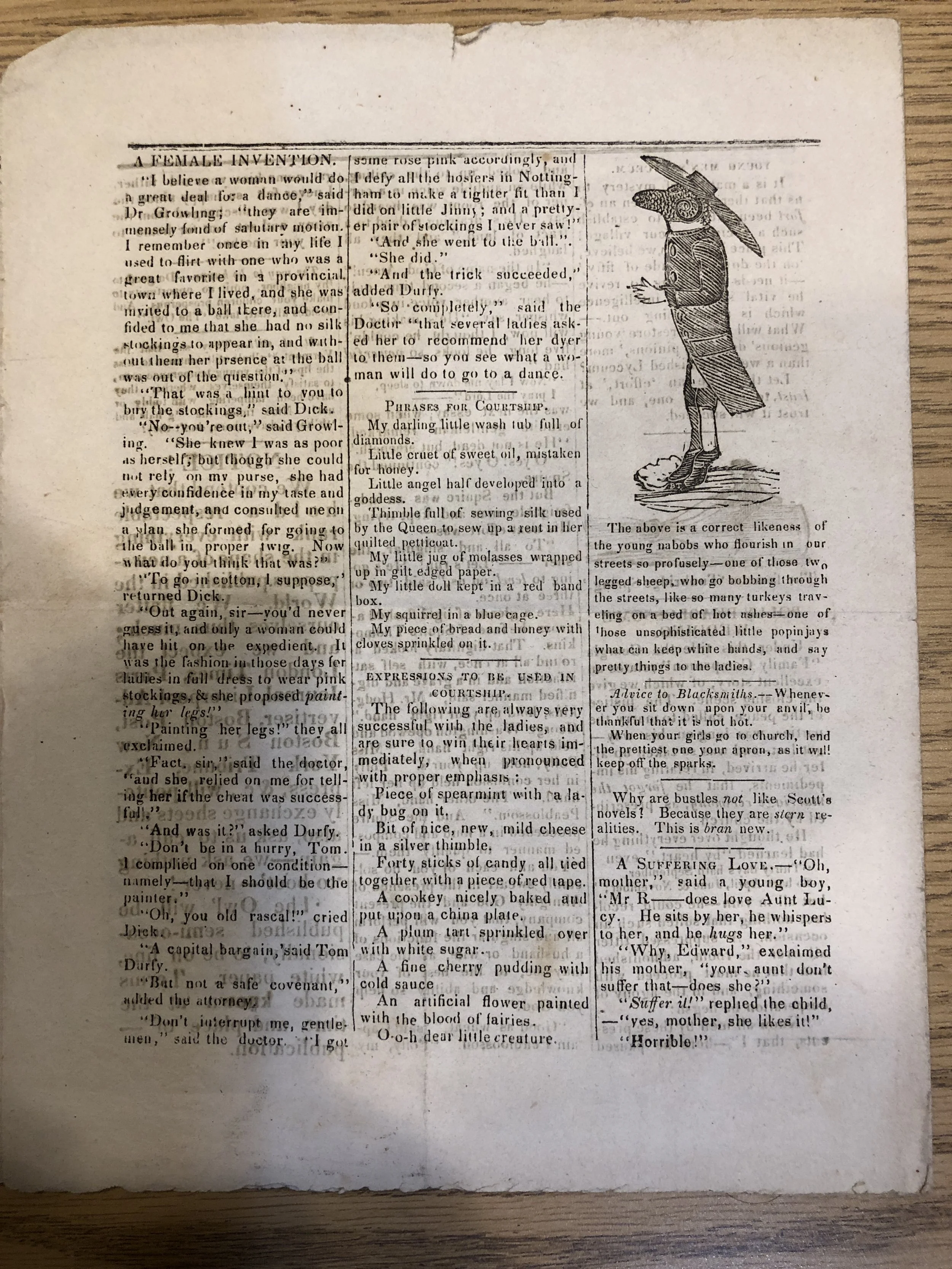
The Woodstock History Center has a large number of local historic newspapers from the mid to late 19th century in its collection, and many more are available online through sources like Newspapers.com. These papers provide crucial insights into understanding what people were thinking and talking about on a weekly basis — from politics to what attributes were considered charming in women. The sheer number of papers attests to the interest in sharing news and, in many cases, trying to shape public opinion.
Papers like The Owl, which are unfiltered and “neutral in nothing,” give insights into some of the polemical issues in the Woodstock community in the mid 19th century. If you wish to read more, some pages of this publication are included below.
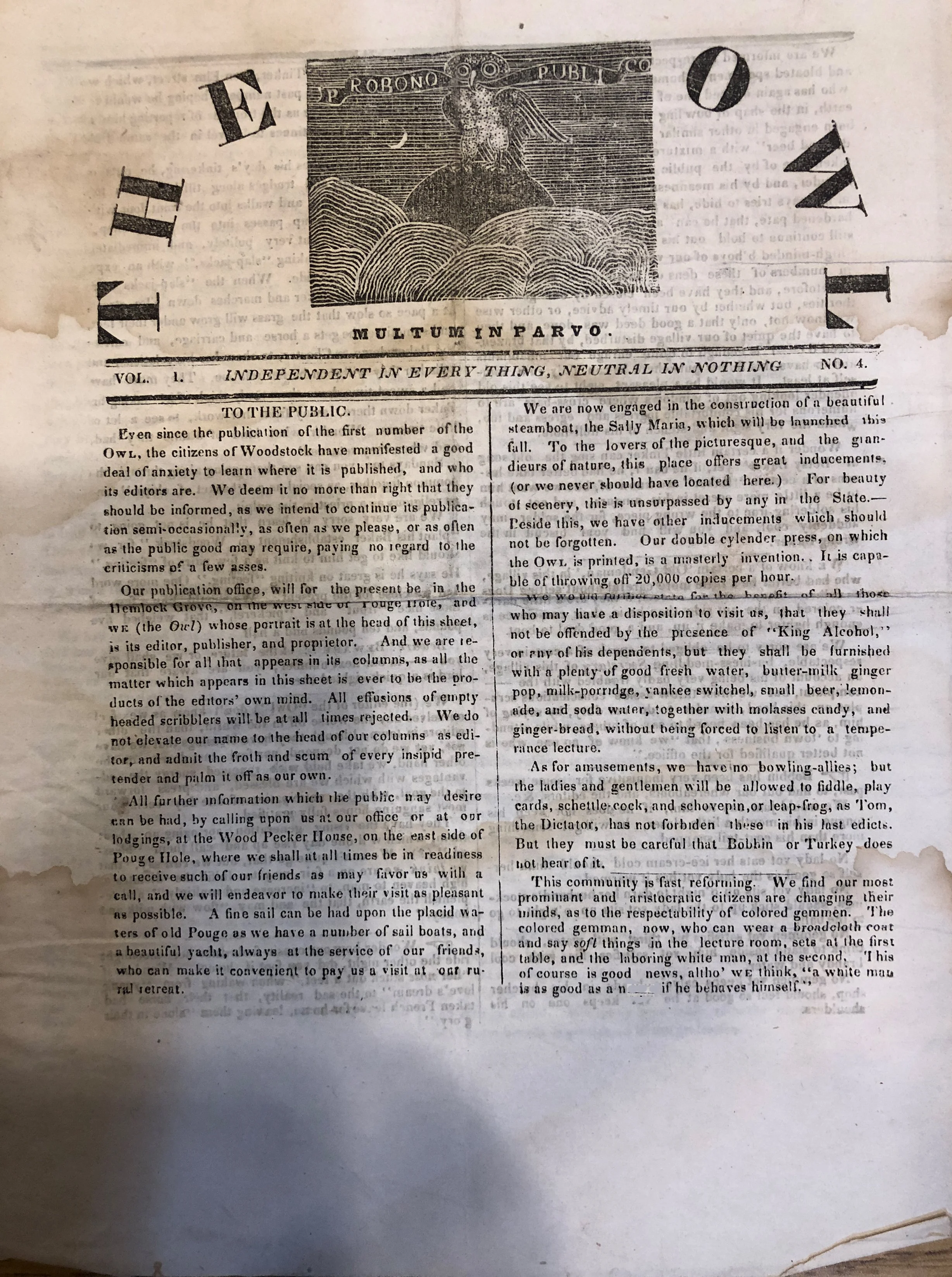
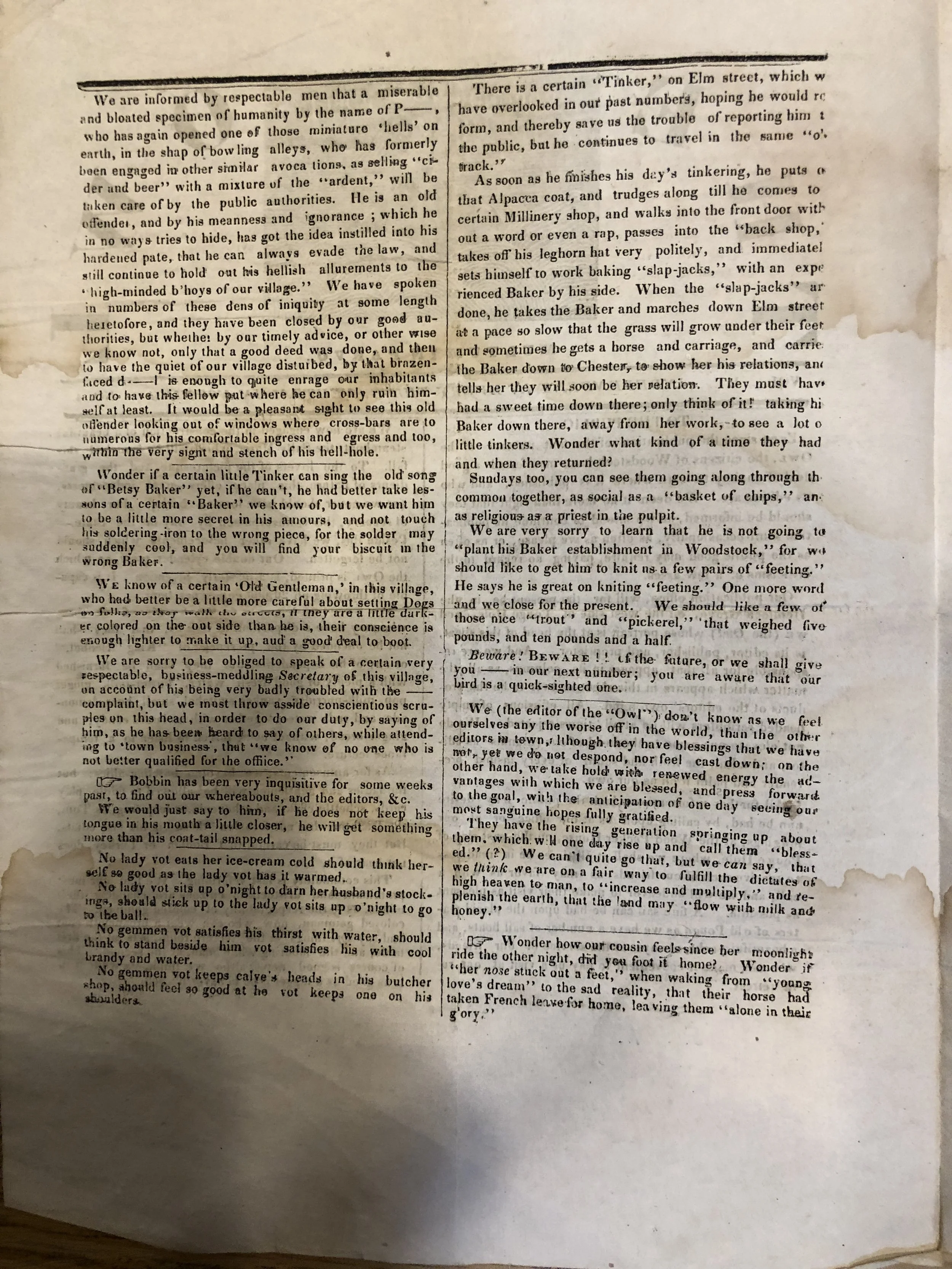
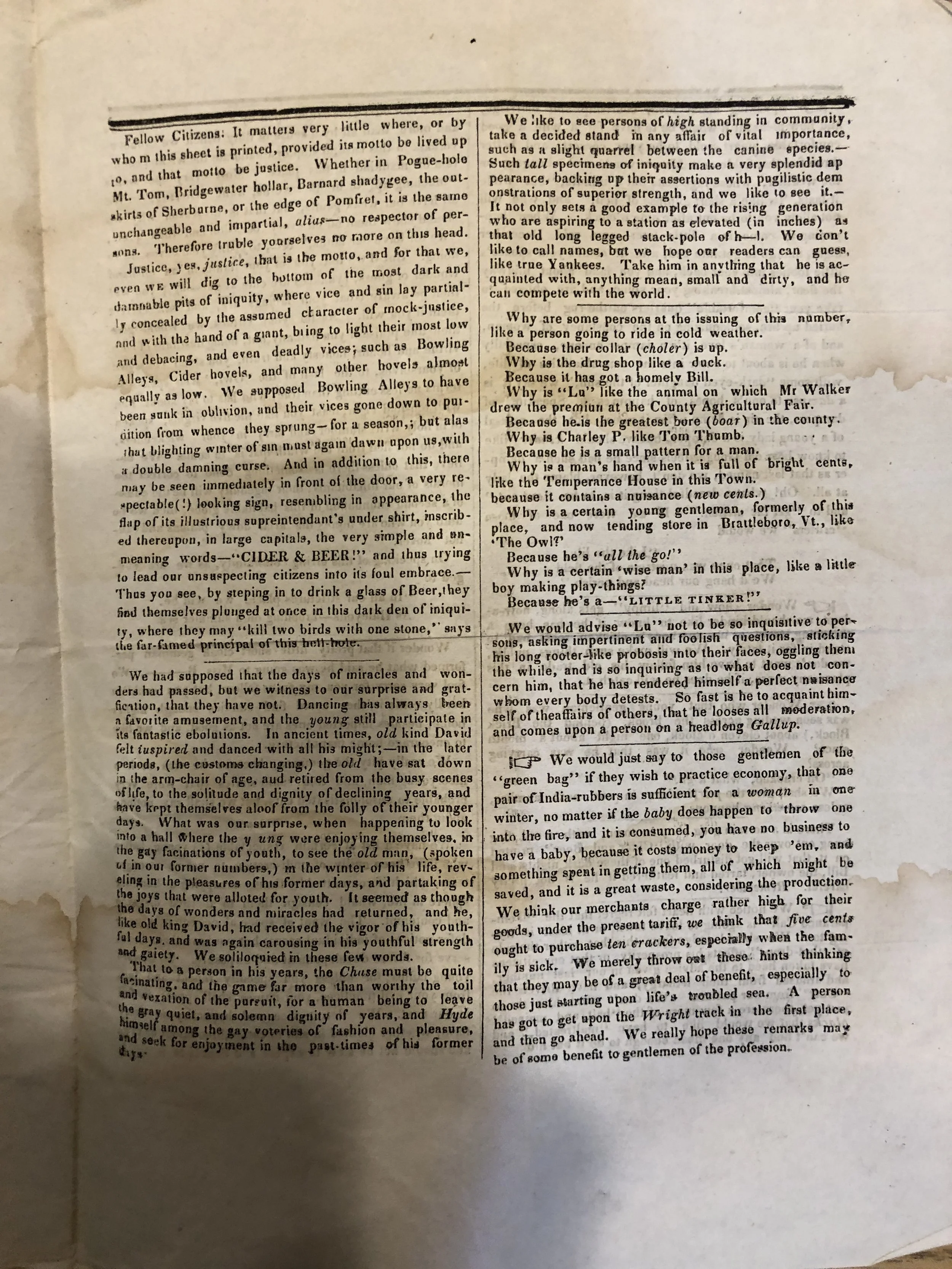
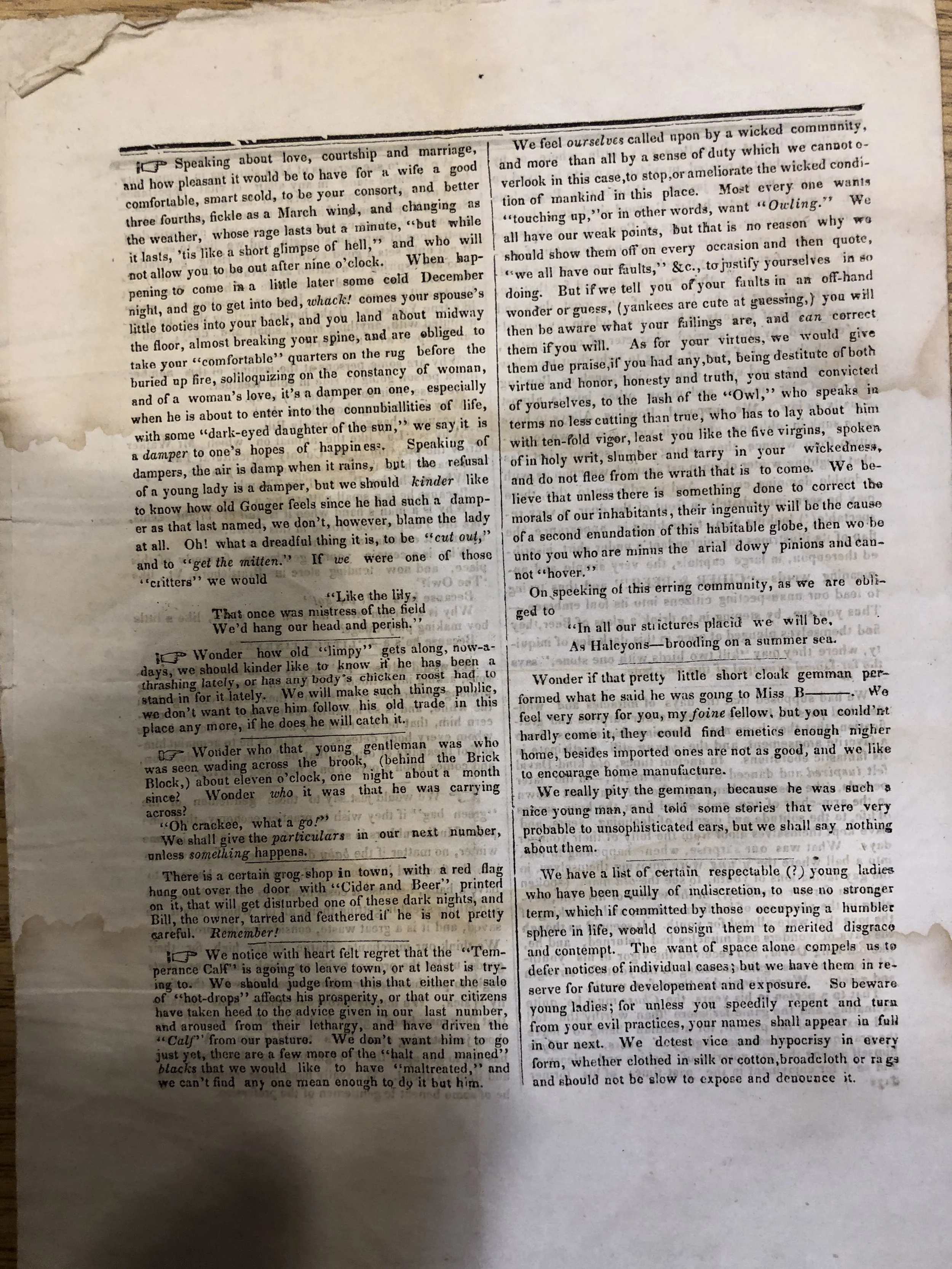
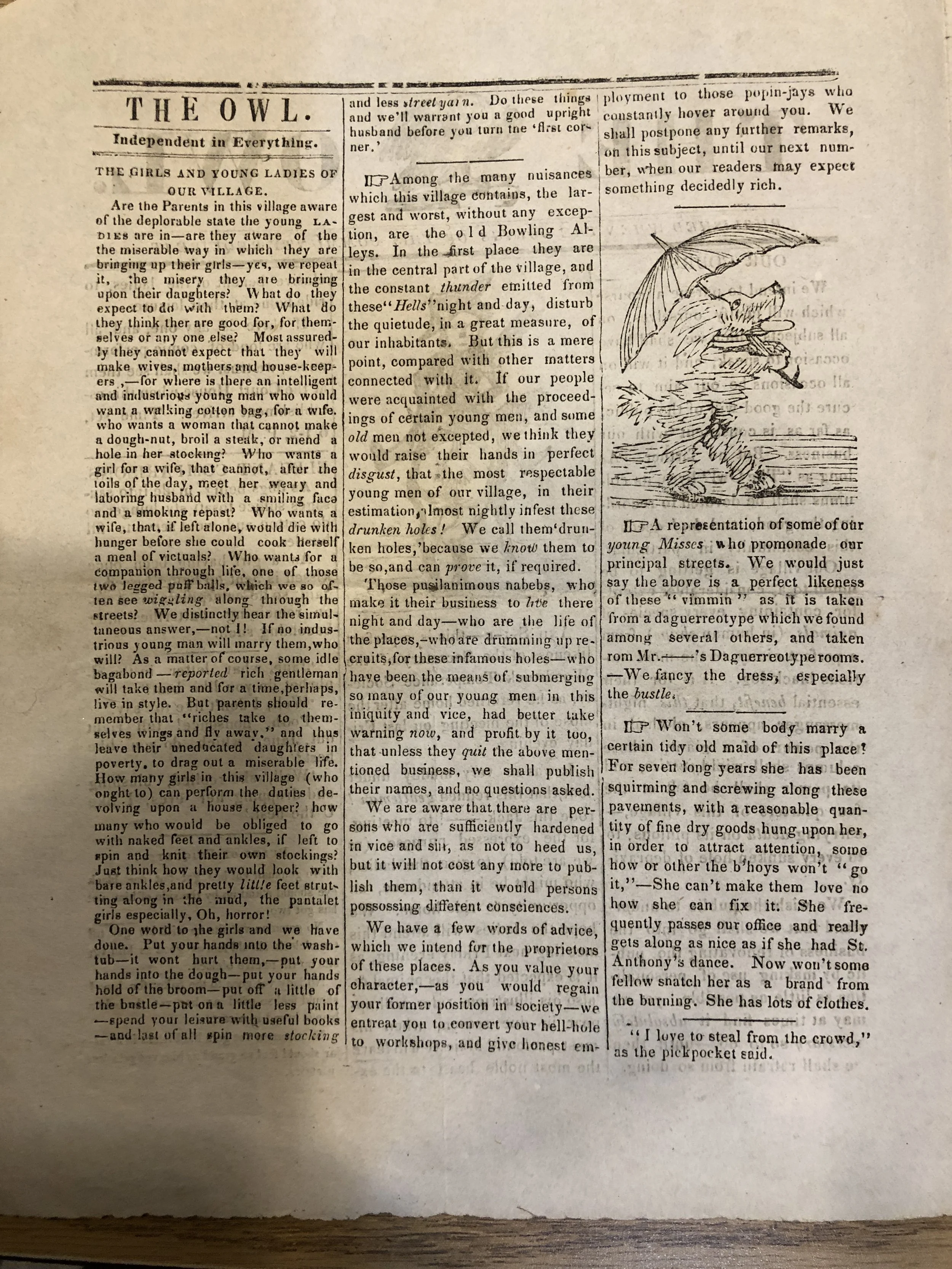
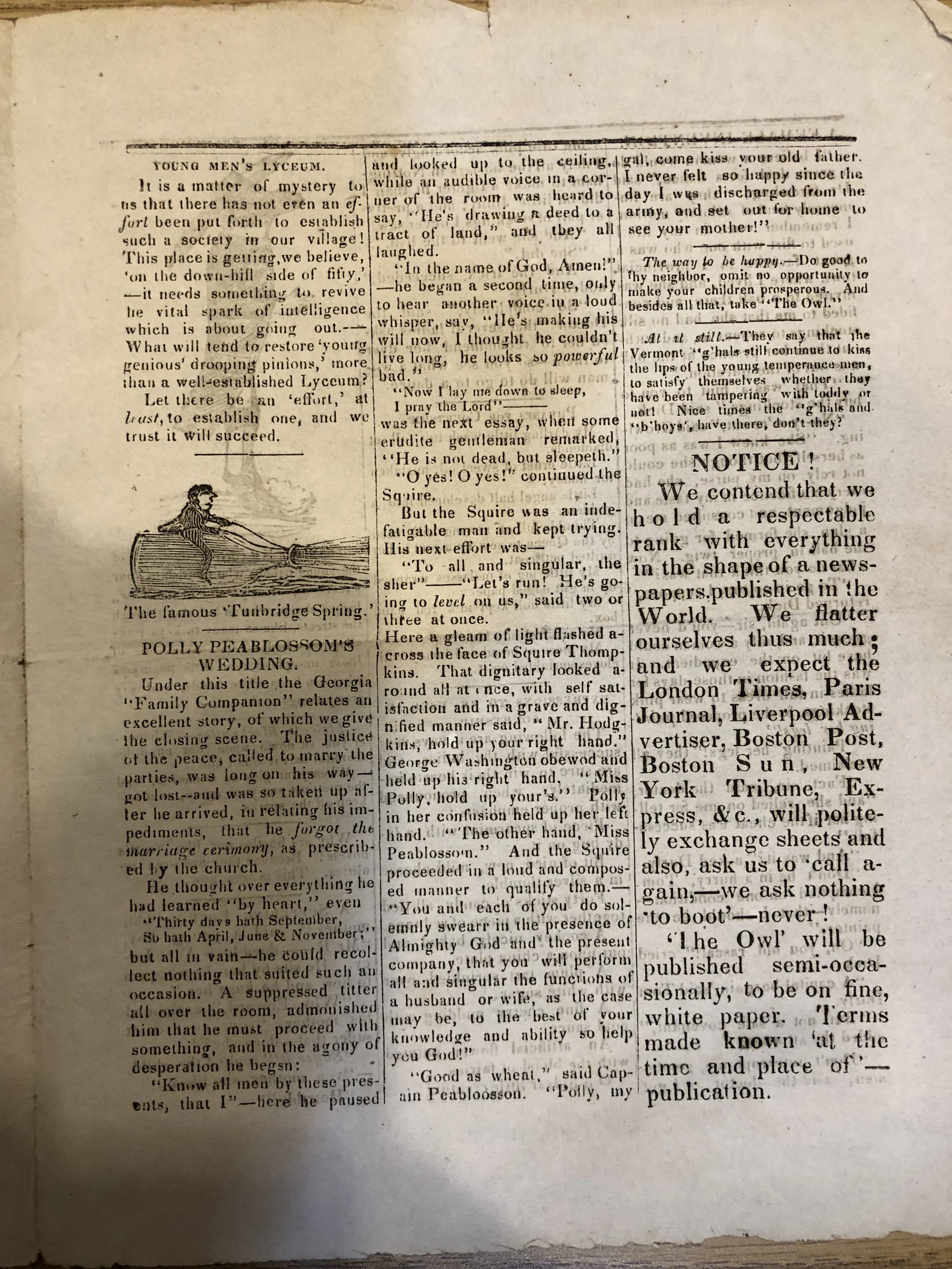
The Woodstock History Center has a large number of local historic newspapers from the mid to late 19th century in its collection. These papers provide crucial insights into understanding what people were thinking and talking about on a weekly basis — from politics to what attributes were considered charming in women. The sheer number of papers attests to the interest in sharing news and, in many cases, trying to shape public opinion.