Electrical Power in Woodstock
By Matt Powers
The Early Days of Electricity
For many years, people all over the world had tried to convert different sources of energy into electricity. It wasn’t until the 18th century that electrical power began to take shape. Throughout the next hundred years, many inventors and scientists began to find ways to convert electrical power to make light and other uses. Artificial lighting as electricity, generated by water or by coal-fired steam, burst onto the American scene. Thomas Edison's experimentation with using a carbon filament for use in light bulbs, first demonstrated in October 1879, showed how electricity could be used in practical applications to improve people’s daily lives. It took the public many years to begin to trust this new “invisible” power source that could light their houses and power machinery. There continued to be other forms of cheaper and more reliable light sources which remained available which contributed to the slow transition to electric. Eventually, through advertising campaigns and demonstrations, the new electric lights began to be seen as safe, clean, healthy and efficient. In Vermont, the first town to experience the wonders of electric lights was Rutland in 1885. Electricity came quickly to Bennington in 1886. By 1890, 13 Vermont communities had electric lights. That number grew to 40 by 1900. Popularity for electricity started to rise in the 1920s and continued for the next few decades. However, two towns in Vermont had to wait for their first electric light to be lit in 1963!
A Proposition is Made to Benefit Woodstock
In the Spirit of the Age, it was stated on March 23, 1893 that “Mr. A. Hilliard and Mr. Hawkes, of Boston, propose to put in a first-class plant in Taftsville, buying the water power at that place, providing two hundred lights are contracted for by private parties, for a period of one year. They are willing to assume the expense of construction themselves, or to sell any portion of the stock which the residents feel inclined to take. Messrs. Hilliard and Hawkes propose to put upon their line twenty-25-candle-power lights for street lighting, to remain sufficient length of time to enable the village to decide whether it wishes to contact for street lighting covering the entire village.
“Mr. Hilliard is a business man in Boston, connected with the Revere Sugar Refinery, and Mr. Hawkes is a practical electric and construction engineer. They are not connected in any way with either the General Electric or Westinghouse systems. The proposed company to be styled The Woodstock Electric Co.”
Another proposition, from a G.W. Buzzell, representing the Giant Electric Motor Co. of Portland, Maine, was made to the town soon after the Hilliard proposition.
Woodstock Electric Company Organized
The Woodstock Electric Company was organized, with capital of $22,000, on May 16, 1893. At a meeting of the incorporators held on June 3, 1893, the following officers were chosen: President, Anbury Hilliard; manger, W.F. Fowler; treasurer, W.S. Hewitt; clerk, F.W. Wilder; directors, F.W. Wilder, A.M. Milles, A.B. Wilder, W.F. Fowler, F.R. Jewett and Phillip Royce.
Contracting and Equipping the Plant
The work of equipping a power plant and wiring the streets of the village was begun at once. Power was obtained from the overflow of the dam at Taftsville, owned by W.H. Brownell who had a sawmill on the north side of the river and a woodworking plant near the railway passenger depot. It was originally planned to furnish service by August 1st of that year. The middle of August found the power house done, the repairs to the dam practically complete and the dynamo installed, but the flywheel had somewhat missed connection in transit. In The Vermont Standard issue of August 24, 1893, the paper said, “Illumination not yet visible, but as usual ‘just about ready to start.’”
Woodstock Sees First Electric Lights
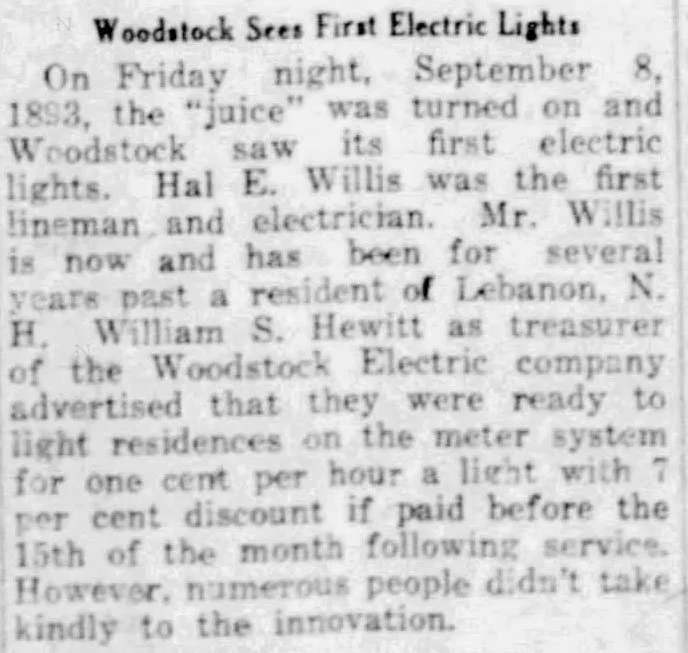
“On Friday night, September 8, 1893, the ‘juice’ was turned on and Woodstock saw its first electric lights.” Hal E. Willis was the first lineman and electrician. William S. Hewitt, the treasurer of the Woodstock Electric company, advertised that they were ready to light residences on a meter system for one cent per hour a light with a 7 per cent discount if paid before the 15th of the month following services. However, numerous people were still hesitant to sign up for the new power source.
Memorable Town Meeting
On October 3, 1893, the Woodstock Electric Company met to elect Arthur Wilder as general manager and it was voted to contract with the village for street lighting. The village trustees insisted as a prerequisite that 20 incandescent lights be installed for demonstration purposes and that a provision be made for omitting services on bright moonlight nights. One village trustee also thought it wouldn’t be necessary to have the lights on when there was bright snow light. “Some people were considerably ‘bet up’ over the whole matter and a special village meeting was called for October 19. At this meeting it was finally voted that a committee of three people be appointed to contract for 84 25-candle power incandescent lights at $10 each beginning January 15, 1894.” The contract for kerosene lighting in the village was expiring the following January, and the electric company proposed to run the 20 demonstration lights free of charge until that time and as many additional lights as they would be able to place.
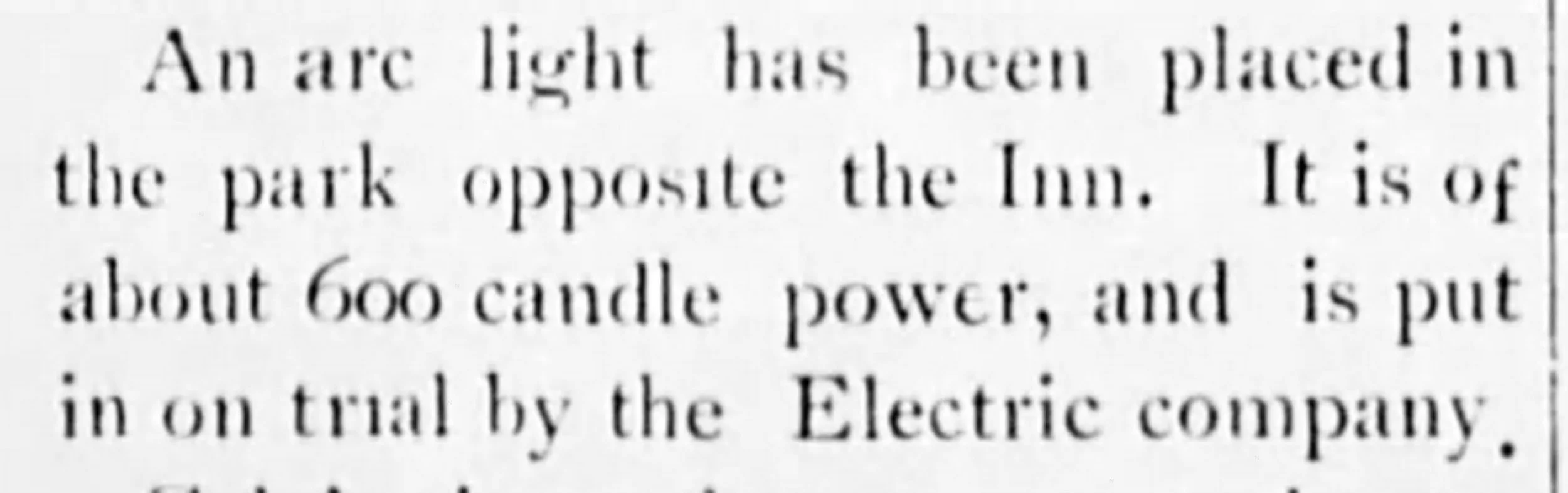
Spirit of the Age. June 29, 1895.
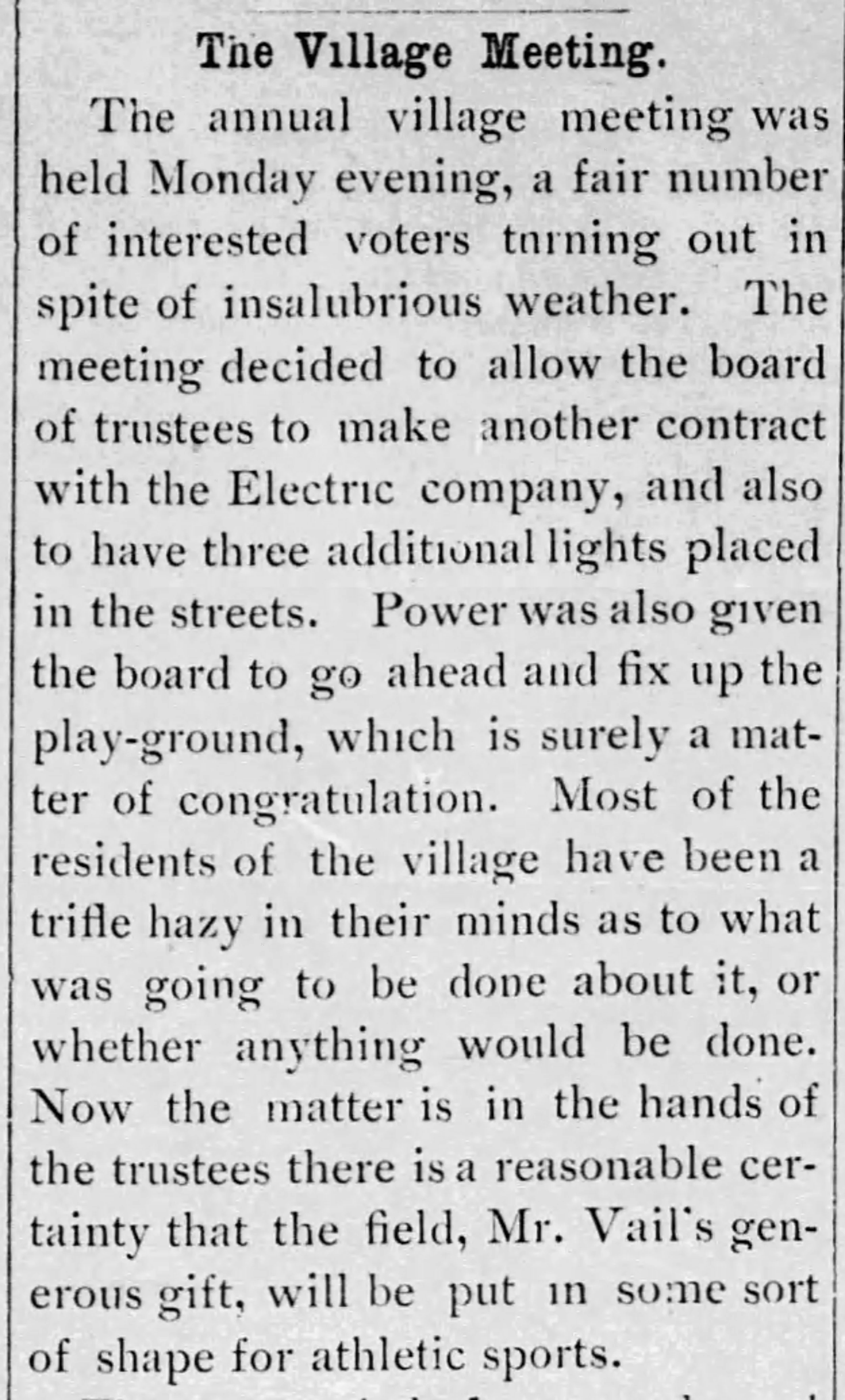
Spirit of the Age. January 11, 1896
Troublesome Years for the Company
During 1900 and 1901, the Woodstock Electric Company and Boston parties were at the point of scrapping the plant or selling it. It was due to the efforts of F.W. Wilder that the venture was saved. Local investors were procured and new local management took over the finances and control of ownership.
An Era of Improvement Begins
The new management took over and made improvements to the street lamps, which “were so poor as to make the service valueless and the village was at the point of canceling its contract.” Bonds for $12,000 were sold and a contract with the Exeter Machine Works was made for new equipment. The Exeter Machine Works placed a new 2200-volt dynamo with a 133-cycle generator. In 1902 the Exeter Machine Company built the brick power house.
The public responded to the service the rejuvenated company was offering and demand increased. In 1903 the Holyoke Machine Company installed a new water wheel which added 75 horsepower to the generating plant. That same year, a 90-kilowatt machine was installed for emergency or heavy loads. At about this time, a 100-horse power engine replaced an antiquated makeshift.
At the same time, the Woodstock Gas Company was experiencing financial difficulty and finally closed its operations by 1908 due to lack of profit and lack of maintenance. The improvements in the infrastructure of the electric company couldn’t have come at a better time.
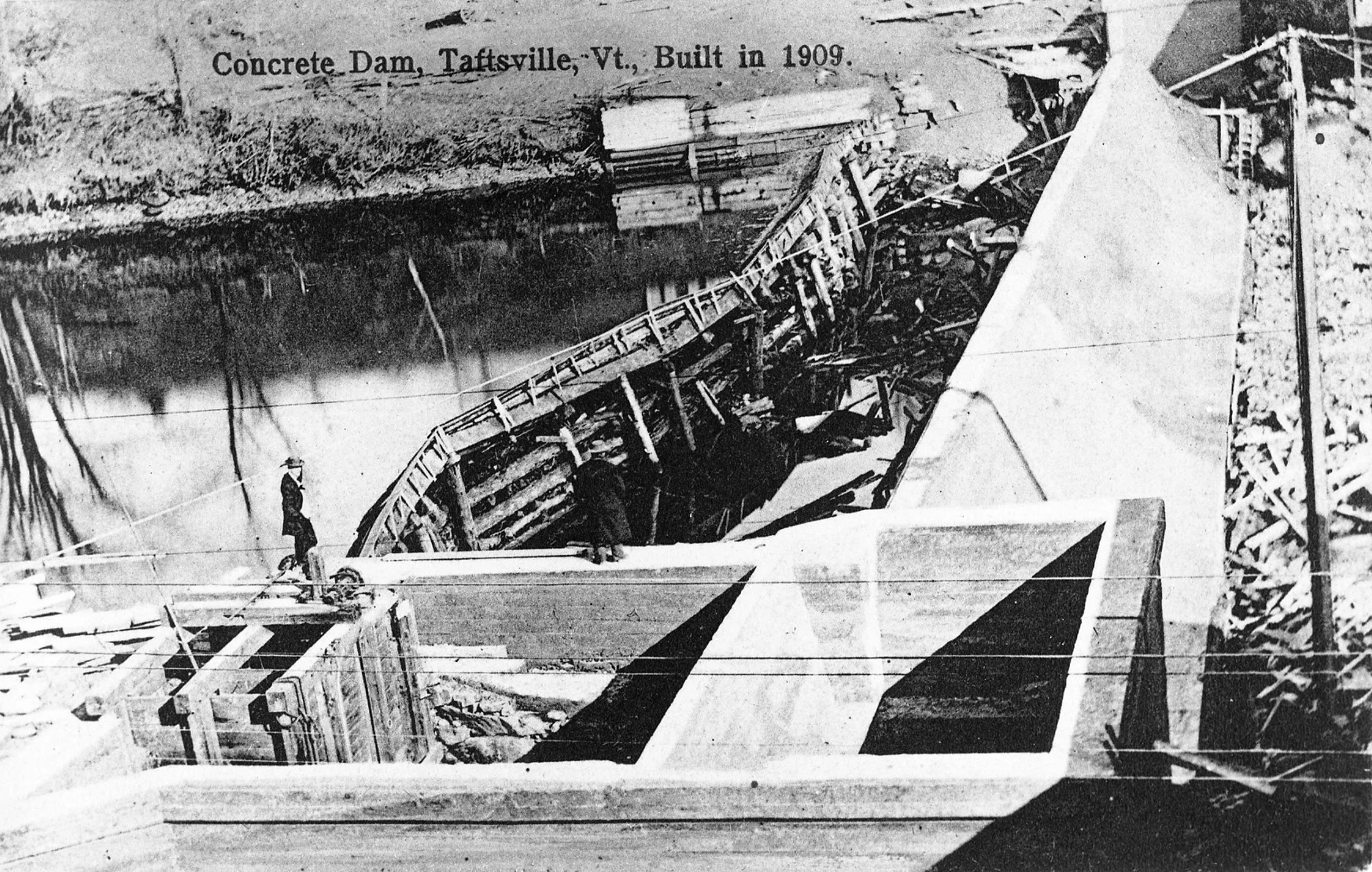
Concrete Dam, Taftsville, VT, Built in 1909.
In 1909, the Lathrop, Shea & Harwood Company of Scranton, Pennsylvania, replaced the wooden dam with a modern concrete structure. And in 1910, a 150-kilowatt, three-phase, 2200-volt, 60-cycle generator was placed.
The company wired the poles to Woodstock Village in April, 1910. The company also installed a new 150 kw, 60 cycle, 3-phase Allis Chalmers generator which would charge the village’s new stone crusher. In 1913, Arthur Wilder – who was the manager of the Woodstock Inn and the president of the Woodstock Electric Company – purchased a new electric bus to replace the Concord Coach “for use between the Inn and the station.”
In 1916 a 200-kilowatt turbine engine replaced the steam plant. While it was thought this would give enough power for a generation, in 1924 it was found advisable to “hook up” with the Vermont Hydro-Electric Company, which eventually became the Central Vermont Public Service Corporation. The first extension of the line was to West Woodstock, and later came extensions to Quechee, Deweys Mills, South Woodstock, Prosper, South Pomfret, and West Hartford.
During this time, the “lighting field” expanded from a managed light system that went from twilight until midnight (and for a time in the early hours of morning) to include day service. “For a day service the first equipment was a storage battery installed in the stock room to power fans, small motors and a few day lights. Finally as an experiment the plant was run Tuesday forenoons, largely that electric flatiron, that had been sold in numbers, might be available for family ironing. Then the service was continued for a full day and a little later Wednesday was added. From that the 24-hour service started, which soon included motive power, that in later years has come to be such a large item of the electrical business.”
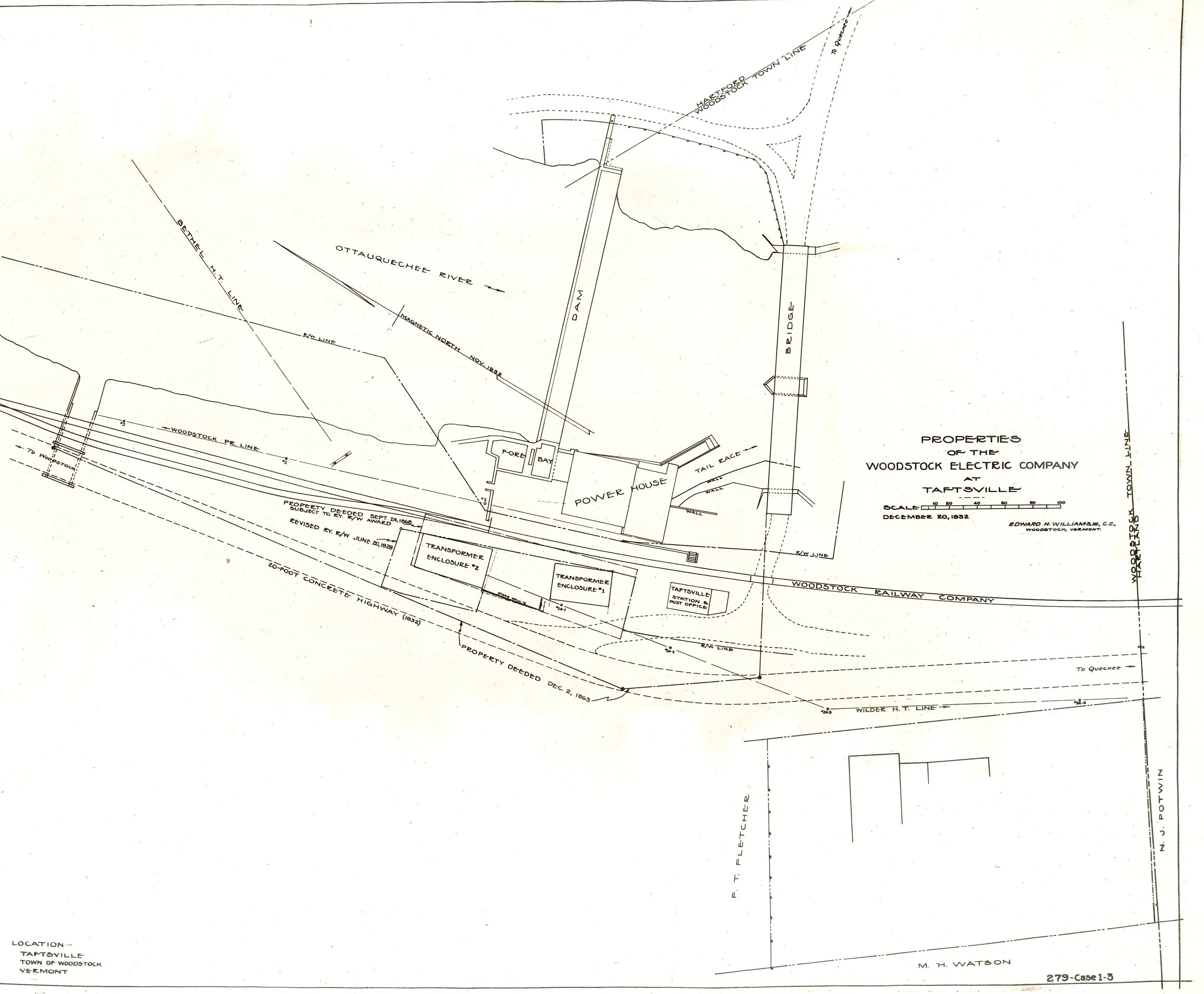
Properties of the Woodstock Electric Company at Taftsville. 1932.
The Modern Era
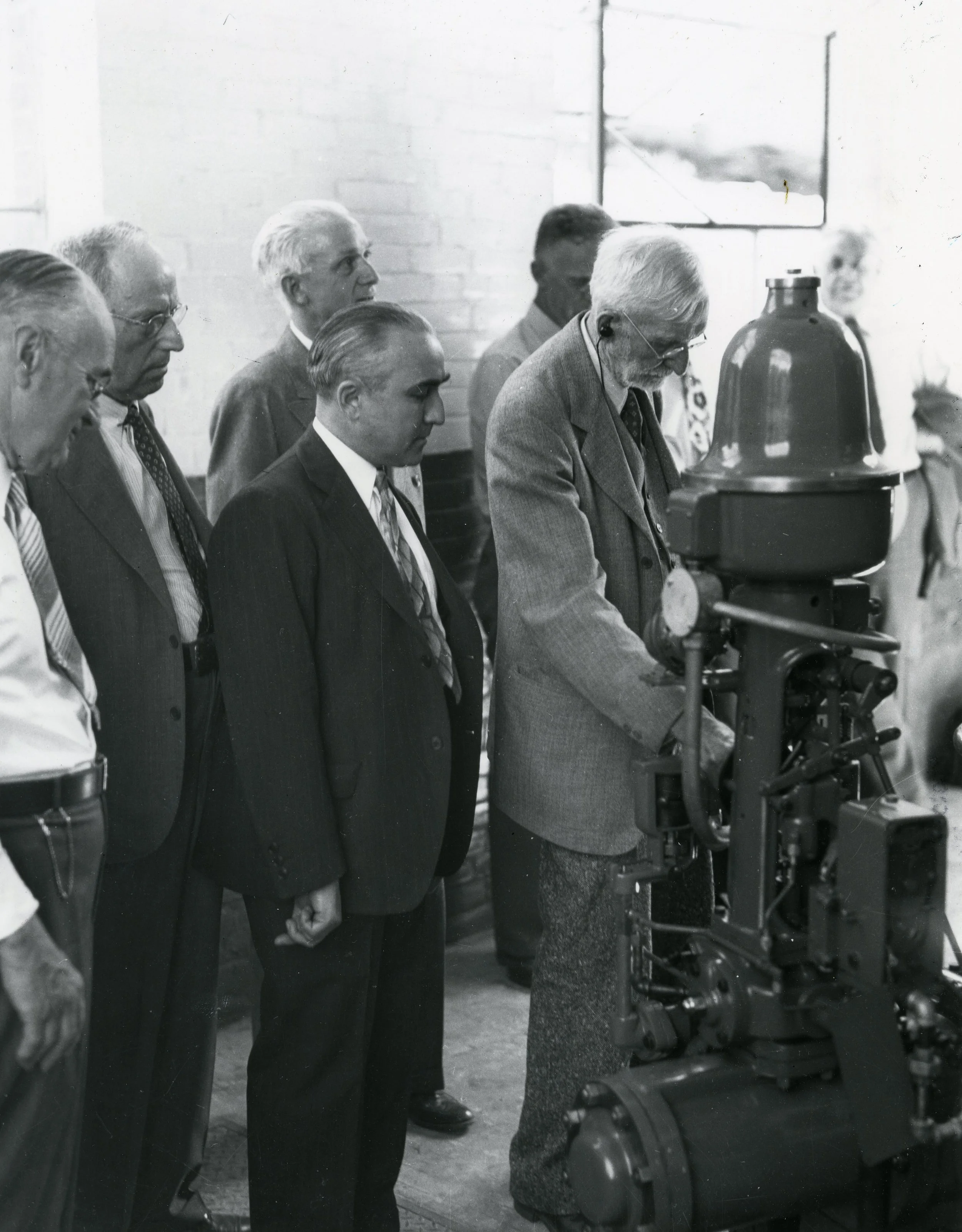
In 1941, a fire at the Woodstock Electric Company’s power plant practically wrecked the generator room. In 1943, new water wheel equipment was installed in the new brick power house at Taftsville to fix the damage from the fire. It started generating electricity on June 24 at a ceremony attended by officials and company representatives. Arthur Wilder, president of the company, raised the gate to start the Ottauquechee River flowing into the turbine. The single runner vertical Smith-Kaplan hydraulically adjustable blade turbine was made by the S. Morgan Smith Company and was connected to a General Electric generator of 500-kilowatt capacity. The new brick house was constructed by C.T. Maxham. The new equipment was to generate three to four times as much electricity as the old equipment which was destroyed by the fire in 1941.
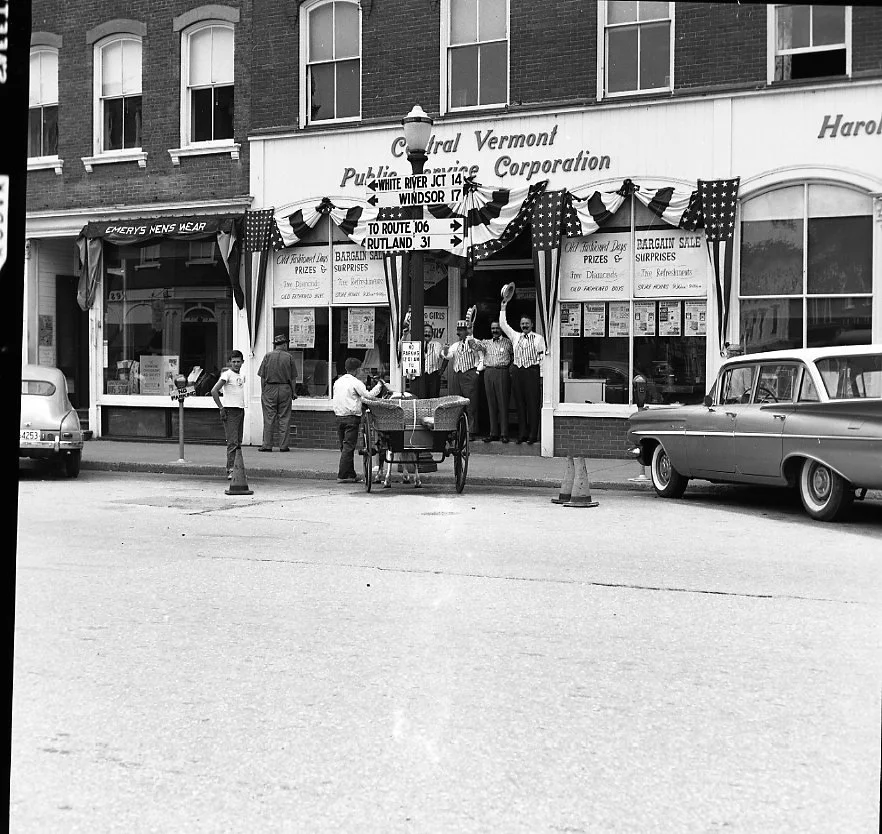
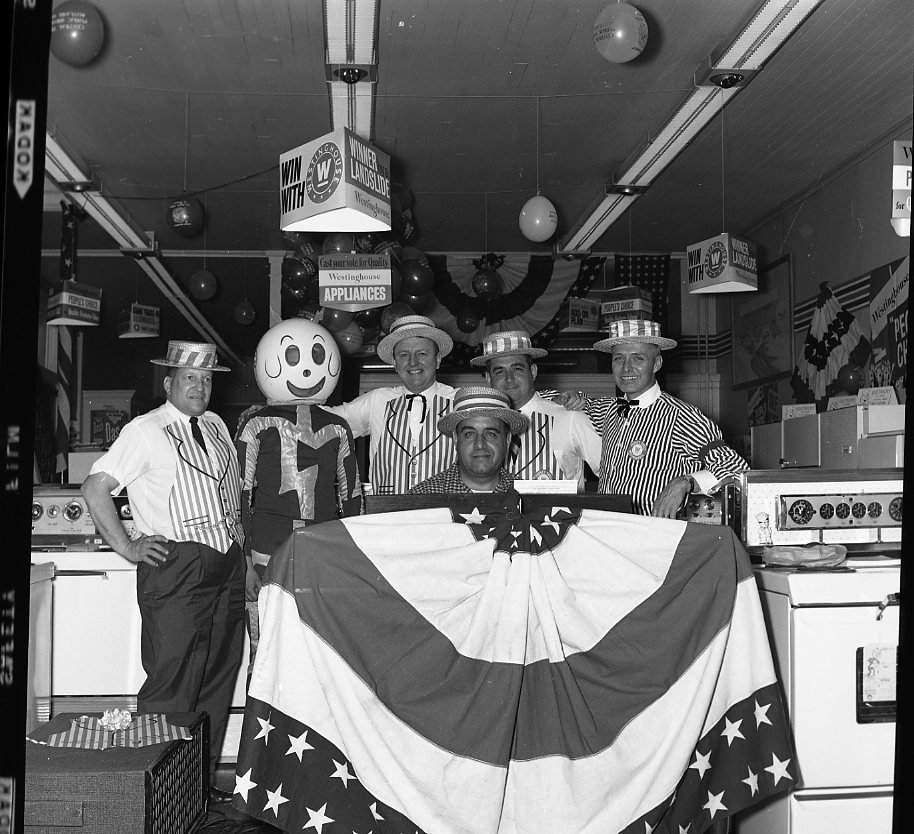
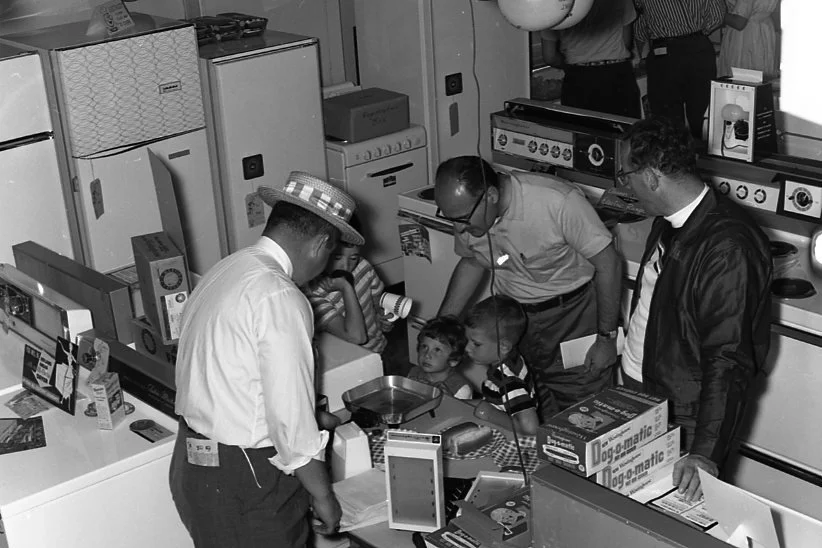
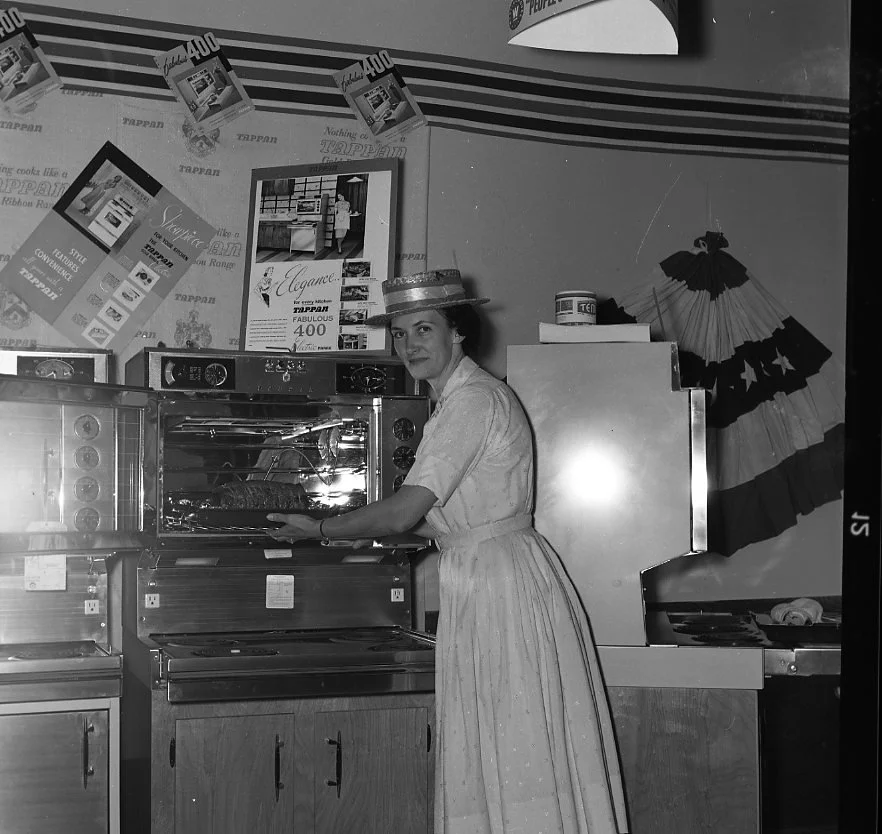
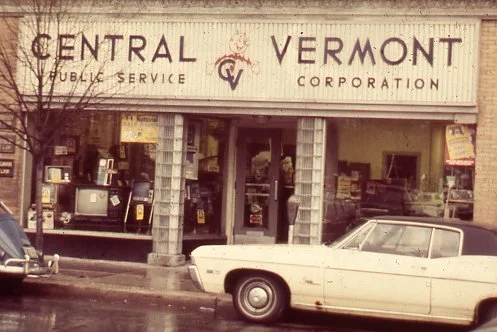
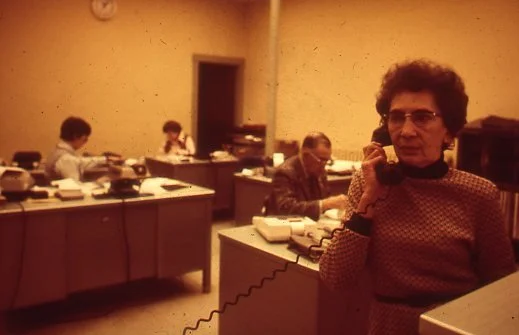
In 1956, Central Vermont Public Service purchased the Woodstock Electric Company and spent thousands of dollars upgrading the system. The CVPS offices were located in the Jones Block on Central Street. Utilities, such as CVPS, tried to educate and excite customers about using electrical appliances, from lights to newfangled dishwashing machines and electric ovens. The ambassador for electricity use for many utilities was Reddy Kilowatt. The CV’s Woodstock district service center would later be opened off Route 4, east of Woodstock Village, in 1974.
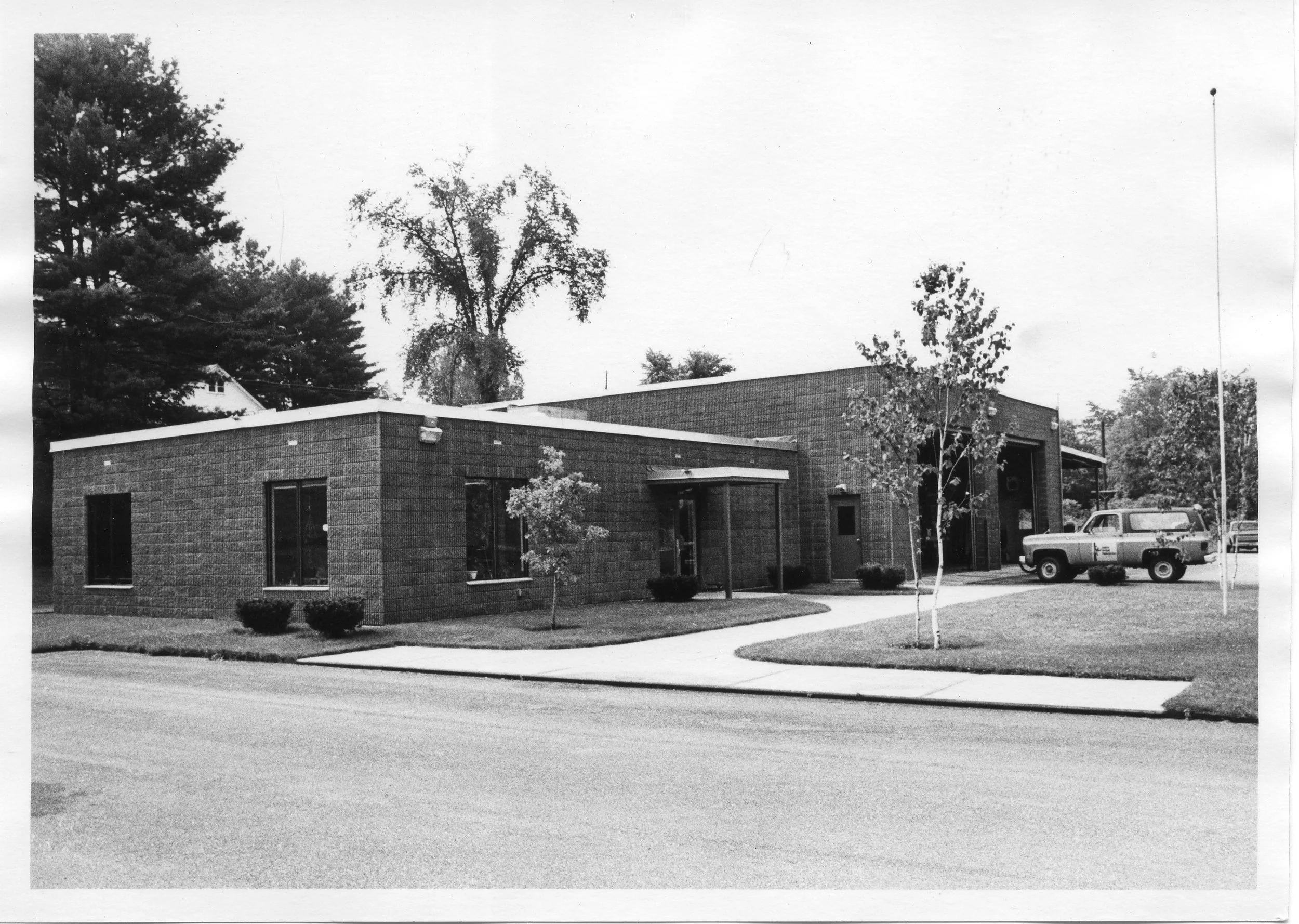
CVPS--Woodstock Service Center--early 1980s.
Interesting Woodstock Electrical Project
In 1971-72, one of the more interesting electrical projects in Vermont was completed in downtown Woodstock. Working with Woodstock officials and Mr. and Mrs. Rockefeller, CVPS placed electrical lines serving portions of the village underground. The Rockefellers sponsored and underwrote the project to improve aesthetic and historical qualities of Woodstock. With the underground lines in place, the project was complete with the removal of the overhead lines and poles in the spring 1972. Other utility lines such as telephone were also buried in special conduits.
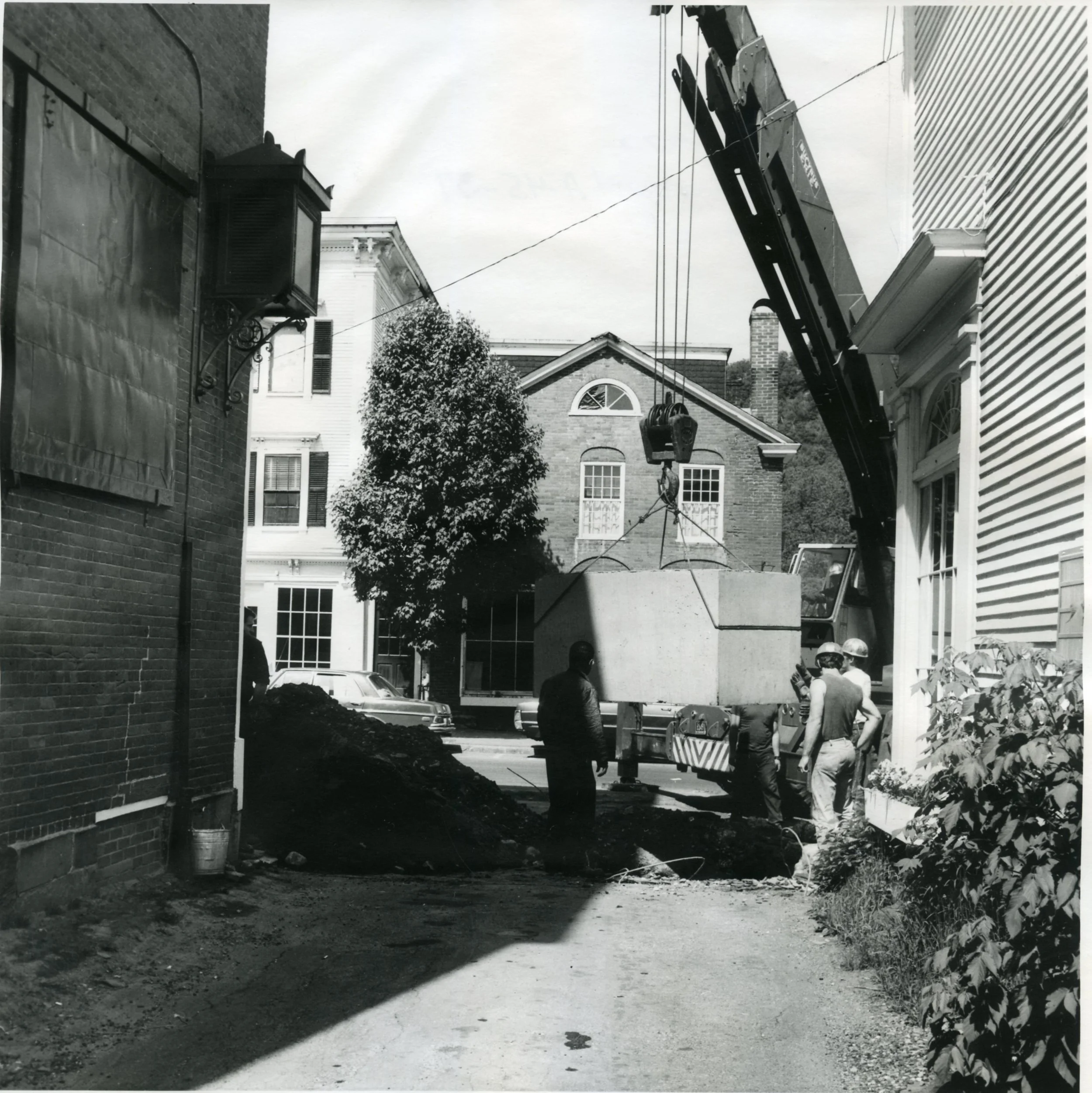
Installing underground wiring on Elm Street--Woodstock National Bank at left, Morgan Ballou at right--July 1971 - July 1972.