
Strong Men and Tall Tales
By Jennie Shurtleff
In a time before sophisticated machines could fell trees, harvest hay, thresh grain, and perform the many other tasks essential to survival on the frontier, physical strength was a tremendous asset—one that naturally earned the attention and admiration of those around.
While New England cannot claim the Greek hero Hercules, nor the Biblical Samson who destroyed a temple by pushing apart its columns, it can boast of a number of men who were celebrated for their remarkable strength. Most notable among them was Joseph Call, who might well have been forgotten by history had it not been for the de facto local historian Chauncey Richardson. As a child, Richardson witnessed some of Call’s feats of strength and later wrote about them in one of his history columns for the Vermont Standard in 1869.
The article is as follows:
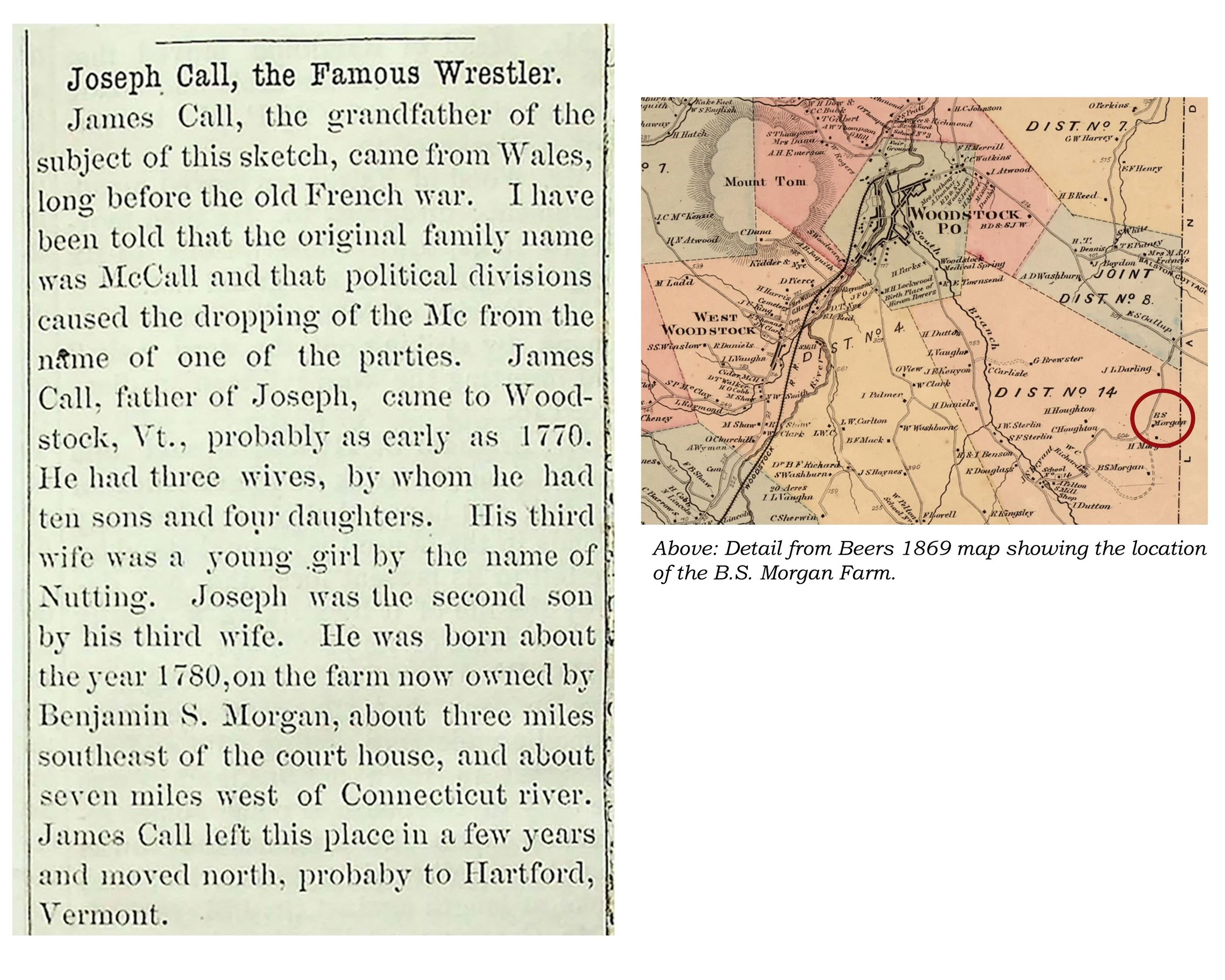
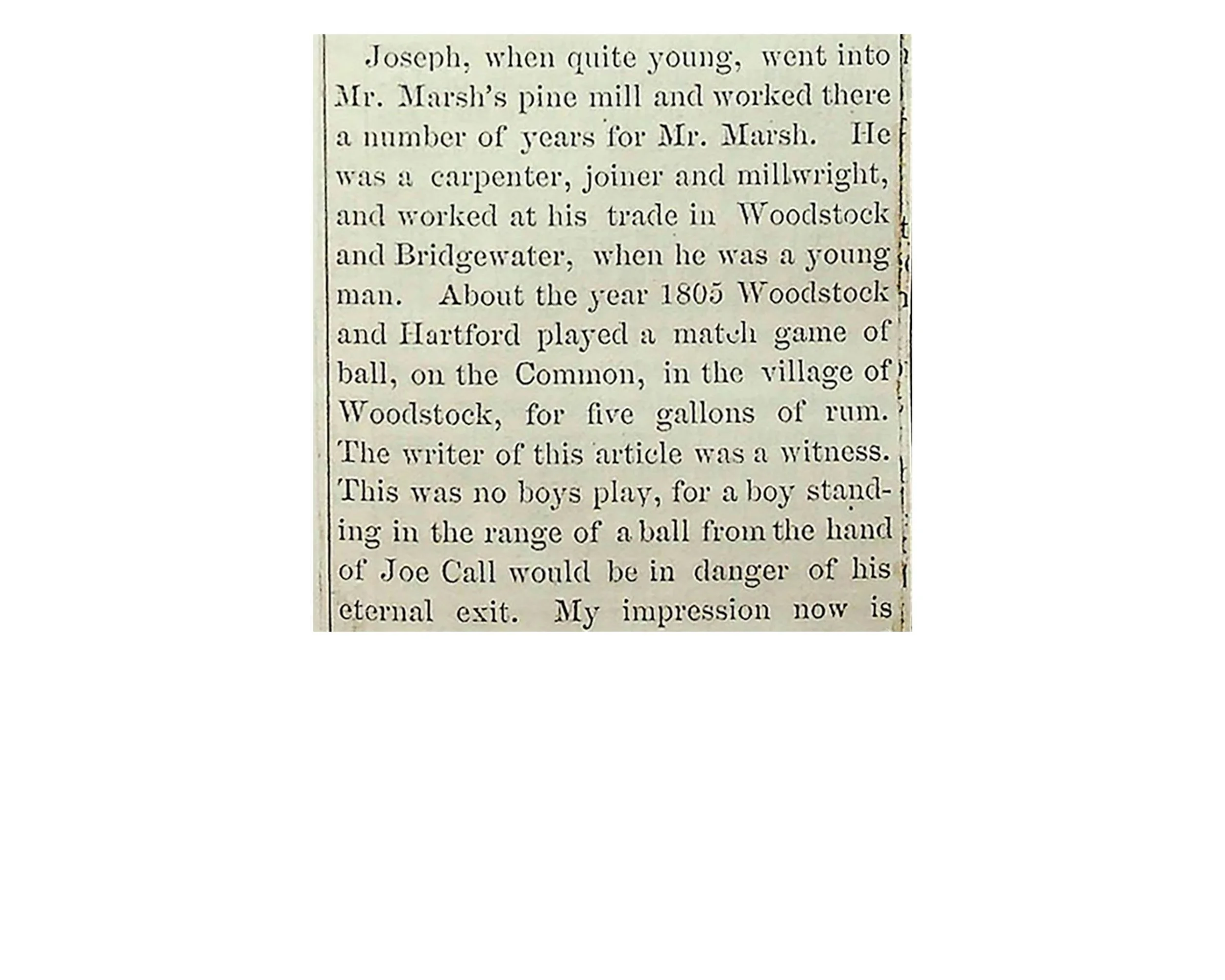
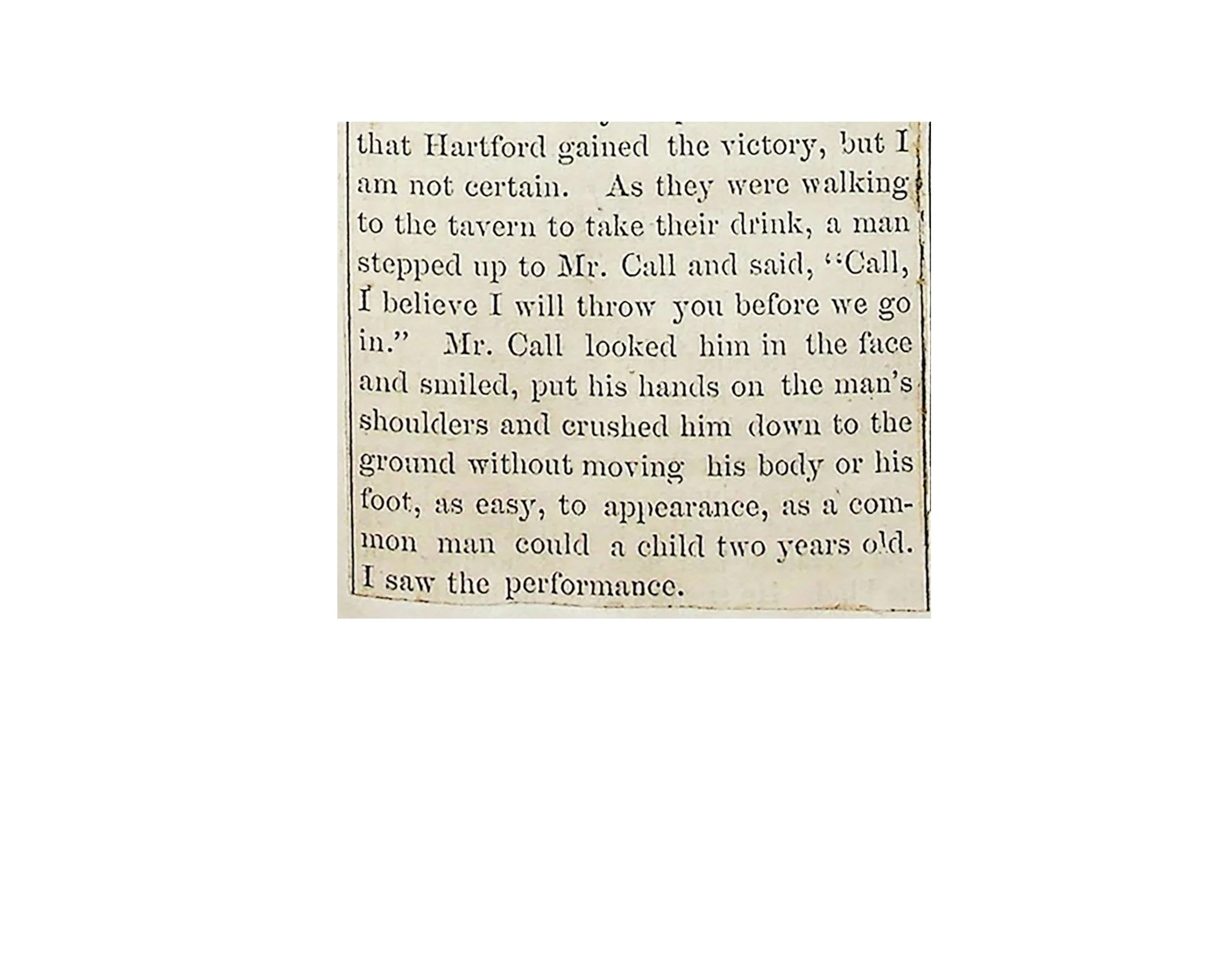
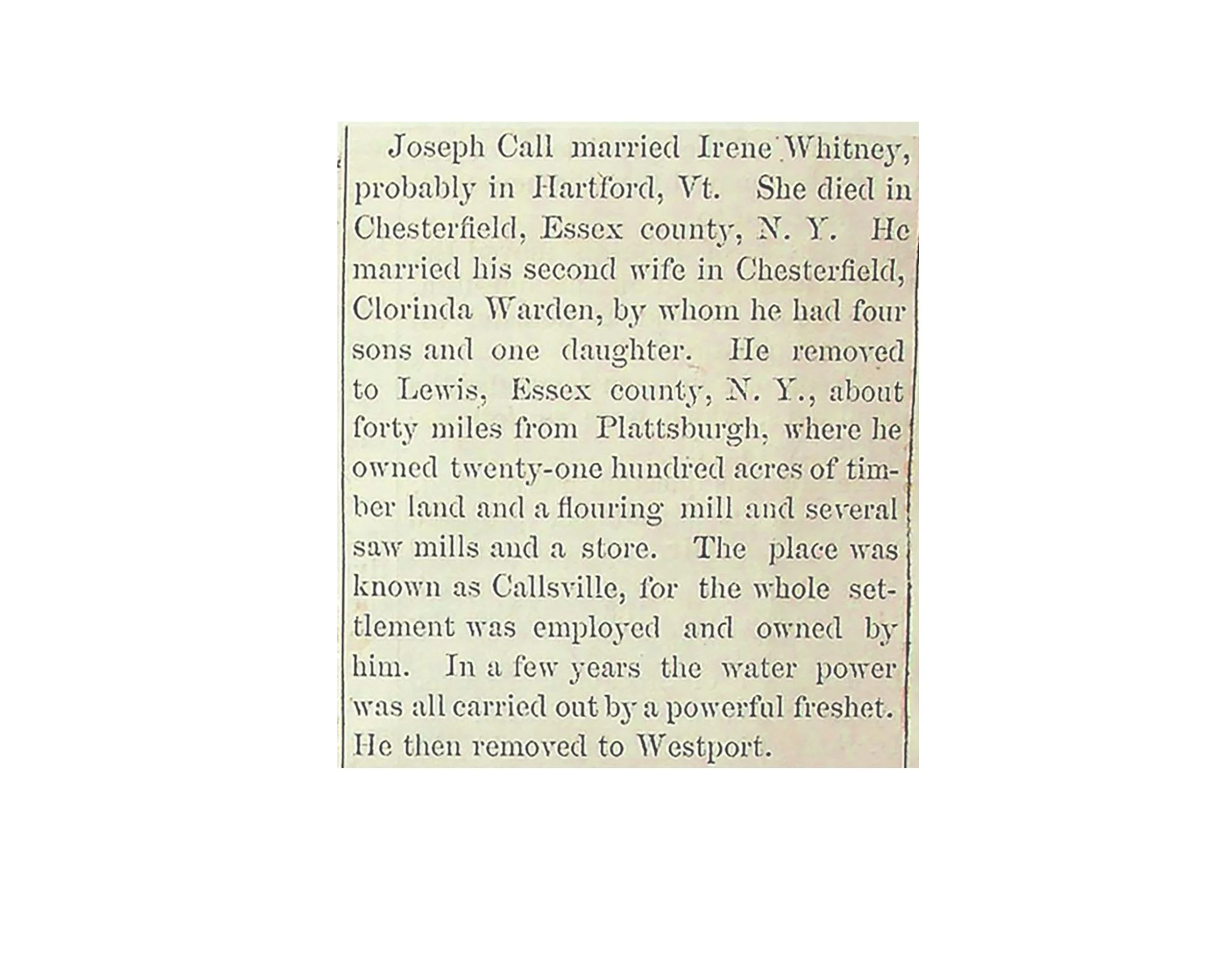
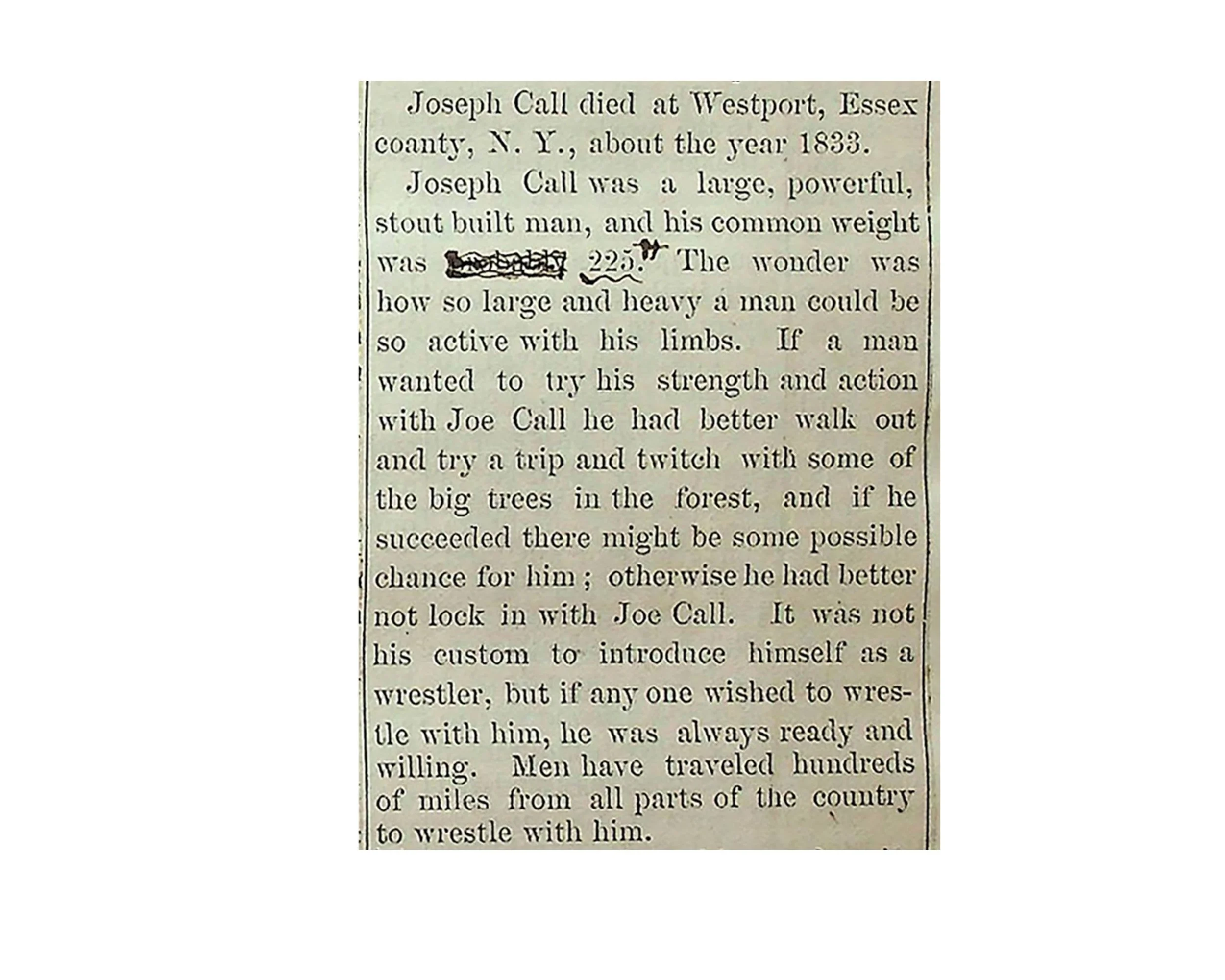
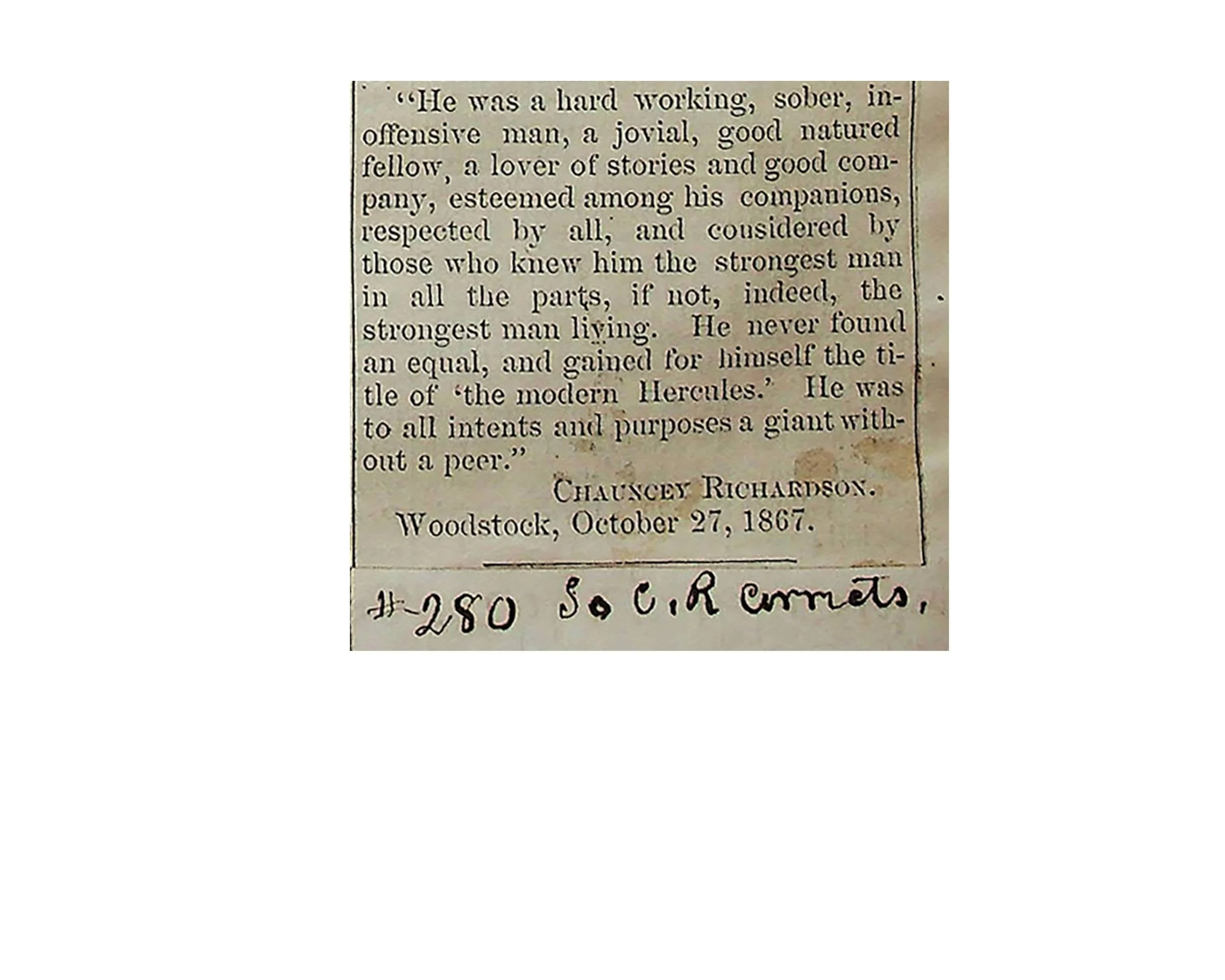
The title of “possibly the strongest man in the world” was an extraordinary claim—one, of course, that could not easily be proven—especially given the many other exceptionally strong men accustomed to the rigors of physical labor. One such individual who may have been a contender for the title was Dyer Emmons. Dyer Emmons, who was mentioned in Henry Swan Dana’s History of Woodstock, was the brother of Woodstock resident Benjamin Emmons. According to Dana, there were eight Emmons brothers — all of whom were “healthy, active men, with large and powerful frames, fitted in a high degree to endure and overcome the hardships of border life.” Several of the brothers served in the colonial army during the French and Indian War.
It was during this conflict that a colonel of an English regiment made a wager with a colonel of a colonial regiment. Each claimed that his unit contained a man “superior to all others in muscular strength,” and they agreed to hold a contest to determine who was right. The prize for the victorious colonel was to be a barrel of rum.
The colonel of the colonial regiment selected Dyer Emmons, Benjamin’s brother, as his champion. As proof of his strength, Dyer reportedly picked up a cannon weighing eight hundred pounds, carried it six rods (ninety-nine feet), and then tossed it over a stone wall. His counterpart—the champion from the English regiment—was unable to match the feat, and so Dyer was declared the winner, earning his colonel the wager. The account does not mention whether Dyer himself benefited from his display of strength by being treated to any of the rum.
Many other individuals of remarkable strength or skill have undoubtedly been lost—or are in danger of being lost—to history simply because no one recorded their stories. One such tale that my grandfather related to me concerned a farmer named Elisha Gillet, who lived on the North Bridgewater Road in the late eighteenth and early nineteenth centuries. According to local lore, Elisha wore knee-high boots, had no fear of heights, and was an extraordinary jumper.
He apparently helped several neighboring farmers construct their barns, which was not uncommon in a time when communities came together for house and barn raisings. One of the barns he helped build still stands on my family’s property. While most details of the barn’s construction have long been forgotten, one small story has endured: while working on the frame, my grandfather said that according to local lore Elisha Gillet would jump from beam to beam, high above the barn’s floor.
I have measured the span between the beams in this old barn. They are 10 feet apart and stand 12 feet high. It is little wonder that such a feat was remembered and passed down from one generation to the next.
Other stories are perhaps less dramatic, but still worthy of remembrance. Being a good shot—like being strong and athletic—was a valuable skill in a frontier community. One such account recorded by Henry Swan Dana in his History of Woodstock concerns Timothy Knox, reputed to have been the first white settler in Woodstock. Dana writes that “Knox was the best marksman to be found in these parts. He had a long smooth-bore rifle, the cherished companion of his many years of wanderings as a hunter. In his old age the people got him to come down to the Green and exhibit his skill in shooting at a mark. The mark was a card of gingerbread set up too far off for any other man to hit. Knox drew on it, and put a ball through the centre.”
Was Joseph Call truly able to push down a grown man as if he were a two-year-old child? Did Dyer Emmons really pick up, carry, and throw an eight-hundred-pound cannon? Could Elisha Gillet actually leap 10 feet from beam to beam?
We will probably never know for certain. It is quite possible that these stories contain a measure of exaggeration. A remarkable feat becomes a little more remarkable each time it is retold—especially when the story is passed down by people who admired the man who performed it.
Yet that does not negate the value of such stories. Whether perfectly accurate or somewhat embellished, they reveal what people of the time respected and remembered. In an age when survival depended on muscle, endurance, and skill, those who possessed such qualities became local legends.
And like all good legends, their stories—true or not—have proven strong enough to endure.