PART THREE OF A FOUR-PART HISTORY LECTURE SERIES
250 YEARS: LOOKING BACKWARD & LOOKING AHEAD
HELD IN THE NORMAN WILLIAMS PUBLIC LIBRARY
CO-HOSTED BY THE WOODSTOCK HISTORY CENTER
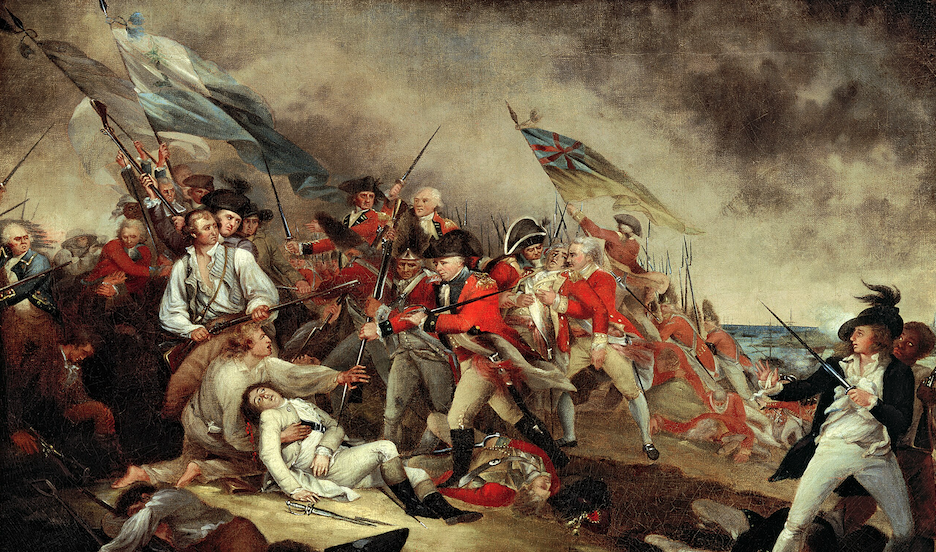
The Death of General Warren at the Battle of Bunker’s Hill, June 17, 1775, by John Trumbull, 1786, Public Domain.
This program is a collaboration between Penguin Random House, Yankee Books, the Norman Williams Public Library, and the Woodstock History Center. Any views, findings, conclusions, or recommendations expressed in this program do not necessarily represent those of the partnering organizations.
THE GREAT CONTRADICTION:
THE TRAGIC SIDE OF THE AMERICAN FOUNDING
with Professor Joseph J. Ellis
On the eve of the American Revolution, half a million enslaved African Americans were embedded in the North American population. The slave trade was flourishing, even as the thirteen colonies armed themselves to defend against the idea of being governed without consent. This paradox gave birth to what Joseph J. Ellis calls the “great contradiction”: How could a government that had been justified and founded on the principles articulated in the Declaration of Independence institutionalize slavery? How could it permit a tidal wave of western migration by settlers who understood the phrase “pursuit of happiness” to mean the pursuit of Indian lands?
About the Speaker:
Joseph J. Ellis is the author of many works of American history, including Founding Brothers: The Revolutionary Generation, which was awarded the Pulitzer Prize, and American Sphinx: The Character of Thomas Jefferson, which won the National Book Award. A frequent contributor to Ken Burns' celebrated films, Ellis is featured in The American Revolution, airing on PBS. Ellis' essays and book reviews appear regularly in national publications and his commentaries have been featured on major programs. He lives in Vermont with his family.