
Deborah Sampson: One of the Revolutionary War's most Revolutionary Soldiers
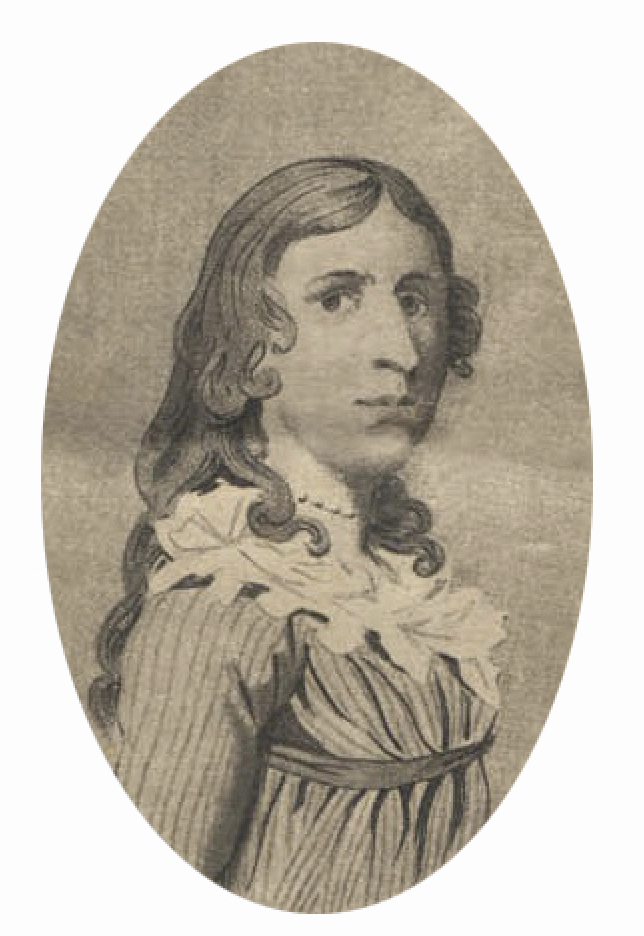
An image of Deborah Sampson taken from the biography written by Herman Mann.
By Jennie Shurtleff
Every war has its share of unusual stories and extraordinary soldiers. During the American Revolutionary War, one of the most “revolutionary” was Deborah Sampson. Deborah, like the famed folk heroine Hua Mulan, who was the inspiration for the animated Disney classic Mulan, Deborah dressed as a man, enlisted, and for nearly a year and a half served in the military without her secret being discovered.
Deborah Sampson was born in Plympton, Massachusetts, on December 17, 1760. She was the great-great-granddaughter of William Bradford, a respected Puritan Separatist, signer of the Mayflower Compact, and long-serving governor of the Plymouth Colony. Despite this notable lineage, Deborah’s immediate family faced significant financial hardship.
Much of what is known about Deborah Sampson comes from her biographer Herman Mann, who interviewed her in 1797 and later published her story under the title The Female Review: or, Memoirs of an American Young Lady.
According to Mann’s account, Deborah’s father struggled as a farmer and, prior to her birth, turned to the “seafaring business.” When he didn’t return to his family after an excursion, it was believed that he had been lost at sea. Later evidence suggests that this report was incorrect and that he had instead abandoned his family and had begun a new life in Maine. Deborah’s mother, left to care for seven children, attempted to keep the family together but was ultimately forced to place her children in other households.
Deborah was first sent to live with a distant relative—an elderly unmarried woman—who was most kind to Deborah, but died a few years after taking Deobrah in. Deborah was then sent to live with a Mrs. Thatcher of Middleborough, Massachusetts. Mrs. Thatcher was about eighty years old and in Mann’s biography, she is described as having a “slender constitution” - perhaps suggesting that she had many physical needs and that her care was beyond the skills of ten-year-old Deborah. In any case, the arrangement appears to have proved unsuitable as Deborah was moved yet again. At the age of ten, she was indentured to a farmer named Jeremiah Thomas, also of Middleborough.
Although Deborah did not attend school, she learned to read and write. Sources differ as to how she acquired these skills. Some suggest she learned to read while living with Mrs. Thatcher; others believe she taught herself by examining the schoolbooks of the Thomas children and listening closely to their lessons. As an indentured servant, Deborah performed not only traditional domestic labor but also, as needed, she helped with physically demanding farm work, such as harnessing horses, raking hay, and storing it in the barn. She also learned practical trades, including weaving, basket-making, and basic carpentry, producing items such as milking stools and sleds.
By the time her indenture ended, Deborah had become sufficiently educated to secure work as a schoolteacher in Middleborough during the six-month summer term. She supplemented her income through weaving. After two years of teaching—and with the Revolutionary War still raging—Deborah sought a dramatic change in her life.
Disguised in men’s clothing, she first attempted to enlist in the Continental Army in Middleborough under the name Timothy Thayer. Her disguise was discovered when an older woman recognized her distinctive way of holding a pen—a result of an injured forefinger—while she was signing enlistment papers. Undeterred, Deborah traveled to Uxbridge, Massachusetts, where she successfully enlisted for a three-year term under the name Robert Shurtlieff. She was assigned to a light infantry unit, an elite group of soldiers.
For approximately seventeen months, Deborah served as a combat soldier under her assumed identity. In his 1797 biography, Herman Mann suggests that Deborah’s success in passing as a man may be attributed in part to her physical appearance, stating “her aspect is rather masculine and serene, than effeminate.” She was reportedly about five feet seven inches tall, unusually tall for a woman of the period, when the average height for women in the colonies ranged from five feet to five feet two inches. She was also described as rather flat-chested (especially since she had bound her upper torso with cloth) and had plain facial features, both of which likely contributed to an androgynous appearance.
During her service, Deborah participated in active combat and sustained at least two injuries during a skirmish in the summer of 1782. She was taken—against her will—to a hospital, where a doctor treated a sword wound to her forehead. Fearing discovery, Deborah left before her leg wound could be examined. Later, she removed the shrapnel from her own leg using a sewing needle and penknife.
Her fears were ultimately justified. In the summer of 1783, during a fever epidemic in Philadelphia, Deborah fell seriously ill and was hospitalized. While she was unconscious, her disguise was discovered by her attending physician, Dr. Barnabas Binney, who noticed how she had bound her chest to alter her profile. Rather than reporting her, Dr. Binney transferred her to his home, where she was cared for by his family and a female nurse. After the war ended and soldiers were being discharged, Dr. Binney wrote a letter revealing Deborah’s identity and instructed her to deliver it to General John Paterson.
Deborah Sampson ultimately received an honorable discharge from the Continental Army. She returned home and, a few years later, married a farmer named Benjamin Gannett.
Nearly a decade after her service, Deborah petitioned Congress for the back pay she had been denied because she was a woman. Her request was eventually granted, and she received her wages with interest. Her next quest was to get a pension for having fought in the war, which her male counterparts had received, but she had not been awarded. In 1805, Congress finally approved Deborah’s pension, granting her approximately four dollars per month, though this payment applied only going forward.
In 1809, Deborah submitted another petition requesting retroactive pension payments dating back to her 1783 discharge. Although the amount owed would have been substantial, she ultimately received only $76.80, a fraction of what was due. After her death in 1827, her husband applied for spousal benefits available to widows of veterans. His petition was finally approved in 1837; however, he died shortly after the determination was made, and thereafter never received the funds.
The biography of Deborah Sampson, written by Herman Mann, is available online through the Library of Congress. This copy includes annotations that are intended to correct errors and provide additional historical context. In addition, through other sources, there are also a number of twentieth-century works—for both adults and younger audiences—written about Deborah Sampson. These more recent works are far more accessible while still serving to illuminate the life and contributions of a fascinating woman who challenged long-standing assumptions about women, their gender roles, and their treatment by the government in early American history.